Spotify

 Apple Podcasts

 Amazon Music

 Overcast

 Castro

 PocketCasts

 Castbox

 RadioPublic

 RSS Feed
213: In the Middle | Patrick Pinschmidt and MiddleGame Ventures
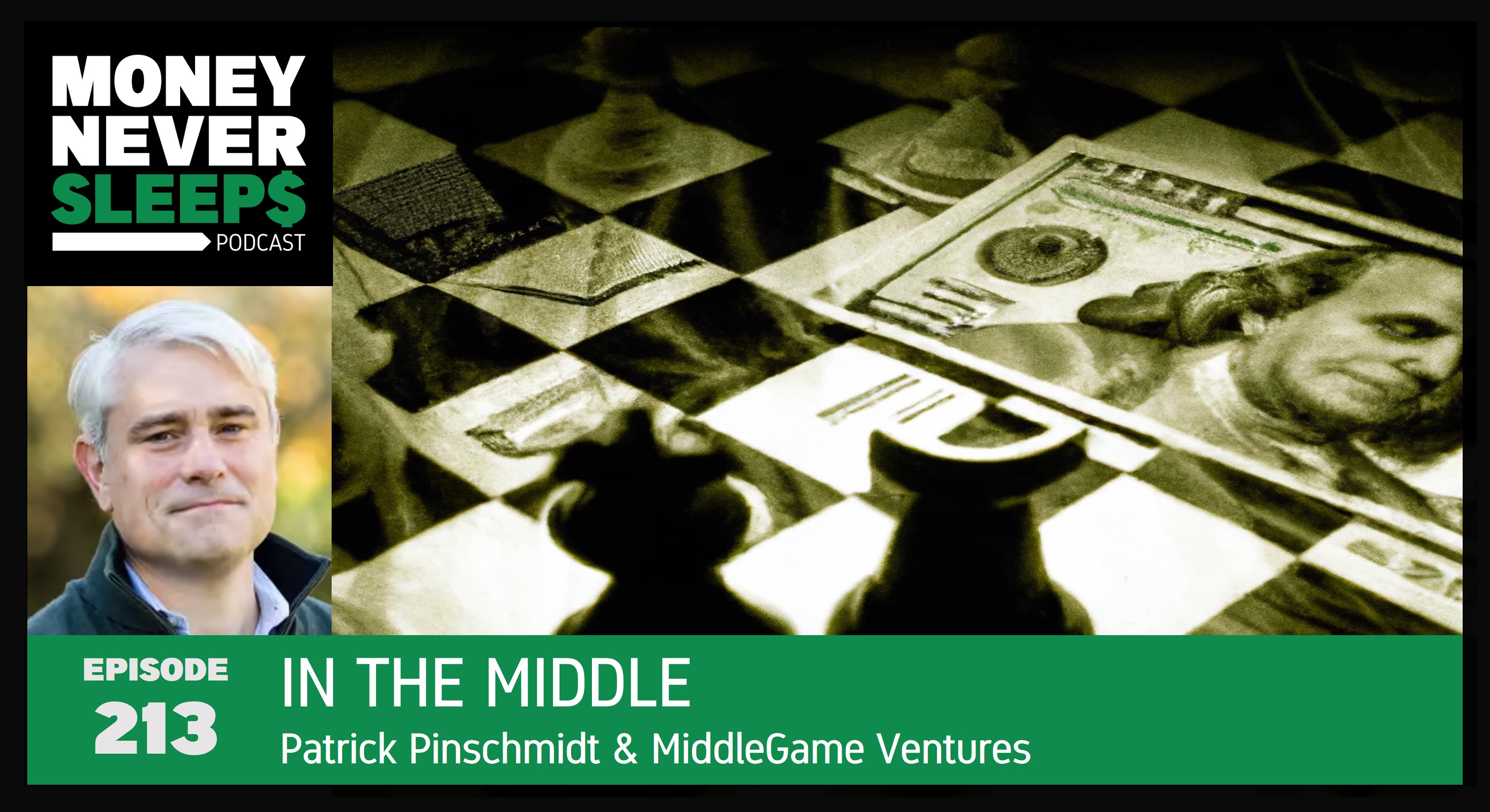
Patrick Pinschmidt is a General Partner and Co-Founder at MiddleGame Ventures, a financial technology venture capital fund focused on early-stage investments in Europe.
In this episode, Patrick riffs with Pete Townsend on the life experiences that delivered him to venture capital and what Patrick looks for in fintech founders in the context of MiddleGame Ventures’ Irish seed fund. Patrick and Pete also dive into Patrick’s lessons learned as an investor, investing in lines not dots, and the human focus of early-stage investing.
LINKS:
Learn more about MiddleGame Ventures on their website
Follow Patrick Pinschmidt on LinkedIn and Twitter
Episode title inspired by In the Middle by G-Eazy
Leave a review and subscribe on Apple Podcasts | Spotify
Check out our MoneyNeverSleeps website and email us at info@moneyneversleeps.ie
Follow us on Twitter: MoneyNeverSleeps | Eoin Fitzgerald | Pete Townsend
--- Support this podcast: https://podcasters.spotify.com/pod/show/moneyneversleeps/support
0:10 Hey there. I'm Pete on said, in this is money. Never sleeps. We look inside the minds of entrepreneurs, and at the crossover of startups, Enterprise Finance, technology and Life. As we know it on the show this week, we've got Patrick pinch, MIT, who is a general partner and co-founder at middlegame. Ventures a financial technology, Venture Capital fund focused on early stage investments in Europe, Previously Patrick was a deputy assistant secretary at the US Department of Treasury, re served as the first executive director of the financial stability, oversight Council. Prior to his government service, Patrick spent a decade as a sell side. Financial institutions and capital markets analyst where he was at lead Analyst at Morgan Stanley and Merrill Lynch for the Brokers exchanges in financial technology sector. He's a grad at Georgetown University's School of Foreign Service and Columbia University's Graduate School of Business in this episode.
0:58 Patrick, and I dive into Life experiences, it delivered him to venture capital for, we talked through middlegame Ventures, Iris seed fund, and what he looks for and fin Tech Founders. We also get into Patrick's Lessons Learned as an investor, how he looks at deals investing in lines, not dots and the human focus of early stage investing. All right here on money. Never sleeps. Thrilled to be having this chat with you. And I look back in my calendar to see when you. And I actually first met, and I knew it was at Matt, the Threshers, which is on Pembroke Street in Dublin, but it was actually September 3rd, 2018, nearly five years. Yeah, yeah, yeah.
1:42 No. Well Pete, it is. It's great to be on and sorry alone could enjoin, but yeah, that's right. You and Owen were kind of there when I started making Footprints in Dublin, kind of talking to different Some folks and I guess, I guess what's typically done and so we should talk to this other yank called Pete Townsend and I think that's how I wondered ended up in your tracks. Yeah, that was my Santa Maria. So shout-out to my thank you. Maya Jackson. Thank you. My she's awesome. So let's get started with just give us a rundown an intro into and to patch up inch bit and how you got to this point with what you're up to and what that is. Okay, well that's a that's a broad way to begin but let me let me give it a stab.
2:24 So I'm with middlegame Ventures for an early-stage content BC focusing on the European market and I guess about five years ago I started scouting Europe for another office for us. We were based in Luxembourg and we were close to launching our first fund and I was spending time in Ireland talking to potential LPS talking to folks in the ecosystem talking to Art ups and for a host of reasons, I decided to push forward with Ireland. And that's kind of how I ended up here talking to you. So I guess to give some context my entire career has been spent in financial services. I've started out on the sell side, research at Merrill Lynch and Morgan Stanley as a research analyst covering Banks asset managers exchanges and financial technology before it was called then Tech. And you know, this Is pre-crisis and it was a very interesting time, obviously a lot of growth and then a lot of pain with the Advent of the crisis and I had an opportunity coming out of that crisis to return to Washington. I had gone to school in Washington DC and you know, always had an interest and public policy and getting involved at some stage and the Stars had never really aligned for a host of reasons.
3:43 Including I'm a Democrat and there wasn't really a democratic Administration in the early 2000's, that makes a lot of sense. So, what I wanted to ask you a bit about as well, is that your role as Deputy, assistant secretary at the US Department of Treasury? We served as a first executive director of the financial stability, oversight Council. That's a mouthful, right? That very topical experience in light of what's happened in the u.s. in the last few weeks. Any insights from your prior rolls on on, what you see going on over there right now. So when Obama was elected and you had the financial There was kind of the moment was right for me to sort of, take the plunge and try and do something in DC and not as fortunate, enough to land at Treasury and help stand up an office called the financial stability, oversight Council, which is basically charged with connecting. All the dots across the US Financial system among the different regulators and among the different data that's provided by companies.
4:39 And across different markets, to make sure systemic risks, do not fall beneath the cracks and clearly that was one of the core lessons of the Financial crisis. So that the US has very much a balkanized regulatory system, and you weren't going to create an Uber regulator in charge of everything, you're going to kind of keep all the Regulators in place because, you know, Congress wasn't going to back the significant regulatory restructuring. So the compromise was creating this entity in the US, Treasury Department called the financial stability, oversight Council. And so to your question on sdb, I mean, yes, certainly the last few weeks have brought back memories of my time in DC. I, I love My role in DC, but I feel certain amount of empathy for my colleagues who are sick, who are there right now, because I can imagine they're not getting a lot of sleep and they're dealing with a whole lot of different issues. And, you know, I think when you look at SV B, it's certainly a teachable moment for, you know, Bank management, team regulators.
5:35 And of course, shareholders. And I think there's a lot of work to be done. Yeah, yeah. There definitely is. And you know, there was SV B and obviously Silver Gate before them and then Signature Bank and First Republic almost went under And it's just been, it's been one after the other but it's, you know, I think covid just changed the world not only from a health and human perspective. But from a financial perspective it's just been so many unexpected bumps and troughs and just injections of capital and interest rates and everything that have just created this. This macroeconomic Quagmire almost around the world and it's going to take awhile to get out of it.
6:15 But listen, you know, wanted to really hear more. From you about the fund as well. When you and I first met Patrick back in 2018, I had just parked the second of four Venture Capital fund launch but I had been involved with between 2016 and 2021 and was unknowingly moving on to my third unsuccessful project to get a fun launched, you guys have done well, in getting your foothold into the Irish market with the Irish focus on, maybe tell us a bit about the strategy for Staying in Ireland, and how you've gone about that and what some of the learnings are. Yeah, yeah, no great. Obviously foundational question. So we, as I as I noted at the onset here, when we set up the fund we we all got together in 2017. My two partners that came out of a fairly large fun, but through a family office structure.
7:10 So they kind of came out this with a significant track record and had some strong operational experience and my background was a little Morkul obviously on the regulatory side as well as on the incumbent Financial Services side and I think as you know, Pete when you're setting up a fund its you know that you couldn't kind of dream and a lot is possible and it's only when you get the capital you can kind of actually do things. And so at that stage you know, through talking and getting to know my partner's, you know, we decided to make a run at it and you know I joined up with them in 2017 and then you know fast forward Word 23 years. And after a lot of fundraising, we set up the fund and we decide to have a European fintech Focus because we believed we could have three partners that would maximize our kind of Leverage in the European market.
8:01 Given our touch points in the US as well as across Europe and you know, being fintech specialist to that would be something differentiated we thought would be welcomed. And initially, you know, coming to Ireland, you know, clearly there's some interesting fintechs we had a supportive, Enterprise Ireland, and Some other LPS and and generally speaking, obviously, Dublin Airport, CZ the rest of the continents, but relatively easy to get to it's a good jumping-off point to the rest of the continent. But yeah. I think what has surprised us is the amount of activity and the quality of a lot of the startups and we've done six Investments through the fund, that was launched in 2019 and the, you know, kind of through those touch points. We realize, well, there's a way here to get involved, actually earlier and the Legacy C fund more a series, a focus fund, and we decide well, yeah, we should start talking to people at the see stage level and, and really kind of get in on the ground floor.
8:57 And and that's what motivated us to pursue a seed fund again with the support of Enterprise Ireland. And that were in the process of doing a final close for the coming months. And we've already made for small Investments, through that thought. And then we have two or three more in the pipeline. But again, I think where we sit we're in the Fortunate position of being a detect, specific fund that can help startups scale commercially, whether it's across Europe and into the u.s. through a strategic Partnerships or help with subsequent funding rounds or even the current funding round by bringing in other investors. That, you know, we there either within the Irish Market or outside the Irish Market, but you often tag is a little bit of a different animal and I think sometimes it helps to have an investor on board who can help validate and help you know, really take a Hands-On.
9:48 Roll and and helping bring other investors in and then help that business scale as it moves forward, definitely definitely. And what are some of the basic metrics in terms of check size and you know, the kind of traction that you look for and those types of things. So we'll invest from seed through Series be across both fun Vehicles, specifically at the seed level so it's not there. You know at the sort of the more mature level will put in you know we'll go up to seven million but at the seed level we can go Low as 250 300 and will probably max out of it a little over 1 million and you know obviously as you know P that the seed level it's really all about team and technology and product.
10:31 You know traction is great but it's sort of optional but you know if there's some evidence of traction. Yeah we'll take that but yeah, we're really trying to understand. Is this a you know back a couple team and ab a couple solution and you know, is there something we can Can kind of help move along and I think that the one metric we we try to hit it here too in terms of our engagement as just have as many meetings as possible, get to know the founder and the founding team and you know, really understand what vertical they're going after. And you know, if everything adds up then let's try and move forward together. I got you. Yeah. And that was one of the big lessons learned that Owen. And I talked through when he asked me about what I thought from the first thousand deals that I've looked at through techstars and it was investors invest in lines. Dots.
11:19 And like you said, have as many engagements interactions you can with people, right? Yeah, yeah. I mean that that that's absolutely right and I think you know you'll never regret taking another meeting in a start-up, you're interested in because you always learn something more and I think it's not just the founder and the CEO, it's who does that person's around him or herself with, you know, what's the quality of their better team? What's the interaction? Like and it's you know, it's a learning journey. I mean we're not trying to torture people but you do need to invest the time and it's frankly, it's that the founder needs to invest the time also because when a seed investor comes on, I mean that's generally going to be kind of a long relationship and they'll be many twists and turns and they'll probably be, you know, hopefully good times but they'll be some uncomfortable conversations and some difficult choices along the road and and ideally, if you're in a position where you can pick your investors, and it's important that the startup does that due diligence also be Because, you know, while you know capitals capital and that's important, you also want a strategic Capital to help, you know really be a partner as the founder grows the business. Yeah.
12:28 Definitely at what you just said there is, critically important pick your investors, right? And that is what I say to Founders is you need to go out and do the research on your Market in the same degree or with the same degree of voracious as the craziest sales person you've ever met research is their Target customers. Right. And that you need to understand, investors need to understand, is it, you know, do they even vast in my stage? Are they writing the checks eyes? Are they investing in this thematic that I'm involved with and there's so many things that go into this that a lot of Founders, sometimes when they're new to fundraising, they think well, although they must not like me. They must not like me at all. And usually, we as, from an investor perspective, it's me. It's not you, you know, and that you've got investors behind you, right?
13:16 That you've signed up. And That they've agreed to certain covenants and requirements in terms and so on and so forth that when you talked about the check size and what rounds you're going to invest in that's because you've made some representations investors, right? Yeah yeah I mean yeah and so going through your first funding round can be quite painful and emotional experience for all involved because the lawyers tend to take over and you know obviously key goal of both parties is to you know kind of limit that the pain and time and money that's spent on that process. But you know, that that is Steaks for taking institutional money and I think that's the first question. The founder should ask him or herself is do I need Venture Capital, you know?
13:57 Because you know they're frankly a lot cheaper ways to fund your business and luck. Lot less dilutive and some businesses, you know, main that may not be the right choice and you know, so that's kind of like that threshold question and the other thing is you know, don't necessarily wait to your need capital All to start talking to investors. And it's, you know, I think of their a lot of Founders out there. And I think these are just as guilty of this is, you know, waiting until a startup is in the market and then the outbound and inbound, you know, I think the most valuable thing is, you know, having a conversation with the founder a year before they're raising capital and, and, you know, not to give away kind of our secrets.
14:42 As you know, you get a lot from that conversation. You understand, you kind of develop a This in terms of what they're trying to do with the business and you have a much more productive follow-up conversation but in that six months later, 12 months later and you kind of have your check marks in your in your map to kind of gauge that conversation with. And you know I've peed I'm actually reminded of you know back in the pre covid dance. When I was over here, I think you introduced me to a great founder at the other Keith CEO circuit and I can't say it was 2018 or 2019. So I 2019 Yeah, I met with him and, you know, obviously circuit very impressive in terms of what they're creating confirmation platform for the audit space and and much more now today. But, you know, frankly it was very early days and, you know, I didn't necessarily understand or appreciate, you know, the market opportunity but in and we, you know, we didn't invest at that stage.
15:43 But, you know, he came back and we talked, you know, a year ago and You know, he acts appearing on everything. He said he would three years prior and then some and you know it made it a very easy decision to decide to co-lead the series a when that hit the market early last year because we kind of had that reference point for from 23 years prior. And again, this is somewhat of an extreme example because there was a three year gap between conversations but you know again it's you know, just getting in the conversation and you know, if nothing else. Else be selfish about that. You know, obviously this is the VC is being selfish in the sense of wanting to know you and you know, quote unquote, develop a cheat sheet for follow-up conversations but the startup founder should be selfish to in terms of testing the decease, getting a sense for what they can do in terms of introductions, what can they do? Terms of how will, you know, and and kind of, you know, getting your pitch together.
16:40 Yeah, yeah, definitely. David is great. Founder. Shout out to David Heath, absolutely. He's close enough to me neighborhood wise but I know he's And quite intensely focused on even scaling circuit to, you know, to a huge degree recently. So I, you know, the one of the interesting things about I think thinking back a few years is that it was a different landscape back then, pre covid. And I remember, reading something on your website on the middlegame ventures website that I'm like I totally identified with and I saw some of, you know, what circuit was doing in, what you guys were interested in. In investing in and, you know, there's a lot to that name middle game.
17:22 Right? And I know, I think it's Pascal your partner. Who is a big fan of Chess is any, but that's, right, that's right at the middle game, is a chest turn, and not a gaming term? Exactly, exactly. There's the beat, there's the beginning game. There's the endgame in chess and it's how you execute in the middle game. That is critically important. And, you know, I think that resonates with both the stage of where you're investing in that, you've got to get them. To the middle game, you know, and that at that point they're raising capital from instead of the, you know, up to seven million range, they're raising it up to 50 to 100 million range but also then, you know, looking at the financial markets and fintech and how all that's unfolded and seeing that there's so much opportunity in what happens in the middle of Finance, right?
18:09 And that there's so many opportunities to provide new Solutions in there. They can just make the Global Financial system operate smoothly. Either. And, you know, it's always hard when you're trying to invest in things that are, you know, bringing costs down rather than creating new Revenue. But if you have the right approach and you've got people who are experienced in that space, they could tell the ones that are really going to make a difference in the middle game versus those that will just be afterthoughts, right? Yeah, that that's very articulate and well-stated. Yeah, we should have you help us with our coffee, on our website. You can pull these things out of thin air or something. Patrick. So that's all that for what it's worth. But but thinking it thinking about, you know, as I mentioned earlier, Owen and I did have that chat. We talked about the Lessons Learned, we talked about Investors investing in lines, not dots and you're clearly speaking to that in this conversation, we're having right now.
19:08 Are there any models that you apply yourself in terms of the first conversations that you're having with Founders? And what are some of the, the The signals that you look for, obviously not giving it all away, right? You don't want people, you know, acting to, to cover off what you and I are talking about right now in terms of the conversations going to have with you. But I have this, you know, Team market traction product that I work into every conversation and I try to take all four of those boxes and make it a natural conversation. We have that natural conversation, things tend to come out of the wash anything that you try to follow to keep things moving smoothly when you're chatting with with Founders. Yeah. Yeah, that was I think you Your framework is spot-on.
19:50 I mean, the earlier, the company, the more focus on team and Technology the later stage, the company, the more focus on on the market fit, and, and the ability to scale and and then kind of anything in between comes in between. And, you know, I think that the challenge is when you're in the market and you're investing across Europe and you're looking at an early stage startups, you're going to talk a lot of people and the the challenge is to kind of arrive at some quick nose and and that also be able to decide which are the ones you want to follow up with and spend more time on because I think the biggest challenge for an investor is it is prioritizing one's time and in order to help do that and not saying we always get it right is to, you know, have a view on kind of, you know, what are the sectors that are most promising and Stan, which startups are operating and that environment and you know, try and get in front of them earlier than you need to to develop a relationship to become smarter on that sector but also to understand what individual startups are doing.
21:02 And then you know, obviously when you have that first conversation, it's really getting a sense for that founder and you know, particularly at the seed level because, you know, whenever they show you on your deck, you know, we talked about reference points and, and kind of Building a map, whatever they show you on that deck. If it's really going to come to fruition whether it's a financial statement, with the business plan, they're going to be a lot of pivots. The the, the hockey stick will be flattened a little bit and, you know, that's just a given but it's understanding kind of the resilience of the founder and the ability to kind of Bob and weave as the market, you know, punches you in the face or or things happen, and you have to put it and yeah, I think you know the whole Grail of Founders, is that, that Vision, that strategic Vision to sort of Sierra Market opportunity, and then develop the technology of the solution to take advantage of that opportunity. But but that's just one part of it. The other part, which is not as sexy as, you know, having that operational discipline to build a team and to set near term and medium term and longer term goals. And hold people accountable day in and day out and that's more of a grind.
22:23 And and that's the lonely part of the founders journey and that's very difficult to assess based on our first meeting. And, you know, obviously that's where kind of comes into play. Well, does the CEO certain strengths and art and does, does he or she have certain weaknesses and how does the team complement or exacerbate that? And I think, frankly they're, you know, there's been a few times where I think we talked to a very interesting Very promising founder and then you talk to the rest of the team and you're wondering well, what kind of team is this person building? So you know there can be some, you know, false positives, and negative positive is a positive negatives or however you want to phrase that but you know, you get that with discussions but the the initial sort of fork in the road is, you know, trying to make quick decisions as to is this a start-up or a vertical you want to spend more time online and and then don't be shy about following up and having as they touch points as possible. Do you guys do default to and fall back on specific areas within fintech where you know that you're going to be able to necessarily contribute the most but at least stay on top of things.
23:29 The most and being able to point people in the right direction and make introductions for them after the investment. Yeah. And so that's, you know, the good thing about fintech. It's a very broad space and there are multiple different verticals. Yeah, I think, as a Practice and they all sort of consistent with our investment themes. We're very much be to be focused and I don't think we've done anything direct-to-consumer there, maybe a little bit of that, but it's not a primary driver of any of the businesses we've invested in which is not to say there aren't big b2c companies out there, it's just that's less core to our expertise. I mean we come from be institutionalized world and financial services but you know, I think generally speaking, you know, We want to dust and and and and Founders and teams where, you know, we can be involved.
24:22 We can roll up our sleeves, we can take a board seat. We can leverage your network and you know, our, you know, our core areas of expertise or another incumbent space obviously in the regulatory space. And that's the the the thing to remember here is fintech is a lot different than some of these other Tech verticals. It's been a late relatively Late Bloomer and and I think you talked about that that middleware and you know, when you're talking about middle game and and that's, you know, back in the late 90s, the BET back in the late 2009. 2010 2011, you saw that ConEd being digitized. Now, we're kind of in that middle, we're being digitized and and then and we're slowly starting to see it in the core. And the way I like to kind of explain that is again, sort of using my old cell site research.
25:15 Out here. When, you know, I was used to cover the exchange space and and it was going electronic and the then sort of the life cycle of taking an instrument that was traded. Let's say on the nymex or on the floor of the New York Stock Exchange. And putting that on a screen is very compelling because you're essentially digitizing it and you're making it, you're taking out the friction, you're reducing the costs and so therefore you get more Hume you you rewire it, you expand access and and you lower costs and those are all the factors were seeing and financial services. As we think about it.
25:56 Being digitized taking out the friction, reducing the costs expanding access and you know, out of that hoping to become a host of new products and you see they have a companies like way flyer. You see that with companies, like circuit, the startups that are able to sort of connect the dots and build digital, ecosystems in new models, Didn't exist previously. And and that to us is is the real big opportunity and you can kind of start going down some of the different verticals whether it's in capital markets asset management or open finance, open banking but that to us is what gets really excited. And the opportunity here is, is immense because unlike other, you know, if you're talking about a Google or Microsoft or even a meta, those aren't the same type of companies in terms. As of their ability to innovate, its banks and banks are very poor innovators.
26:50 They can't attract the talent. They can't retain the talent and even if they had the technology, they wouldn't necessarily be able to Pioneer it so that they had the assets. But they're always going to look for a partner on the outside to, to sort of implement and drive that technology forward and and, and it's great for us as investors and participants in the context space because, you know, there's a partner And and there's an investor there and there's a potential exit there. And, you know, I our role is driven a lot by helping, you know, particularly countries in Ireland where, you know, that the local incumbent infrastructure isn't as developed and let's say the UK or the u.s. is providing them.
27:33 The touch points to help test their product and help scale their product with other weapons. Yeah. Yeah. And you you touched on a critical point there in that, you know, Looking at the financial systems and seeing opportunities to improve the killer word there. Her killer phrase, you use is increased volumes and grow volumes increased throughput and the ability to just unlock and remove this friction, allows Revenue to be created. And it's not just, okay, we're making the machine work better. It's that what you can build on top of that, better version of the machine in order to Sell more, right?
28:17 It's all more financial products and it's, yeah, I love the way that you pull that all together. It's thinking about Patrick the, you know, your journey itself, or your journey yourself that you. And I talked about this once is that, you know, stepping into Venture Capital that, you know, they're all different ways that you can find a reference point for the world that you are stepping into. And whether that's podcast, whether that's reading whether that's Whatever there are, there are ways to do it. But I think what you said to me, that time, is that only way to really learn? It is to do it, right? Have there been some surprises to you about what you thought?
28:58 The world of venture capital was going to look like before you got into it based upon what you've seen over the last few years? Yeah no I mean it's a as you know that there really is no manual to being a good early stage investor and I think, you know, obviously the table Stakes or understanding the markets you're investing in and, and then, you know, having that Compass to, you know, prioritize your time. But I, you know, looked I think in terms of kind of the the Lessons Learned is, I think you have to constantly be curious, you know? You have to, you know, you have to constantly be talking to people. You have to constantly be challenging your assumptions. And it's also, Good to surround yourself with Partners who kind of look at the world, maybe through a different lens. And you know, so you kind of you know the sum is greater than the the individual Parts in terms of you know making a decisions and challenging different areas of where to play and then you know, I think that that's in finding deal flow and and it making the decision decision there but, you know, frankly, you know if we're doing our job and we're succeeding as a dusters ninety percent of the time will be just a supporting actor and as startups journey and, you know, it's the founder that's driving that and we just have to make sure that that person and that team, you know, has all the
30:30 tools that they might need or might not know, they need to in order to be successful and I think we'll, you know, what, what I learned is, you know, a lot of your your best performing companies from a, I guess returns perspective to LPS, Are are not always the ones you spend the most time on means. It's the ones that, you know, have to engineer pivot. Or, you know, have have really hit up against the wall in terms of their product or their Marketplace. And, you know, a lot of gratification at least from the investor side. You know, it's also a lot of pain on both sides but you know, helping that founder kind of navigate that journey and hopefully you know, finding a way out of particular predicament and securing some sort of Ask that gives that start up some momentum that wasn't there before. I mean, there's a lot of satisfaction on that. So so when I look back on kind of what we've been able to accomplish over the last three or four years, I mean sure you know you'd love every investment to be a 10x and more but you know, they're ones that are less than that. But would have been a lot less had we not been able to help and there's a lot of satisfaction from that and, you know, I just from a personal standpoint.
31:43 Yeah, I've been lucky to spend mine. Entire career in financial services. Doing it from the research analyst side and then the regulatory side. But, you know, when you're investing it's basically you're wearing a different hat every day and you know, every hour of the day, it's a different hat. And, you know, you have to transition very quickly from looking at startups to you know, helping with the board to dealing with lawyers and it's not always fun and exhilarating but the Arc of it is extremely gratifying and you know getting too Different touch points along the founders Journey because at the end of the day, I made that what you asked, what surprised me, and I'm kind of down about this in a long roundabout way.
32:25 I have so much admiration and offer for, for a start-up founder. Yeah, I've never been a Founder. So, I mean, I'm like, yeah, that's probably not a great thing, but I've done other things and, you know, I think being a Founder takes a lot of guts, it takes a lot of persistence and, you know, and And it's quite a lonely journey, in the sense that, you know, there aren't that many other people who you can talk to and kind of bounce ideas off of. And, you know, if we can kind of be a resource along that road, I think we're doing a good job. And that's, that's been a key learning. Yeah, yeah, absolutely. And, you know, empathy and Humanity can go a long way, right? And that it it's It's crazy with this investment process. This investment framework that it's hey, we're investing in people right at the earliest stages, you're investing in people.
33:21 Like you said, you know, a little while ago and that it's that when one of these fails, it's heartbreaking because you're so emotionally involved. Because not only are you trying to be an advisor and you are an investor but you're also a fan, right? You really want this Founders succeed on the other end, when you see someone just killing it. Over and over and over again. It's like how can I help? You know? And sometimes it's just, it's not what, you know, it's not. Have you been through this before? It's not how have you dealt with this challenge. It's that, who can you introduce me to? And that's not always the hey, an investor and, you know, another investor help me build out this round is just like you said, someone else that, you know, that's been through this because you've got that Network, you've got that experience, that can be have a incredibly helpful conversation with One of the founders you invested in, you know, and and that Humanity that empathy for people is what makes all the difference for me in the space, you know.
34:18 Yeah. Yeah and and, and that's a key thing because you're going to see Founders in a lot of different positions in terms of what they're going through. And it's the euphoria that first check in the door, whether it's a funding round or your first big commercial costumer and and then they'll be, you know, other twists and turns and and just You know, being able to devote the time and being a resource. And, you know, creating actually a space where you can have that dialogue with a Founder. There are founders who don't like to say anything negative and and and, and want to kind of keep everything Rosie even when the opposite is happening behind the scenes. So, you know, obviously we're not doing our job at if we can't have that open honest communication. Because I think that's the best for all parties, definitely. And, and Sincerely Patrick.
35:11 That's why you make such a great mentor on the techstars web three program, because you've got that, you know, that Humanity in that empathy. So thank you for all that you do for us. Thank you. Listen, we're at the point of the chat where I know that if Owen was here, he would ask his favorite final famous question that we asked everybody on this podcast. Patrick, pinch, MIT, what is one thing that people would not expect to know about you? Well II guess Pete firm from one American to another. Erica and I guess I think but I meet a lot of people in town that they sort of assumed. I was kind of air-dropped into Dublin several years ago. But the truth is I you know I'm actually half Irish and my parents live in a small village in County Limerick.
35:58 So yeah, take that. I I knew that. I knew that but most most people did not and it's the name pinch mid that would would not give that away. Yeah, it's Patrick O'Dwyer catchment if we're going to use my mom's maiden name, alright. Alright. And know and you know, there's a good good crew of folks that you know over the years have dropped into Ireland that and I mean it's just what makes this community here of people coming at things from all different angles, including our friend Kurt Pittman, shut out to Kurt. He's at he's from New Zealand, right? So there's you know a good bunch of people anyway. Listen.
36:38 Patrick, thank you so much for coming out to the show. We got into such a great chat here. This is one that we could keep going and I know we'll keep going with, you know, over the years. So thank you again and it really appreciate you doing this with us. Thank you Pete for having me on and look forward to catching up again soon. Thank you. That does it for this week, folks. Thanks to Patrick pinch made for opening up his mind, to help us figure out why he does what he does. You can learn more about Patrick and middlegame ventures in the show, notes on our website money never sleeps. That IE, if you like what you heard, please leave us a rating and a review on Apple podcast or Spotify. Is it helps others to find the show? Thanks to Conan, Brophy, from create sound for mixing and editing. This episode Conan is an excellent medium and to get in touch with when you're thinking about launching your own podcast. As for me, I'm an early stage, startup investor focused on where fintech meets crypto and crypto meets web 3 and I run the Starts with three accelerator there are plenty of links in the show notes on money, never sleeps die and how to get in touch.
37:34 So don't hesitate to reach out finally till next time, thanks for listening. See you