Spotify

 Apple Podcasts

 Amazon Music

 Overcast

 Castro

 PocketCasts

 Castbox

 RadioPublic

 RSS Feed
185: Diamonds Dancing | Your Diamonds | Tim Goodman
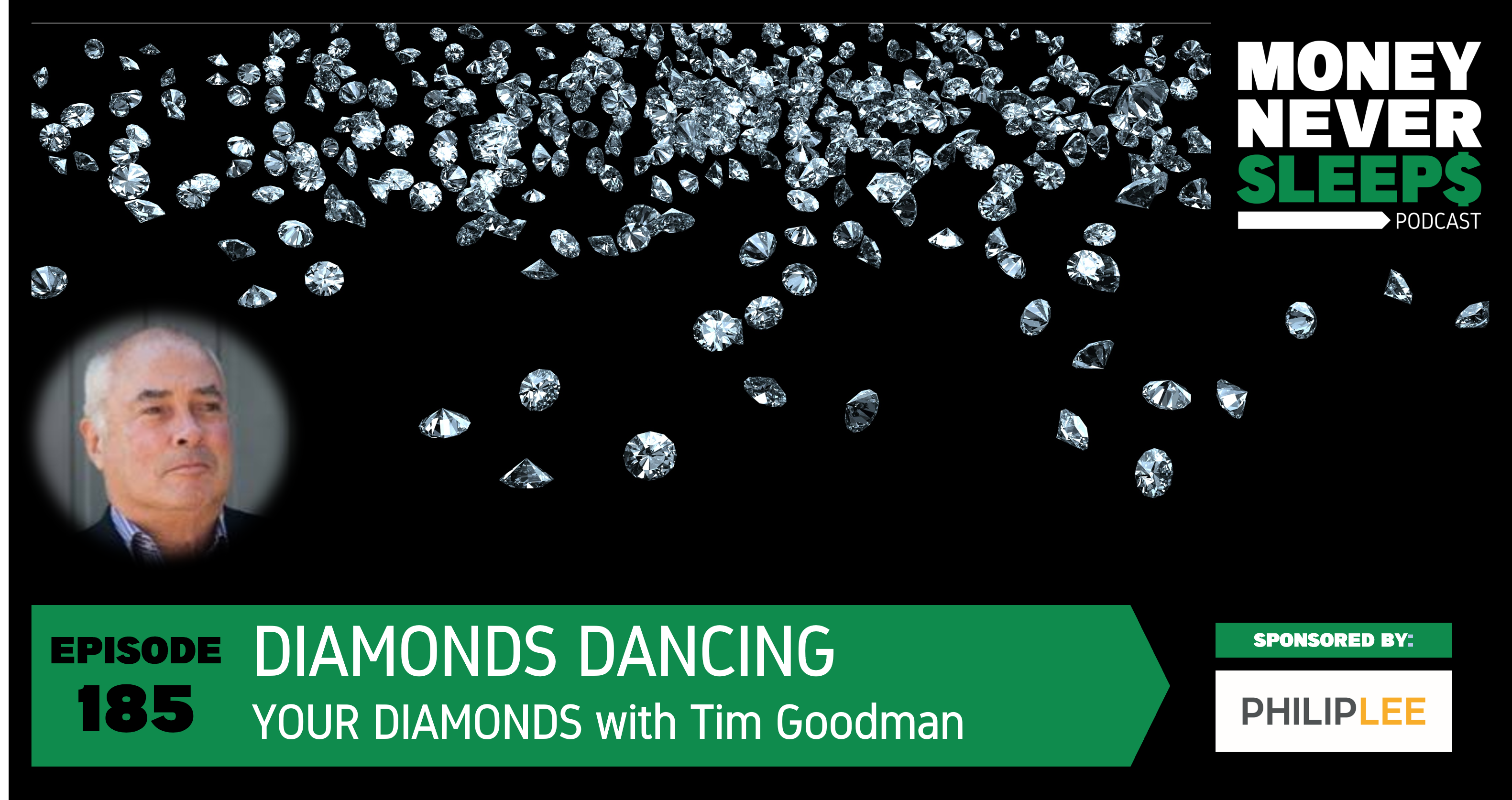
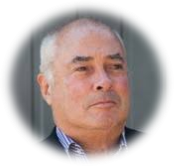
Tim Goodman is the founder and CEO of Your Diamonds, an ecosystem enabling the diamond industry to solve old-world problems through digital technologies and Web3.
This episode of MoneyNeverSleeps is sponsored by Philip Lee, one of Ireland’s fastest-growing corporate law firms and expert advisors at the heart of the Dublin and London start-up, fintech and crypto communities.
Your Diamonds are the eighth of the founding teams forming the Launchpool Web3 Techstars Accelerator Class of 2022 that we’ve got on the show over the next month.
In this episode, Tim Goodman talks with Pete Townsend about:
- Having diamonds flowing through his veins
- Scaling by surrounding yourself with smart people
- Cashflow finance as the problem to solve in the diamond industry
- Building fintech first before moving into DeFi (decentralized finance)
- Providing a venue for lenders and borrowers to negotiate
- Creating scalability by pairing NFTs as digital twins of real-world assets with smart contracts
- Letting nature work out the ups and downs of crypto markets
HIGHLIGHTS:
Tim Goodman on getting started in the jewelry business:
“I've got diamonds flying through my veins. I come from a family that founded a jewelry business in colonial Sydney in 1864, and my uncle was the last diamond merchant. He died about 15 years ago.
“I started out sweeping the floors and cleaning the lavatories in an auction business in Sydney, and I guess it took about 30 years, but I ended up owning and operating the largest art and jewelry auction enterprise in the Southern Hemisphere encompassing brands like Sotheby's Australia, Bonhams and Goodman, and the license agreements with their head offices.
“The jewelry business was something that I was always focused on and I employed other people for art collections, cars, coins, stamps, music and other memorabilia. But I was always very closely associated with the jewelry business as that had been my heritage.”
Tim Goodman on driving earlier lessons learned into the Your Diamonds business:
“I've been involved with the launch and operation of numerous online businesses. Originally, with art, I had a couple of failures due to technology issues - failures that I learned a lot from. In recent years I realized that if I gathered a really good team around me, like I did back in the day when I had the auction businesses, then I would succeed.
“So, in the last 12 months we've raised some seed capital and we've built five really cool apps for the diamond industry, all around diamond pricing, benchmarks and measurements of market sentiment, basically providing information for the diamond industry.
“The thing that I learned in my last career was that to scale, you must surround yourself with very good people. You can't be great at everything. We all know that. So, if you're going to scale and launch into areas to take market share from your competitors, you must surround yourself with the very best.
“These people have been absolutely vital to get Your Diamonds to where it is today.”
Tim Goodman on cashflow finance as the problem to solve in the diamonds industry:
“There is a massive problem in the diamond industry that’s been evolving over some years: cashflow finance is very difficult to obtain.
“The traditional banks have reduced their exposure to the diamond industry from $16 billion to $8 billion per annum in recent years. The mid-supply chain operators, of which there are many thousands, are finding it very difficult to fund their cash flows.
“So, we have conceived a concept whereby the borrower, a diamond merchant, can use the very thing that the merchant is borrowing the money to acquire - a diamond - as collateral for a loan. It just makes common sense and it's like a diamond mortgage.
“I struggled for about 18 months to work out how to do this, and then in October of 2021, I came across blockchain technology, and I totally immersed myself in it.
“But all the projects out there focusing on the digitalization of real-world assets in preparation for trading them, they lack valuation engines. They also lack an understanding of the valuation and sale of secondhand valuable assets. And, so lucky me, these are the things that I understand because of my 40-year career.”
Tim Goodman on creating digital twins of real-world assets with NFTs (non-fungible tokens):
“You create a digital twin of the asset and the blockchain-related process enables this to be automated. And when you have automation, you get scalability. NFTs are misconceived at the moment because the world thinks non-fungible tokens are these mad things.
“The true value of an NFT is the ability to create a digital twin of any asset that enables people to actually trade that physical asset with all sorts of good things. One of them is the history of that asset, as you can track and trace its history. The second thing is that you can attach that NFT to a smart contract and then the world opens up with so many options.
“Not only does the NFT give you provenance and traceability, but it gives lenders the ability to obtain security, because the NFT is attached to a smart contract.”
Tim Goodman on what Your Diamonds looks like at scale:
“So, you've got a borrower, and you've got the lender - people who want to get a return on their [liquid] assets, and at the moment, they're not getting a return. The borrower is a diamond merchant who wants to buy a diamond from a third party.
“We're creating a place where lenders and borrowers can negotiate a deal along with the terms of the loan. It will be like a stock market order book, and once there's agreement, that triggers the next steps.
“Firstly, it triggers the lender to stake a stablecoin into a liquidity pool. Secondly, the auditor - a human auditor - takes possession of the diamond and checks it out, and parties undertake KYB processes (know-your-business). Thirdly, an insurer enters the frame like Lloyd's of London - a species insurer - who provide insurance against default.
“Once the auditor checks all aspects of the borrower as required by the diamond collateralized loan protocol, then the loan funds are transferred to the borrower. Then the NFT (evidencing title to the diamond) is then attached to the smart contract (representing the loan agreement) and the diamond is handed over to the borrower.
“The NFT is in the name of the lender until the completion of the smart contract, so the lender has title to the diamond until such time that the lender completes the contract. If the lender defaults, then the species insurer provides the lender with cover against not being able to recover the collateral if the borrower has defaulted.”
Tim Goodman on the bigger vision of applying the Your Diamonds concept across multiple asset classes:
“There is no reason why we can't apply this to collectors’ cars, wine, coin, stamps, art and other weird things like water rights and carbon credits, providing there is a marketplace for that asset, whether it be a spot market or a semi-spot market, and the ability for us to create a valuation engine based on those markets.
“This concept could apply to shiploads of petroleum, shiploads of gas - anything that somebody needs to borrow money against to buy or to trade.”
Tim Goodman on bringing it all back to real life:
“I think it was Confucius who once said that if you choose a job that you really love, you'll never have to do another day's work in your life. I work 7 days a week, and I punctuate that with a bit of surfing, but even that gets in the way. It's full-on and I'm 69 years old, but I feel like I'm 29 years old - it just makes me happy.”
LINKS:
Connect with Tim Goodman and learn more about Your Diamonds
Episode title inspired by ‘Diamonds Dancing’ by Drake & Future
Leave a review and subscribe on Podchaser| Apple Podcasts | Spotify| Google| Overcast
Check out our MoneyNeverSleeps website
Follow MoneyNeverSleeps on Twitter
Follow Eoin Fitzgerald on Twitter
Follow Pete Townsend on Twitter
Get in touch at info@moneyneversleeps.ie
--- Support this podcast: https://anchor.fm/moneyneversleeps/support
0:11 Hey, there on Pete Townsend, and this is money, never sleeps. We look inside the minds of entrepreneurs, and at the crossover of startups, Enterprise Finance, technology and Life. As We Know It, This episode of money never sleeps is sponsored by Phillip Lee one of Ireland's fastest growing corporate law firms and expert advisors at the heart of the Dublin and London startup fintech and crypto communities. On the show this week, we've got I'm Tim Goodman and I'm the founder and CEO of your diamonds.com, your timings the platform, enabling the diamond industry to solve old world problems through digital Technologies and web three. Your diamonds are the eighth of the founding teams forming the launch pool with three textures, accelerator class of 2020 to that we've got on the show of the next month. In this episode.
0:53 I talk to Tim about having diamonds flowing through his veins scaling by surrounding yourself with smart people cash. Flo finances a problem to solve in the diamond industry. Pairing. N ftes is digital twins of real-world assets with smart contracts and letting nature take its course to work out the ups and downs. The crypto markets, all right here on money. Never sleeps. Tim, listen, I've been to Australia. Did I tell you that before? No, yes I spent a month in Australia back in February 2006. Traveling from Sydney up to Townsville incorrupt near Karen's and then off to Alice Springs and back down to Sydney through Melbourne. And and then took off for Singapore after that. But I did stop in your place of residence Byron Bay for a couple of nights.
1:45 Yeah, great. I think it's It's wonderful that you did that. You'd have a little bit of knowledge about the Australian culture. Absolutely. Absolutely. And having you on this program for the last couple of months Tim has brought it all back. So thank you. But just to get started, why don't you bring us through your back story and how you got to this point where we're sitting here today? Having this chat will play it. I've got diamonds Flying through my veins. I come from a family, that founded a jewelry business in colonial Sydney, in 1864 and my uncle was the last diamond. He died about 15 years ago. I started sweeping the floors and cleaning the lavatories in an auction business in a in Sydney. And I guess I took about 30 years, but I ended up owning and operating the largest Art & Jewelry auction Enterprise in the southern hemisphere encompassing Brands, like celebes, Australia, bottoms and Goodman and the license agreements with their head offices. And, and I think that at the jewelry business was something that I was always focused on.
2:51 I am employed other people to do art, collectors cars, coin stamps, music memorabilia Etc. But I was always very closely associated with the jewelry business as that had been my Heritage, all right? And what brought you to the point of saying, hey we're going to get your diamonds going and off the ground. What was it that happened? Over the last few years where you said, we're going to get this. Look after doing numerous mergers and Acquisitions and the establishment of new businesses. I sold all my auction houses to management buyouts and I took some time off and then I couldn't wait to disrupt the hell out of the business that I've been in all my life.
3:36 And that led me to online auction products, and services way back about 10 years ago and I've been involved with the launch And operation of numerous online businesses. Originally with art I had a couple of failures due to technology issues failures that I learned a lot out of and in recent years, I realized that if I gathered a really good team around me like I did back in the day when I have the auction businesses, then I would succeed. And so the last 12 months, we've raised some seed capital and we've built five really cool apps for the die.
4:17 Need to Street all around. Diamond pricing benchmarks, and measurements of Market sentiment, providing information. Basically for the the Diamond industry, very good. And you said just there that building your team around, you was one of the big Lessons Learned From the different Ventures that you've been through in the past. Maybe talk a little bit about that and how you've assembled your team here. Look. The thing that I learned in my last career was in order to scale, you must surround yourself with very good people. You can't be great at everything, we all know that. So if you're go to scale and launch into areas to take market share from your competitors, you must surround yourself with the very best and these people have been absolutely vital to get your diamonds to where it is today. And you've got this, like you said, it's collection of fintech apps.
5:17 But can you tell us a bit about your diamonds as a decentralized finance platform? And where that's all headed? Look, I must say the most exciting Venture that I've ever launched or been involved with is the concept of decentralized Finance in the diamond industry. There is a massive problem at the moment in the diamond industry, or it's not just the moments been evolving over some years. In that cash flow Finance is very difficult to obtain the traditional banks have reduced their exposure to the diamond industry from Sixteen billion to 8 billion per annum in recent years and the mid a supply chain operators of which there are many thousands are finding it very difficult to fund their cash flows. So we have conceived a concept whereby the borrower A diamond Merchant can use the very thing that the borrower is borrowing. The money to acquire.
6:20 That is to say a diamond as collateral for a loan. I mean, it just makes common sense. It's like, a dive at all garage and I have struggled for about 18 months to work out how to do this and then at a moment, did I think it was October last year, I suddenly, by chance came across some editorial in some me. Media about blockchain technology and suddenly I realized I had the answer to all my problems. This blockchain technology was going to solve the problem and and and I just became totally immersed in the whole concept like to learn fast. I'm still learning.
7:04 Thank you, two textures to, as to how we can make this work. And I'm glad to say that we've when And we my colleagues and I have have really Advanced a lot in the last four to five weeks on the techstars program. One of the problems has been that all the tech that's out there at the moment, all the projects, the technology that's out there at the moment is lacking in a couple of things that all the tech and projects out there with regard to the digitalization of Assets in preparation for trading them, they lack valuation engines.
7:48 They also lack an understanding of the, the valuation and sale of second-hand Goods secondhand valuable assets. And, and so lucky me, they're the things that I understand because of my 40 year career. And so, I'm applying my experience to the this Tech that Available and I cannot tell you how exciting is because it just solves all these problems that I used to have in my previous career and I'm being helped with some of the some really good people that I mean, for example, I discovered a blockchain developer, I'd been searching the globe. I did a Google search, I gave up. I did a Google search.
8:39 A guy came up who was really interesting And anyway, we started communicating turns out, he lives down the road. Unbelievable, and so, he has been a great addition to the team. Yeah, shout out to span. I chatted with him as well as good guy. I can hear it, in your voice, Tim your conviction with this, and it reminds me of founder. I know, well, here in Dublin, shout out to Greg Chu from qbq. Greg started his vision in 2002 or what he wanted to build, and the Wasn't available. Blockchain wasn't a thing in 2002. He spent 2002 to 2004, trying to figure this out, and then packed it away, mothballed it for 10 years, 12 years even, and then when he saw a certain incantation of blockchain, take hold, and I think it was 2017 when he was looking at one of the protocols specifically that he saw.
9:32 Wait a second. This might do the trick. That's where he went all in and has been pursuing the qbq vision of his with conviction for the last number of years. And you know, the conviction in your voice is is it a similar thing? And that this was a problem. You always wanted to solve this liquidity Gap in the market when it comes to financing, this period between the auction and the actual retail sale. A diamond is something you always wanted to solve and was just killing you as a problem. And then finally, the technology was there that you you came across Ross. Yeah. Look plate by Family lent money for Generations, using jewelry as collateral. I used to do it, when I had my auction house, it was called a cash advance Sotheby's and Christie's. Do it, I'd have done it for years. However, this concept is not scalable, it's all manual. And so what blockchain has done its enabled you to create a digital twin of the asset and because the block And related process is I enabled this to be automated and when you have automation you get scalability.
10:43 So that's the difference and and and I find it very exciting because I'm going to mention non-functional tokens, non fungible tokens misconceive died. The moment the world thinks non-functional tokens are these mad things and supply and demand has gone crazy and they fetching big money. I call that the Tulip boom of Amsterdam in the the it was the 17th century in the 1600s those. N FTS have no value, except that collectors want to buy them and they bring a lot of money. The true value of an NF T is the ability to create a digital twin of any asset.
11:25 Now, that enables people to actually trade that physical asset with all sorts of good things, one of them is The history of that asset, you know, it's track and Trace its history. The second thing is that you can attach that NFC to a Smart contract and and then the world is over ends up with so many options. It's it's fantastic. That's the future of the nft and, you know, you and I are old enough to remember our fathers and grandfathers would say where they did a deal, they'd say it goes with the original paperwork, you buy a car painting. You buy a piece of jewelry, it comes with the original paperwork, well, the nft is the original paperwork of the old day.
12:11 And and so that's, yeah, that's where I see it going. Hey, everyone, this is Pete. Let me tell you about the folks at Phillip. Lee few years ago is that my first Venture Capital industry dinner in Dublin and honestly I felt a bit lost. I bumped into Andrews is Ali. One of the partners at Phillip Lee. You bought me a pint. Introduced me to the team and they took me under their wing. That take you under their wing approach has been what I've heard consistently from fintech. And crypto startups who I know have worked with Phillip Lee and Dublin in London to help them wrap the right legal framework around their business, fundraising and Regulatory needs, and I can't recommend them enough, get in touch with a team at Philip lead. IE or on money.
12:51 Never sleeps. That IE /, Phillip Lee to learn more. You can see up on this wall behind me, that's an old map of Boston from. I think, definitely the 19th century, and I have stored behind that frame that you see up on the wall. There, there is an envelope and inside that envelope is the original paperwork, fantastic. But we'll do. When we start, you will be able to ask us to create an NFC of all the original paperwork that you You can attach to the ownership of that map and whatever you sell it.
13:35 You can save. It comes with the original. Paperwork is the nft. Where do you want it? Yep. Absolutely. And big question, how do you solve that link? How do you, how do you create that indelible link between the physical asset and the nft as of right now? If I lose that envelope I've got a problem but you know that that to prove When that envelope becomes an mft digital work rather than paperwork, right. How do I make sure that that n of T and that map that antique map up on the wall behind me that those two are connected forever. So it looks really good. Comment paperwork, the original paperwork naughty, the state of the time gets lost and then has a detrimental effect to the value of the object with regard to your map. If a 10 ft is created, it sits in your way. Wallet or perhaps, there are circumstances where you have your a map collector and you've got a deal of that. You buy your maps from you, may wish to ask your dealer to keep your nft in the wallet and so if you've got it in your wallet well then you can't lose it which obviously possible and we all know that things can happen with regard to wallets and access to them.
14:54 But generally speaking you can you know the that when you die and Children go g. That map's worth a lot of money. Then hope you in your will you've given them access to your wallet? They can then provide the auction house, whoever it is that sells it with that nft. Absolutely. And let's move to the collateral side and think about all this as collateral rate. How does the lender have faith? That that nft that they're using to secure the loan is actually linked to a quantity of Diamonds or I will. Look at this is I could speak for now. This, but I'll give you a three minute summary. So you've got a borrower and you've got people that have assets and they want to lend.
15:41 They want to get a return on their assets and the moment they're not getting one. You're getting a pool one. The borrower is a diamond Merchant and he has diamonds in his safe or he wants to buy a diamond from the third party. So we're creating a place where lenders and borrowers can negotiate a deal. They'll be the, the terms of the loan will be negotiated, so it'll be like a stock market book, you know, buy/sell book, and once once there's agreement then, that tree is a bunch of stuff. Firstly, it triggers, the lender, all all lenders. Two steak stable coin into a liquidity pool.
16:23 Secondly, the an auditor so human audits takes possession of the diamond and checks it out. And there's KYB on the parties, thirdly, an insurer enters, The Fray Lloyd's of London, a species, insurer provides insurance against default once the auditor checks, all aspects of the borrower, As required by the diamond, collateralized loan protocol, then funds, the loan funds are transferred to the borrower and the the nft is attached to the smart contract, which has been agreed. And completed the goods, are then handed over to the borrower, and the nft is in the name of the lender until the completion of the smart contract.
17:16 So the lender has Has title to the goods until such time, that the lender completes the contract in the event. The lender defaults, then the species Insurance provides, the lender with cover against the lender not being able to recover the collateral. If the borrower has defaulted I'm with you, I'm with you and the walkthrough of all of this 10 points to the fact that behind the scenes decentralised Finance can be very complicated. But the key is that you are abstracting that away from the End customer and that all the customers sees is and and experience that.
17:56 Hopefully, they're delighted with bright. That's I think that's the target of what you're aiming for you. Yeah. Look, the the borrower is a middle-aged Mark in the The diamond industry he or she unfortunately mostly he in this business he just wants the money equally W Fiat and so that's no problem. You know, the stable coins are converted to Fiat. So he just gets his money. The lender is as cash or crypto, and they convert the stable coin and put the liquid equal. We can have several liquidity pills for different lending appetites. So the three components of the liner debt-to-equity, ratio, interest rate, and And and so they'll be different pools for different scenarios.
18:41 Some, some pools will be fixed. Some pools will be variable. I mean, he, it is just a classic beautiful blockchain version of what happens in the old world, the old world, I keep calling it a Nazi idea to foundational. Technology to be able to bring the old world into into the digital world. Is what I'm hearing. Yeah. Yes. Very good. What does this all look like? Look at scale. Tim, what does this look like when there's a critical mass of real-world acid, starting with diamonds, right? That are financed through a defy platform, like your diamonds. What does this look like? When it's when it's really big.
19:21 Okay, so that the line that the markets are bad eyesight and a half billion weight is we're going to disrupt that market but I believe we can take 10% very quickly and my colleagues agree. So one of the problems is that the That needs to be human. And so how do we scale this? So we need to have hundreds if not thousands of Auditors will already in discussions with some major Enterprises who have massive databases of diamonds including some of the big luxury Brands who have got hundreds, if not thousands of outlets. And we're going to we're going to talk about creating the Outlets of some of the luxury.
20:06 Brands to be Auditors, under a strict protocol, they will be able to use our system, to create an NF T but diamonds and luxury goods that they sell over the counter. So when you buy a diamond or a luxury good over a counter, you get an invoice and in many cases you get a valuation. Well, now, you'll be able to get an mft and the nft will be given to the buyer into their wallet if they don't have a wallet, they go. I got no idea what all that is, then the nft could be stored by the auditor rate, the retail outlet auditor and in their wallet, which will help them maintain a relationship going forward with their customer.
20:53 So the scalability is it's very big in that we believe will be able to do about a billion to one and a half billion within a very short period of time. Eric gents is heading up the execution of this with me as the former head of diamond industry and jewelry lending at ABN, Amro the biggest Traditional Bank lender in this space, in the world, to billion a year. And so we believe that we'll be able to achieve those numbers. Now, the that there is an extraordinary opportunity to apply this to many other assets and many other Industries. There is no reason why we can't apply this to collectors car.
21:36 Cars, wide coin stabs art and and other weird things like water rights. A carbon credits providing there is a Marketplace for that asset. Whether it be a spot Market or at 70 spot market and the ability for us to create a valuation engine based on those markets, then this concept could apply to them. Well, and yes, it's just Bloods of petroleum, shiploads of gas. I mean, it anything that somebody needs to borrow money against buy, or to trade, or whatever this can be applied to them. Yeah, I get it. I mean like, like we're talking about digitalizing assets, creating this, digital twin, and then using that to have this provenance between the actual physical asset and its digital twin, so that you can increase the velocity of that asset. The Orkut and you know, obviously totally get it for Diamond Market liquidity.
22:33 But when you start thinking about the process of how that is applied in the diamond market and obviously with your expertise in that space, then yeah. Clearly you can see it transferring to other asset classes as well. We'll play it. It not only does it give you Providence and traceability but it gives the lender the ability to obtain security digital security because the the nft is H to the smart contract, you can't walk into a court with an NF T and say to the judge. I want to enforce my rights to go and collect these Goods because the borough has defaulted, but you can walk in the smart contract and an NFC is basically a smart contract anyone, but it's not it's you can't print it out and go into a good say hey judge I've got a smart, I've got an area of tea, you've got to have a an old-fashioned contract and the nft simply provides all the You know, information in the old days it was called an ex-cia A and XU be an exigency all the info. So actually that's good.
23:37 The nft is like a next year to the smart contract in Old legal speak and in nature. Yes, I haven't heard that word in a while. If very good, bring it back to the Here. And Now Tim, what is the biggest challenge for 2022? Okay, so the number one challenge is funding, I've got to get funding because when we launched this, we have to scale up really fast. I want this launched and scaled up very big by the middle of next year. The Second Challenge is to build a technology. Now, I've had three guys at Building Technology, the first two father, lost a million dollars, the third one. When I realized that I needed to surround yourself with people that are a lot smarter than Than me as worked. We've built five, really fabulous apps and with the digital marketing testing we're doing at the moment. We're getting a really good response. So I am currently surrounding myself with the best people. I can find that process will continue. So I have confidence that we're going to be able to build it the tech but we are we are getting into areas that you know others have not we're treating the road in the forest. It's Place trodden on and then say it so it's but I love that I get off on it.
24:58 I love it but it is risky and it worries me. Okay. Do you feel like this is work for you? I have an obsessive personality, which some people my ex-wife, for example would argue that. That's not a particularly good trade. However in order to succeed with any Enterprise. Really will, you've got to be obsessed? You've got to be totally obsessed. I work seven days a week. I love what I do. I think it was Confucius once said that if you choose a job that you really love, you'll never have to do another day's work in your life. I love it. I think it was him. And and so I do that every day.
25:39 I work. Seven days a week. I punctuated with a surf I do. But it's surfing diving, but even that gets in the way. Why? So, yeah, it's, it's full-on. And I'm 69 years old, but I feel like I'm 29 years old and it's just, it makes me happy. Yeah, you're a young. 69 Tim. Absolutely to get last question that we asked everybody on this podcast. What is one thing that people wouldn't expect to know about? You don't tell me you're a dancer. Well, look, when I was a young man, I was a party animal, we were all You know, we're all young at some stage but you know, young at heart young, it mind, it's all relevant.
26:24 Hey, Dolly did a treehouse in Sydney. I will looking Sydney Harbor. When I was in my 20s, it was not as the party house. And in those days, I wasn't obsessed with my job. I was obsessed with other things, which I don't want to go into now. Banned in that was a different era, but as I came to the end of that decade, I fell in love with business. I connected with my Family and my uncle who was Diamond merchants and that's when everything changed. So, you know, it was sort of 30 that I really and at and it took me pretty well from the day I started work sweeping the floors and auction house in Sydney, it took me 30 years to build that company up and I had to be obsessed to do it but it was a very successful Venture so I don't know, look, people would know about me. I I happiest when I'm fly fishing or diving. And in Australia, unfortunately, diving means then confronted by sharks there.
27:25 That's about from being obsessed with business. That's my second, most enjoyable Pastime. Absolutely, yeah. Now I do a bit of scuba diving, myself and snorkeling, but it's been a long time. And the waters here in Ireland aren't very friendly to that although there are scuba diving clubs and snorkeling clubs. But the biggest first thing is to get yourself adjusted to the to the Of water, which I've done. But yeah, I think the return to scuba is next for me here. Did you ever let a Jew as a Dawes in Australia? Yes. On the Great Barrier Reef and I did see a shark. It was amazing. It was amazing. It was my wife's first time doing scuba. She had done snorkeling before when we lived in Bermuda. So, she did just kind of like a beginner class and stayed pretty close to the surface.
28:10 I went down, you know, a good. What 90 100 feet and that was pretty cool being down there and You know, I think we all know where this planet in the way it is. That thing won't be there forever. So I'm glad that I did see it when it was still there. Well, the ously I'm of the view that Coral will adjust to the side sat there that suggested at will. Yeah, I mean that's that's the other thing. My religion is nature. Everything I do is governed by Nature what's happening. Now the world with the crypto crash, the re-evaluation of Technology businesses, it's all nature, it's all predictable. Well, I predicted this, I Ooh was going to happen and but it will come down and then things will sort itself out. Nature will provide it's just like the bush. It'll all be okay.
28:55 Yep. Yep it all works out in the long run. One of the number one rules and my family's. Don't worry until something bad happens, right? Yeah. Well, even then, when something bad happens you can say Well it can't get much better so it can only get better. That's that's the way to deal with bad eyes. Awesome, awesome. We'll listen to him. It's been awesome. Having you on the show, it's been great having you on the show. Thank you so much for joining, really, looking forward to seeing you back here in Dublin in less, than two weeks time, which is going to be amazing for the last two weeks to finish the program. So looking forward to that and we will be chatting to you very soon. It's a spade and saves to take Stars.
29:36 It's been the most extraordinary experience. Awesome. Love to hear that Tim. Thanks so much. That does it for this week, folks. Thanks to Tim Goodman for opening up his mind. Help us figure out why he does what he does. Let's get in touch with Tim and learn more about your diamonds. Are in the show notes on our website money, never sleeps that I eat. So, check us out online. Also, thanks to Conan Brophy, from create sound for mixing and editing. This episode Conan is an excellent medium and to get in touch with when you're thinking about launching your own podcast. As for me, I'm an early stage, startup investor and advisor focused on where fintech meets crypto and crypto meets web 3. Like to talk to you about your business, drop me a line on info at money. Never sleeps that I eat finally till next time.
30:18 Thanks for listening. See you