Spotify
 Apple Podcasts
 Amazon Music
 Overcast
 Castro
 PocketCasts
 Castbox
 RadioPublic
 RSS Feed
 You Can't Code Your Way Out of Risk | Amor Sexton | Blockdaemon [EP. 314]
![You Can't Code Your Way Out of Risk | Amor Sexton | Blockdaemon [EP. 314]](https://s3.us-west-1.amazonaws.com/redwood-labs/showpage/uploads/images/3ebbcd30-f24c-465f-bf42-bff25238fd35.jpg "You Can't Code Your Way Out of Risk | Amor Sexton | Blockdaemon [EP. 314]")
In the last few weeks, Drift Protocol and Kelp DAO lost $577 million between them. Neither one was a code exploit. Both were operational and governance failures.
That's the conversation Pete sits down with Amor Sexton to have on EP 314 of MoneyNeverSleeps — and it's the conversation the industry isn't having loudly enough.
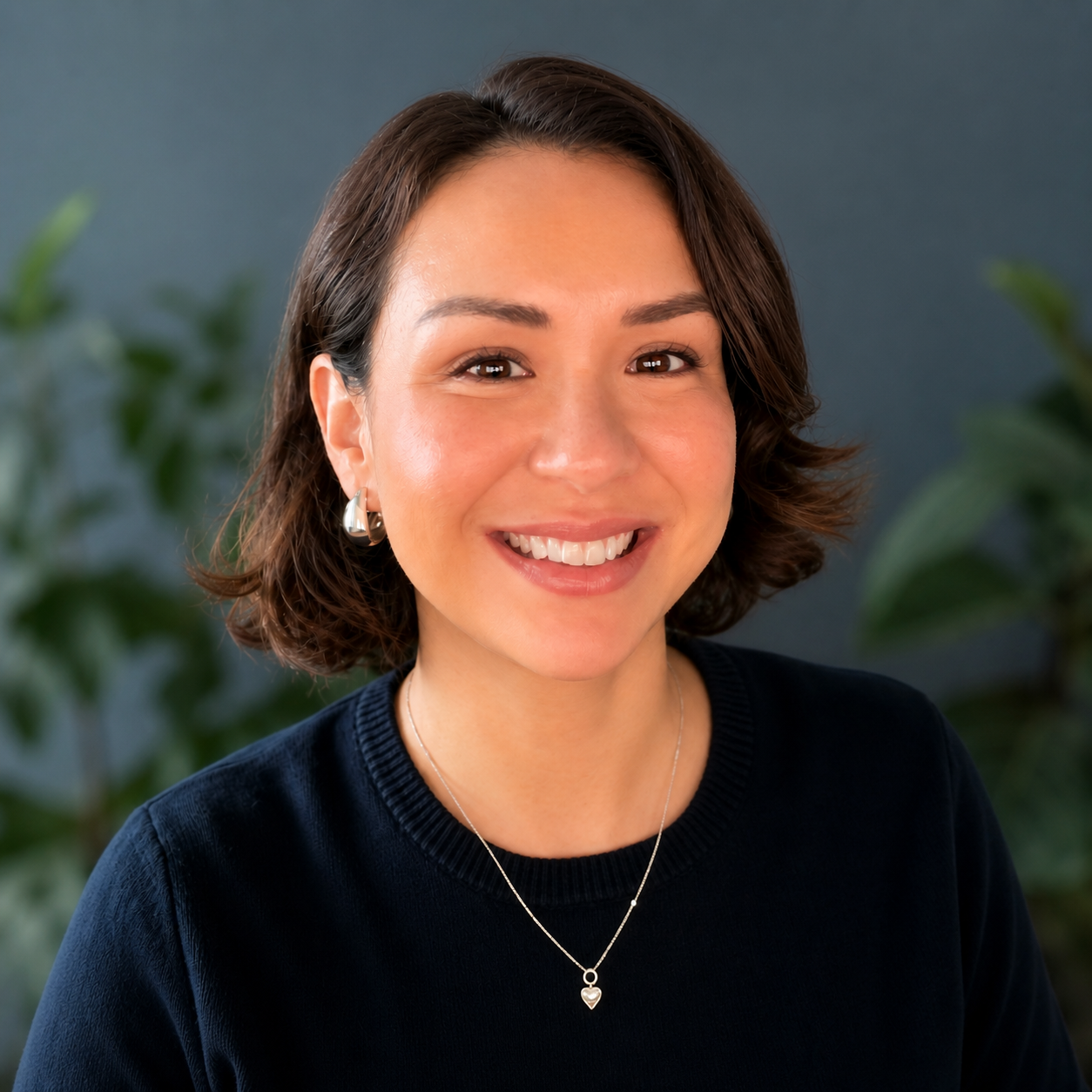
Amor is Chief Operating Officer at Blockdaemon, one of the world's leading institutional-grade blockchain infrastructure providers. She was last on the show in October 2022 (EP 193), back when she was Head of International Operations at Blockdaemon, talking about how institutional client expectations of resilient processes were going to drive blockchain adoption. Three and a half years later, the industry just got an extremely expensive lesson in exactly that thesis.
The reframe: this isn't security, it's governance
The headlines on Drift and Kelp called them hacks. But neither attack involved breaking the code. Drift was social engineering — months of attackers posing as a quantitative trading firm, building trust with Drift contributors at conferences, eventually getting Security Council members to pre-sign transactions that handed over admin control. Kelp was an infrastructure configuration choice — a 1-of-1 LayerZero verifier that LayerZero itself had publicly recommended against, exploited via RPC node compromise and a DDoS to force failover.
In both cases, the smart contracts did exactly what they were told to do. The compromise happened at the human and operational layer.
As Amor puts it on the episode: "You can't just code your way out of some of this. The technology can mitigate some risks through decentralization, but you still have to make the right decisions."
What the industry isn't talking about
Amor's central argument is that the conversation in DeFi has stalled at compliance. And compliance is just one slice of risk — a specific question about what happens if you don't follow a particular rule. Real risk management is bigger: governance, technology risk, product risk, market risk, counterparty risk. The kind of decision-making architecture that institutional players take for granted, and that DeFi protocols are still piecing together in public, with real money on the line.
She references Peter Bernstein's Against the Gods — the book about how the modern economy was built on humanity's ability to calculate, model, and price risk rather than treating loss as the will of the gods. Markets that can't calculate and mitigate risk don't grow. That's the foundation Amor is asking DeFi to build on, before the next $300 million event.
Speedrunning the guardrails
Pete brings in two voices to test Amor's framing.
The first is Alejandro Gutierrez of Solana Superteam Ireland, who Pete had on the show two weeks earlier. Pete and Alejandro landed on the same two words for what's missing: governance and guardrails. Alejandro made the point that no institutional player managing even a quarter of that money — say $150 million — would have run with the operational framework Drift or Kelp had.
The second is Pluto, a veteran of THORChain and AirSwap now building Harbor (a native asset DEX), who appeared on Castle Island Ventures' On the Brink podcast with Nic Carter. Pluto's line: "Everything that TradFi has built in terms of the circuit breakers, we're just speed running, relearning those things in crypto."
Amor agrees — and pushes the point further. The temptation, she says, is to hire a few TradFi CISOs and call the problem solved. But TradFi-level security people don't have a clue what they're getting themselves into. The actual answer is collaboration: ongoing, iterative, with both skill sets in the room — people who've operated guardrails for forty years, and crypto natives who understand validator networks, MPC, and cross-chain messaging.
The detail that stops you cold
The most arresting moment in the episode is when Amor turns to the Kelp configuration. The vulnerability wasn't unknown. It had been publicly documented since January 2025. And yet — by Amor's read of the data — something like 47% of operators chose that single-verifier configuration anyway.
It wasn't ignorance. It was a choice. Either operators didn't assess the risk, or they assessed it and decided it wasn't important enough to address. That's not a technology problem. That's a culture problem.
The takeaway: three governance questions
Pete closes with the question every founder, operator, and LP should be sitting with: what are the two or three governance questions almost nobody is asking right now?
Amor's answer:
- Who actually makes decisions? Get an inventory of all decisions that can be made unilaterally by the protocol. Look beyond the governance token and the DAO structure to the humans who hold the keys, who control the multi-sig thresholds, and what the accountability framework around them actually looks like.
- Are named individuals signing off on risk assessments? When a configuration decision like Kelp's gets made, was it an actual decision someone owned — or was it a decision-by-default, where no risk assessment ever happened? Single points of failure should be identified and signed off, not stumbled into.
- Is there a culture of risk assessment? Not a tick-box exercise. A genuine, continuous-monitoring, vigilance-first culture that can withstand a sophisticated attacker willing to spend months exploiting your vulnerabilities. Because that's what happened at Drift.
It's not a sexy answer. Risk committees aren't sexy. Named decision-makers and continuous monitoring frameworks aren't sexy. But they're what stops the next $300 million event.
As Pete puts it near the end of the conversation: "It's amazing that with all of this technology, it comes back to people."
Amor's response: "It always does."
In this episode
- Why Drift and Kelp weren't really hacks — and what that distinction matters for
- Compliance as a subset of risk, not a substitute for it
- Against the Gods and what modern economies were built on
- The Web2/human layer compromise that exploits a legitimate Web3 feature
- Why Alejandro Gutierrez and Pete agree it comes down to governance and guardrails
- Pluto on Castle Island: speedrunning the circuit breakers TradFi already built
- Multi-party computation as a technical solution that still needs governance around it
- The Kelp vulnerability that 47% of operators chose anyway
- Three governance questions every DeFi protocol and LP should be asking right now
- Why it always comes back to people, not code
About Amor Sexton
Amor Sexton is Chief Operating Officer at Blockdaemon, the leading institutional-grade blockchain infrastructure platform. Amor was previously Head of International Operations at Blockdaemon and has held senior operational and risk-focused roles across the digital asset industry over more than a decade.
Connect with Amor: LinkedIn: linkedin.com/in/amor-sexton
About MoneyNeverSleeps
MoneyNeverSleeps is hosted by Pete Townsend, GP at Norio Ventures. Sharp riffs, big ideas, and real insights from smart people in crypto, fintech, AI, and onchain finance.
Connect with Pete:
LinkedIn: https://www.linkedin.com/in/petetownsendnv/
X: @petetownsendnyc
Norio Ventures: https://www.norioventures.com
Subscribe to MoneyNeverSleeps: YouTube · Spotify · Apple Podcasts
Referenced in this episode
- EP 193: Amor Sexton on Blockdaemon and Web3 infrastructure (October 2022)
- EP 312: Alejandro Gutierrez of Solana Superteam Ireland
- On the Brink with Castle Island Ventures, Nic Carter in conversation with Pluto (Harbor)
- Against the Gods: The Remarkable Story of Risk by Peter Bernstein
Chapters
00:00 Cold open
00:24 Welcome back to MoneyNeverSleeps
00:55 $577M, 18 days, no code exploit
02:00 Compliance is a subset of risk
03:15 Guardrails and governance
04:30 The Web2 layer compromise
05:45 Speedrunning what TradFi already built
07:30 Why 47% chose the risky configuration
09:00 Three governance questions every protocol should answer
12:30 It always comes back to people
13:30 Sign off
#MoneyNeverSleeps #Blockdaemon #DeFi #Crypto #AmorSexton #Governance #RiskManagement
(0:00) Pete Townsend: This isn't a case of someone please call security. It's a case of someone please call the risk committee. Some of these organizations don't have risk committees.
(0:07) Amor Sexton: You can't just code your way out of some of this as well. The trust in the technology and the ability for the technology to mitigate some risks, for example, through decentralization is definitely there, but you still have to make the right decisions.
(0:21) Pete Townsend : Welcome to Money Never Sleeps. Sharp riffs, big ideas, and real insights from smart people. I'm Pete Townsend, GP at Norio Ventures. Let's go. So my guest today is Amor Sexton, chief operating officer at Blockdaemon.
(0:38) Pete Townsend : She was last on the show in October 2022, way back on episode one ninety three, and we were talking about how institutional client expectations of resilient processes were going to drive blockchain adoption. Amor, welcome back to Money Never Sleeps.
(0:55) Amor Sexton: Thank you. Good to be back.
[00:00:57] Pete Townsend: Wonderful. [00:01:00] So, in the last few weeks, Amor, you're familiar with Drift and Kelp, DeFi protocols, platforms that lost $577 million between them. Neither one of them was down to a code exploit. They were actually operational and governance failures. How does it feel to be three and a half years early on the exact thesis the industry just got an extremely expensive lesson on ?
[00:01:28] Amor Sexton: Yeah, well, to be honest, not great. I don't think it feels good when you're predicting a situation where anyone suffers loss. Yeah, I'd, I'd much rather be able to predict the price of crypto . I think that would be, that would be something I'd be, I'd be more proud of. But you know, again, I think it's something that is underplayed as an industry.
[00:01:48] Amor Sexton: I said it three and a half years ago, and I'm still saying it now. As an industry, we don't talk enough about risk management. We spend a lot of time talking about compliance . But risk is really, and the ability to [00:02:00] calculate risk is really what determines capital investment into an economy. And you know, I was just telling you earlier before we started, I remembered I'd read this book, "Against the Gods" by Peter Bernstein, and he argues that the ability to actually recognize that the future's not just a whim of the gods.
[00:02:20] Amor Sexton: You know, in ancient times, economic catastrophic loss was just divine will or, or, or misfortune. But once people actually understood that you could calculate risk, you could calculate probability, you could model it, you could price uncertainty in, and all of a sudden it changed the way that economies worked, and it brought about the modern economy.
[00:02:39] Amor Sexton: You know, everything from insurance against risk, the ability to hedge it and transfer it. if markets can't calculate and mitigate risk, they won't grow. And I think that's, again, coming back to this concept that governance and risk management is so important for institutional adoption in, in, you know, whether it's, it's DeFi or just crypto more broadly.[00:03:00]
[00:03:00] Amor Sexton: I think taking some lessons and looking back at how the concept of risk mitigation has evolved
[00:03:05] Amor Sexton: will be really helpful for the industry.
[00:03:07] Pete Townsend: Yeah, absolutely. This isn't a case of someone please call security. It's a case of someone please call the risk committee. And some these, some of these, organizations don't have risk committees.
[00:03:17] Amor Sexton: They don't. I mean, I think even just the concept of, or the terminology and the nomenclature can be a little bit confusing in the industry. So people talk about compliance, and they think that's everything that you need to know. But, you know, compliance is a subset of risk.
[00:03:34] Amor Sexton: Managing a company and managing risks is so much bigger than that. It's, it's about governance, so the decision-making architecture that you have to be able to manage risk. It's about, you know, technology risk. It's about product risk, market risk, counterparty risk as we, as we saw with, you know, the whole FTX incident as well.
[00:03:53] Amor Sexton: So I think we just need to mature the conversations in the industry and, acknowledge that you, [00:04:00] you can't just code your way out of some of this as well. The trust in the technology and the ability for the technology to mitigate some risks, for example, through decentralization, is definitely there, but you still have to make the right decisions.
[00:04:14] Amor Sexton: And we just need to mature the conversation as an industry, stop talking about compliance at every single panel that I get asked on, um, and talk a little bit more about how we bring some of the useful things that the TradFi industry has developed over the years into, into this new industry as well.
[00:04:33] Pete Townsend: Definitely. When I had Alejandro Gutierrez, our friend, on the show a couple of weeks ago We both landed on the same two words, and you're saying one of them governance, the other one is guardrails.
[00:04:43] Pete Townsend: What he suggested was that no institutional player managing even a quarter of that money, say 150 million, would've run with the operational framework that Drift or Kelp had. What is that gap?
[00:04:57] Amor Sexton: It's not just about the technology and the [00:05:00] Web3 layer, it's looking at the attack surface more broadly . Or the vulnerabilities, I guess, because it's not just about attack, although in these two instances it was.
[00:05:08] Amor Sexton: In both of these cases, what I found really interesting is that it was the, the Web2 or the human layer that was compromised, but then the compromise was of a very legitimate specific Web3 feature, in both cases.
[00:05:25] Amor Sexton: I think it's about recognition that making decisions beyond just the technology itself and looking at the people, the processes, and looking at it as an entire framework. I think that's the main difference that people need to make. You, you can't just rely on, you know, you can't just rely on a governance forum through governance tokens.
[00:05:51] Amor Sexton: You actually have to have more of a process around it. And humans are the ones that make decisions at the end of the day, even when it comes to setting up technology. [00:06:00] So looking at governance of humans and, and the role that humans play in the process, I think is really important and For me, sometimes in this industry, there's such a focus on trusting the technology without the recognition that humans are the one that-- humans are the ones that are controlling the technology at the end of the day.
[00:06:17] Amor Sexton: And so do you actually have that culture in your company amongst your people as well? I think that's a really important part of risk management, that's underplayed. It's not just ticking the boxes.
[00:06:27] Pete Townsend: Yeah, definitely , i was listening to the "On the Brink" podcast that Castle Island Ventures does, yesterday. And last week they had on a guy called Pluto, and he's a veteran of DeFi cross-chain systems.
[00:06:39] Pete Townsend: And he said this, to quote him: "Everything that TradFi has built in terms of the circuit breakers, we're just speed running, relearning those things in crypto."
[00:06:51] Pete Townsend: What does that actually look like for taking these 40, 50 years worth of TradFi operatives that are leaning on [00:07:00] a security-guided operating model to crypto natives who understand things like validator networks and cross-chain messaging? How do you get these people into a room talking to each other ?
[00:07:11] Amor Sexton: It's about making sure that the leadership of any initiative, whether it's a company or it's a, a DeFi initiative or a partnership, that you have both of those skill sets there. Because I think it's also about iteration. So for example, multi-party computation actually addresses specific risks that the TradFi industry has found different ways of addressing through more, kind of operational processes and procedures.
[00:07:38] Amor Sexton: But multi-party computation actually delivers a technological solution to that.
[00:07:43] Amor Sexton: But then at the same time, as we saw with Drift, it doesn't bring the whole solution. You still need to have that governance framework around it.
[00:07:49] Amor Sexton: So I think it's about not just a once-off knowledge sharing type situation, but a genuine ongoing collaboration between two different types of experts with iterative [00:08:00] learning, where everybody understands the value that each is bringing to the table.
[00:08:04] Amor Sexton: I think it's unfortunate that in DeFi we've seen a number of breaches or a number of issues where it's happening, but I'm definitely seeing more security experts, more risk experts, more, even more dialogue coming into this space.
[00:08:21] Amor Sexton: I, I just think it's, it's maybe, to the point that Pluto makes, the industry is moving quicker than the dialogue is moving in the maturation of the governance framework.
[00:08:31] Pete Townsend: There's enough of us in this industry now, Amor, as you know, that have one foot on each side of the river between TradFi and DeFi, and that these are the folks that can help.
[00:08:42] Pete Townsend: And it will take a good six months to really, truly identify every hole.
[00:08:47] Amor Sexton: but I think it comes down to culture again, and and a recognition that this is really important. Because, you know, with the Kelp vulnerability, what's interesting about that it is it was a known vulnerability.
[00:08:59] Amor Sexton: [00:09:00] From what I heard, it was actually posted, I think it was January 2025.
[00:09:06] Amor Sexton: So people knew what the exploit was, but still I think it was something like 47% of, of operators chose that single configuration. So again,
[00:09:15] Amor Sexton: in that situation, it wasn't that it was an unknown, risk It was a known risk and people just chose... Either, either chose not to assess it and, and, you know, built, built the mitigation into their architecture, or just accepted it and moved forward and, and didn't think it was important enough, to address
[00:09:36] Amor Sexton: And it, it's not that the single DVN architecture is a bad one. I mean, it's legitimate in that it, you know, it, it can bring some benefits, but for large flows, it wasn't the best architecture to choose. And it kinda doesn't make sense as well when you're talking about a technology that uses distributed consensus to bring security and resilience.
[00:09:58] Amor Sexton: So it wasn't really utilizing the [00:10:00] technology to its full extent. But that's where I mean, like culture, the culture amongst the people is so important, and that's what needs to change. So it's not just a knowledge transfer, but it actually needs to be a, cultural shift.
[00:10:12] Pete Townsend: Definitely, if you were running a DeFi protocol today or if you're a LP about to deploy capital into one, what are the two or three governance questions that you should be asking that almost nobody is asking right now?
[00:10:28] Amor Sexton: I don't know if almost nobody's asking them, but I definitely want to get an inventory of all decisions that can be made unilaterally by the protocol and looking at their, their independent oversight structure. So not just you, do you have a governance token and how does that operate?
[00:10:47] Amor Sexton: Because I think those decisions are different to what we're talking about here. But really digging into the role of the humans, to my point earlier my-- the role of the humans who hold the keys, who controls the multi-sig thresholds. [00:11:00] what is the accountability structure around all of them, and, how have you assessed the risk that's inherent in that framework?
[00:11:06] Amor Sexton: So I think definitely looking at who can make decisions other than just the, you know, the DAO structure, but actually who can make decisions. And I think that's really important to ask, and I'm not sure if enough questions are asked around that. Definitely I think building on from that, do you have a process of having named individuals making decisions as well and signing off on the risk assessment?
[00:11:34] Amor Sexton: So that's, for example, we talked about the DVN architecture That was either a, an actual decision that was made or it was a choice not to make a decision and, and to, to, you know, just, just build the architecture without actually doing the risk assessment. That's a failure in the process, and you need to make sure that you're asking about these decisions and remembering that the decisions and the technology, as I mentioned earlier, are still [00:12:00] humans at the end of the day.
[00:12:00] Amor Sexton: So for-- And, and especially digging in on has anyone identified the single point of failure in the architecture as well, and really honing in on, on the governance process around that.
[00:12:12] Amor Sexton: And then I think the last one would come down to what I've said a few times about the culture of risk assessment in the company. The, you know, not just an approach to tick the box exercises, but actually do you have a strong culture of continuous monitoring, of vigilance, of, building a framework that can withstand a sophisticated attacker that could take months, to exploit your vulnerabilities.
[00:12:40] Amor Sexton: And I think that that's probably the third one, really just understanding that it's about the culture.
[00:12:44] Amor Sexton: What I'm saying here is that that culture of risk assessment, that, that existence of a holistic governance framework within this, you know, the DeFi initiative, that will determine, whether or not your concerns can, [00:13:00] can, can be met and how, how, you know, secure it is for, for capital investment.
[00:13:05] Pete Townsend: It's amazing that with all of this technology, it comes back to people
[00:13:09] Amor Sexton: It does. It always, it always does. I think, it comes back to, it comes back to people, it comes back to culture and it comes back to making sure that you're not just moving really fast and evolving the technology itself, but that you're evolving your structure
[00:13:32] Amor Sexton: from a company perspective as well.
[00:13:34] Pete Townsend: Absolutely. Amor, this has been brilliant. It's exactly the conversation that the industry needs right now. Totally.
[00:13:40] Pete Townsend: Thank you so much for coming back onto the show. Always a pleasure riffing on these things
[00:13:44] Pete Townsend: with you .
[00:13:45] Amor Sexton: Thanks. It's been great to be here.
[00:13:46] Pete Townsend: And to all of you, thanks for watching and listening, and don't forget to follow or subscribe wherever you get your podcasts. It helps others to find the show, and it means a heck of a lot to me. Till next time. See ya.
[00:14:00]