Spotify
 Apple Podcasts
 Amazon Music
 Overcast
 Castro
 PocketCasts
 Castbox
 RadioPublic
 RSS Feed
 From Lean Startup to Incorruptible | Eric Ries [EP. 316]
![From Lean Startup to Incorruptible | Eric Ries [EP. 316]](https://s3.us-west-1.amazonaws.com/redwood-labs/showpage/uploads/images/aa8caf1c-8da5-481f-8874-ceb1ee2baf75.jpg "From Lean Startup to Incorruptible | Eric Ries [EP. 316]")
Pete is joined by Eric Ries, author of the New York Times bestseller The Lean Startup and founder of the Long-Term Stock Exchange, for a conversation about the invisible structural forces that corrupt even the most mission-driven companies, and what founders can do about it before it's too late.
Lean Startup to Incorruptible: Building Something That Lasts with Eric Ries
Eric Ries spent 15 years teaching founders how to build fast and learn faster. His first book, The Lean Startup, gave a generation the operating manual for getting from zero to product-market fit. His new book, Incorruptible: Why Good Companies Go Bad and How Great Companies Stay Great, asks the harder question: how do you protect what you built from the forces that will eventually try to take it from you?
In this special double-length episode, Pete sits down with Eric to pull apart the structural forces that corrupt even the most idealistic organisations, and what founders can do about it from day one.
The Founder's Wake
Eric opens with a story from the book. A thousand people gathered to celebrate a company and a founder who had been on the journey for 15 years. But it wasn't a celebration. The founder had been replaced. The mission had quietly drifted. The people who built something extraordinary were there to mourn it, and most of them couldn't quite name what they were mourning.
At the same time, Eric was on the phone with a new founder, a professor building at the intersection of AI and biology, who was asking the question that became the core of Incorruptible: is it possible to build a company that can't be corrupted? Eric's answer: good news and bad news. Good news, yes. Bad news, you've already taken steps that aren't in line with that aspiration.
What Did The Lean Startup Miss?
Pete asks the self-indictment question directly: you taught people to build, watched them win, and then watched them lose it. What did the first go-around miss?
Eric's answer: we taught people to stockpile an incredibly valuable asset - trust, mission, quality - and then left it lying around unprotected on the floor. The Lean Startup gave founders the tools to build something worth protecting. Incorruptible gives them the tools to protect it.
Financial Gravity
The central concept of the book is financial gravity, the invisible structural force that bends companies away from their original purpose as they grow and enter the orbit of modern finance. It's not about bad people, it's about systems that transmit values, not just capital.
Eric uses the metaphor deliberately. Gravity doesn't care if you believe in it. Every transaction shapes behaviour. Consistently enacted behaviour becomes internalised as values. And before long, the ghost of "what will the market think" is sitting in every product meeting — unnamed, uninvited, and enormously powerful.
The data is stark. In one Harvard study, 78% of CFOs said they would deliberately cancel profitable long-term projects to hit quarterly analyst targets. That's not individual greed. That's gravity.
Pete draws the parallel to onchain companies directly; the moment a token starts trading and the product roadmap starts bending toward token holder sentiment rather than user value. Eric's response: it's been an epidemic. The private equity restaurant test captures it perfectly: one bite and you can taste that someone optimised for extraction over quality. The people who take the cost out get rewarded. The damage to the brand gets left for someone else.
The Right Architecture
The turn in the episode, and the book, is that this failure is structural, not ethical. Good people, wrong architecture. So what does the right architecture look like?
Eric worked directly with Dario Amodei on Anthropic's Long-Term Benefit Trust, a board of trustees sitting outside the standard board of directors with special rights over AI safety decisions. It's the same structural logic as Carl Zeiss in 1885, when the company was placed under the stewardship of a foundation that permanently held the mission of the enterprise.
It's the same structural logic as Novo Nordisk in 1923, when August and Marie Krogh, a Nobel laureate in medicine, licensed insulin technology from Canadian researchers and built a non-profit foundation to hold the mission permanently. A hundred years later, that structure has protected more than $500 billion in shareholder value by preventing the for-profit company from abandoning its original purpose.
Eric's challenge to every founder who says they'll rely on good intentions: are you sure you're smarter than a Nobel laureate?
The Vatican Panel
One of the sharpest moments in the episode. Eric describes being on a panel on AI governance hosted by the Vatican - Anthropic, OpenAI, Google, Palantir, Cohere, one after the other. He looked down the line and realised: not a single one of these companies has standard governance. Every major AI lab has taken some attempt at mission guardianship. The fact that standard governance is so discredited that people building these powerful technologies consider it immoral to embody them in a standard structure. That, Eric argues, tells you everything you need to know about where conventional best practices actually stand.
The Public Benefit Corporation
The practical takeaway is the Public Benefit Corporation, a two-page filing in Delaware that most founders never make because their lawyers talk them out of it. It's not a B Corp, and it's not complicated. It's the legal tool that closes the gap between a company's stated mission and its actual enforceable purpose.
Silicon Valley Bank had a beautifully written mission statement. Their legal charter said "any lawful act or purpose." That chasm was structural, and eventually fatal. A PBC closes it. Answer.AI, Eric's AI R&D lab co-founded with Jeremy Howard, is structured as a PBC. So is Anthropic. The filing is available to any founder today.
Is LTSE Incorruptible?
Pete turns the thesis on Eric directly. You built the Long-Term Stock Exchange to solve this from the outside; new market infrastructure. You were on the bathroom floor at 3am thinking you'd chosen to die for a principle. Is LTSE incorruptible?
Eric's answer is the most honest moment in the episode. LTSE predates the book by a decade and has more conventional best practices baked into its structure than he would like. One of the ideas in Incorruptible is that it's always too early until it's too late. Once you adopt a structure, it gets harder and harder to change. But having this understanding has given him the ability to start new companies and find opportunities that a conventional understanding of profit tends to overlook.
The Guardian of the Soul
The episode closes on the concept of the mission guardian - the person or structure whose explicit role is to protect the soul of the organisation. Eric notes that people inside companies talk about their organisations having souls constantly, in the car park after the board meeting, over drinks, in the messages they send each other late at night. They just don't say it in the boardroom. Incorruptible is, among other things, an argument for bringing that conversation into the room where the decisions are actually made.
About Eric Ries
Eric Ries is the creator of the Lean Startup method and the author of the New York Times bestseller The Lean Startup, The Startup Way, and The Leader's Guide. He is the founder of the Long-Term Stock Exchange and co-founder of Answer.AI. His new book Incorruptible is out now.
Follow Eric: X | LinkedIn | The Eric Ries Show
Buy Incorruptible: Amazon | incorruptible.co
About Pete Townsend
Pete Townsend is GP at Norio Ventures and host of MoneyNeverSleeps.
MoneyNeverSleeps publishes weekly on YouTube, Spotify, and Apple Podcasts. Follow or subscribe wherever you get your podcasts — it helps others find the show.
MoneyNeverSleeps ep 316 Eric
[00:00:00] Eric Ries: We taught people to stockpile this incredibly valuable asset. They built these trustworthy companies committed to quality or committed to making customers' lives better, and then they left it lying around unprotected, piled up on the floor, and then we act shocked when someone will try to take it from you.
[00:00:17] Eric Ries: Well, yeah, no kidding. It's really valuable. The more golden the goose, the greater the temptation to butcher it.
[00:00:23] Pete Townsend: This is Money Never Sleeps: sharp riffs, big ideas, and real insights from smart people. I'm Pete Townsend, let's go
[00:00:34] Pete Townsend: my guest this week is a best-selling author of
[00:00:36] Pete Townsend: The Lean Startup. He's also founder of the Long Term Stock Exchange and two more startups.
[00:00:42] Pete Townsend: Eric Ries, welcome to Money Never Sleeps.
[00:00:44] Eric Ries: Hey, thanks for having me
[00:00:46] Pete Townsend: Awesome. Great to have you here. So for everyone watching and listening, Eric's first book taught a generation how to build fast and learn faster. His new book, Incorruptible, asks the harder question:
[00:01:00] Pete Townsend: How do you protect what you build from the forces that will eventually try to take it from you?
[00:01:06] Pete Townsend: So Eric, to get started, you open the book with a scene, a startup wake, a thousand people showing up to mourn a company that hadn't technically died yet. Tell me about that night and what broke open for you
[00:01:21] Eric Ries: Yeah, this was a crazy experience, and I wish I could say it was the only time something like this has happened to me. But actually, if you're in and around this business long enough, you'll get to have this experience, you know, multiple times. So I was, I was on my way to this event, as you say, 1,000 people gathered to celebrate a company and a founder who had been on, on the journey for like 15 years.
[00:01:41] Eric Ries: But at the same time, I was, I was in my earbud talking to a new founder. I call him just the professor to, to preserve his privacy, although I have his permission to tell the story. And he wanted to create a brand-new company, so he was asking me for advice. Now, his company was very exciting, new technology at the intersection of AI and biology, so you can imagine like maybe lots of cures to important diseases, but also maybe bioweapons and other nasty negative downsides.
[00:02:07] Eric Ries: So he wanted to really embody it in a company that would do good in the world, you know, that would make money, yes, for his investors, but also would be remembered for the advances in medicine that it had made, not the malignancy that he saw so many of his peer companies falling into over the course of his career.
[00:02:24] Eric Ries: And anyway, so I was, you know, talking to him about it, and he was telling me basically when he would talk to investors, they would treat him like in such a condescending way. Like if he said, "Well, I'm concerned about what might happen to the technology in the future," they'd say, "Oh, I guess you're not very serious about business then."
[00:02:38] Eric Ries: You know, they wouldn't, they wouldn't really engage with this question. But when he tried to recruit employees, especially he's trying to recruit senior, you know, researchers and university professors out of university labs, they're asking him much tougher questions about, "Why should I trust you that this technology is gonna be used in the way you say it is?"
[00:02:55] Eric Ries: And he would say, "But I have such good intentions." And that's not really cutting it, right? He would say, "Oh, but I, I, I, I'll, I'll resist the pressure." Oh yeah? Says who? But more importantly, they said, "But aren't we gonna be a for-profit company? Aren't we gonna have investors? What if the investors pressure you?"
[00:03:10] Eric Ries: And then he would say, "Well, I'll resist the pressure." But they say, "What if the investors fire you?" Uh-oh. Meanwhile, I'm watching people stream into this event, and I'm like, "Oh, wow," I'm telling him, "I gotta go. Sorry, I can't talk now. I gotta go to this event." And there's like, I saw somebody walk into the event who the founder we were there to celebrate had fired.
[00:03:26] Eric Ries: Can you imagine like getting laid off and you still come back to celebrate? Like what-- And he was like, "Wow." I'm telling him the story. He's like, "Wow, respect. That's just the kind of company I wanna build." And I'm like, "You're not hearing me. He doesn't work there anymore. This is not a celebration. It's not a party.
[00:03:42] Eric Ries: It's a wake." And he was like, "What? Did the founder die?" I'm like, "No, he's still alive." "Is the company dead?" "No, the company's..." I was like having struggling actually to explain it to him. "No, the company's fine, except that none of these people feel they can really trust the company anymore, since if the CEO can be replaced at will, what good are the new CEO's promises?
[00:04:01] Eric Ries: They might be replaced too." And he had this moment of panic as I was talking to him. He's like, "Wait a minute. Are you saying that's gonna be me someday?" I was like, "Yeah, that's, that's what I'm trying to tell you. I'm trying to help you prevent that from happening." And he asked me the question that's kind of the core of this new book.
[00:04:16] Eric Ries: He said, "Is it possible to build an incorruptible company?" And I was like, "Well, good news, bad news. Good news is yes, I do believe it is, but bad news, I think you've already taken some steps that are not in line with that aspiration. You've fallen into the trap that I have seen so many entrepreneurs fall into of abiding by the so-called best practices about how companies should be built, structured, and governed.
[00:04:41] Eric Ries: And frankly, many of those best practices are actually value destroying. They lead to these malign outcomes, and w- you know, y- I really don't want that for you." So he, you know, he was lucky enough that we had that conversation early enough that he could change course and put his company on a much better path.
[00:04:57] Eric Ries: But that general question of what-- how do we get into this mess where the best practices are actually worst practices and where people are having this experience left and right, I think, is something we all need to grapple with
[00:05:08] Pete Townsend: Yeah, it definitely is. And you wrote that you felt like you were feeding companies into a meat grinder, right? That you taught people to build, you watch them win, and then lose it. What do you think the first go-around might have missed?
[00:05:24] Eric Ries: Well, I was naive, and so were a lot of us in this movement. I'm very proud of everything that we've accomplished. I wanna be super clear, the startup movement as a whole has unlocked a lot of value. We've created a lot of great organizations. So I'm not embarrassed about it at all. Lean Startup, you know, has helped, I don't know, thousands, tens of thousands of people build companies.
[00:05:43] Eric Ries: Like, it's, it's not an insubstantial accomplishment. And yet there is this darkness that lurks just beneath the surface. So many of these companies, mission-driven, long-term oriented, idealistic at the start, wind up in the same lame place. So many companies today have no courage at all. They are so eager to cut costs, they'll betray any promise for a dollar.
[00:06:05] Eric Ries: You, you know, just you can't have trust in them. And you see it in the stats. Obviously, everyone knows trust is collapsing. But when you talk to young people, they don't understand the trust is collapsing stats because they can't even imagine a time when, like, 75% of Americans would say, "I trust big business." Like, who would ever trust those guys? Really? They used to trust them? How stu- how naive, how foolish, because that is now the modern standard of business, that any, any covenant can be broken if it's worth a dollar. But unfortunately, that, that very idea, that kind of sociopathic idea that no promises are worthwhile, is causing a lot of value destruction because trustworthiness is the most underrated and valuable asset in all of business.
[00:06:47] Eric Ries: So what happens is we taught people, I think of it like this, we taught people to stockpile this incredibly valuable asset. They built these trustworthy companies committed to quality or committed to making customers' lives better, or in the case of the professor, curing disease. And then they left it lying around unprotected, piled up on the floor, and then we act shocked when someone will try to take it from you.
[00:07:12] Eric Ries: Well, yeah, no kidding. It's really valuable. The more golden the goose, the more v- the, the greater the temptation to butcher it. But I think what I really didn't understand, and I, I'm kind of embarrassed it took me so many years of my life to figure this out. When I was a younger entrepreneur, what I was told over and over again by investors, by lawyers, by bankers, anyone who one got a- I went for advice, they said, "Listen, don't..."
[00:07:31] Eric Ries: Whatever I was worried about, "Don't worry about that. Just get product market fit. Just get, get big. Have success. Get customers. Make money. That will, that success will give you power. That power will give you freedom." And so that's what we pursued. But, like, completely oblivious to the fact that the more successful an organization, the more valuable it is as a target.
[00:07:53] Eric Ries: And so we've entered into this era. Someone once said to me about a company, they were telling me they're one of their favorite brands, new brands they were excited about, and they said, "I really hope they're successful." And then they clarified, "Well, actually, I hope they're successful enough to make money, but not so successful that they'll be a good target for a private equity takeover." Like, that's, that's the state of the, that's the state of the art where we are, as consumers, in our economy now.
[00:08:15] Pete Townsend: Yeah, definitely. And I'm, I'm sitting here smiling, Eric, 'cause I'm thinking of a founder that I've invested in who was writing governance documents when he was three months into the journey, and folks were telling him, "Stop. Just get your product to market." And he did things right, and it took him about three years to get it to market.
[00:08:33] Pete Townsend: Now he's got it to market, and it's doing well.
[00:08:36] Pete Townsend: But looking at the things that can happen to a company when they get to serious growth stage and beyond and become a more mature company, you've introduced this concept of financial gravity. For people who've never heard of it, what is it, and why is it so hard to see when it's happening to you?
[00:08:55] Eric Ries: Yeah. We tend, and I, I was as guilty of this as anybody in my previous work, in my previous career, we tend to focus so much on what the, on the surface level characteristics of organizations. What are those? Strategy, business model, culture, values, even vision. The things you can see easily, the things you can measure.
[00:09:15] Eric Ries: Revenue, stock price, valuation, all those kind of things. But underneath all that are what I call the fundamental forces that act on organizations, whether you want them to or not, and one of those forces that I enumerate in the book is financial gravity. I use the metaphor of gravity to emphasize how involuntary it is, right?
[00:09:33] Eric Ries: Imagine you said, "Well, I don't believe in gravity." It's like, well, gravity believes in you. If you jump up in the air, you're coming right back down to the planet. You don't have a choice about it. It is an unconscious, involuntary transmission, and the same thing is true of financial gravity. Financial systems, by their nature, transmit values, not just money.
[00:09:53] Eric Ries: Every transaction that somebody does, they cannot help it. This is a biological, psychological imperative of the human condition. You are always thinking, whether you want to be or not, about what might help you succeed in the future, in future transactions. So if your boss asks you to do something, even if you wouldn't normally want to do it, some part of you is like, "You know, if you wanna get ahead, probably should do what he wants."
[00:10:19] Eric Ries: So, this phenomenon warps not just individual behavior, but organizational behavior because organizations start to, as they enter into the gravitational field of modern finance, they start to be unconsciously obsessed with the question of what investors might want. You see this in nonprofits, what donors might want, and notice the use of the word might.
[00:10:39] Eric Ries: Might is always the indication that gravity is at work 'cause, 'cause if you wanna have a long-term partnership with an investor, it's no problem. Nothing wrong with that. You can go meet that investor and find out what they care about, find out what they want, but that's not what we're talking about. If you go and talk to companies that have just gone public, and you ask the CEO, "What's the biggest difference before and after?"
[00:10:55] Eric Ries: They all say the same thing. After, everyone's watching the ticker. And if you go to product management meetings in a public company, what really distinguishes them from private companies is in the meeting, it will appear, very frequently come up, someone will say, "Well, the market might not like that." Might not like it.
[00:11:12] Eric Ries: Like, there's this ghost that is now in the meeting with you, and you see that in, in venture-backed companies that are very focused on fundraising, what might VCs want or not want. So, we tend to adjust our behavior, and unfortunately, according to psychological research, consistently enacted behavior eventually becomes internalized as values.
[00:11:32] Eric Ries: So, gravity is a values transmitting machine that unconsciously shapes the values of those in its orbit, and it's so powerful, it buckles most organizations. That's why they wind up in the same, same place as everybody else.
[00:11:45] Pete Townsend: Take this, Eric, and put it into crypto, right? When companies are at a very, very, very early stage and it becomes, "Oh, I wonder if this product development roadmap that we're following here might work for the token holders." And that, that's just a very difficult place to be in. I've seen bad tokens ruin too many good companies in this space
[00:12:07] Eric Ries: Yeah, it's been an epidemic in crypto. But it's not limited there. Like, I, I think part of the reason I chose the title Incorruptible for the book is this phenomenon that we see of companies losing their way. We don't really even have good language for it. We don't know what to call-- We've all witnessed it.
[00:12:22] Eric Ries: I was at the dinner the other day with a group. We were traveling and, so we needed a place to eat, eat dinner, and someone suggested a restaurant they hadn't been to in a number of years, and we went there. I took one bite and the person ripped out their phone and was like, "Oh, sorry guys, I could, I could tell.
[00:12:36] Eric Ries: This co- this restaurant's been taken over by private equity. I could taste it." And everyone around the table was like, "Oh man, yeah, another one?" Like everyone had a story about how this had happened to some favorite brand of theirs. Anyway, next night we went to a different restaurant and a different person suggested it and a different person took one bite and like looked it up and they were like, "Is this the same private equity fund?"
[00:12:56] Eric Ries: No, it was a different private equity fund, but it still tasted the same. And you see this pattern all over our economy where like the people who take cost out get rewarded without being held accountable for the damage to the brand, the damage to the long-term prosperity of the company. We see this in so many takeovers.
[00:13:14] Eric Ries: We see it in so many instances of killing the golden goose
[00:13:17] Pete Townsend: What I'd like to do is look at what does the right architecture actually look like here, Eric, that where financial gravity does not take over. You gave some great examples in the book of a few different companies that you had studied or that you had worked with. One of them is quite topical at the moment, which is Anthropic.
[00:13:37] Pete Townsend: So you worked directly with Dario on Anthropic's governance structure, the Long-Term Benefit Trust. Tell me about the problem that you were trying to solve and whether it worked.
[00:13:48] Eric Ries: Yeah. Well, I think the results speak for themselves. To be super clear, I take no credit for Anthropic's success. Obviously, Dario and the team deserve all the credit. I played only a bit part. Okay, that company's having an unprecedented run, so you know, I think that's really awesome. But I do think their governance structure is part of the story.
[00:14:04] Eric Ries: And for them, it was very straightforward. Like a lot of founders just don't have the courage of their convictions. But say what you will about Dario, he really did. They were concerned about AI safety. They, they understood this was gonna be a multi-trillion dollar technology if it worked. And so they understood that the stakes, the value of stealing the technology would be immense, and so if they wanted to have-- be a trustworthy counterparty, they needed to have a structure that matched that aspiration. The specific structure of the Long-Term Benefit Trust is basically a board of trustees that exist outside the board of directors that have the ability to appoint directors to the board and have certain special rights as it relates to AI safety. It's one of several ways that you can create what I call a mission guardian, somebody whose job it is to oversee the mission alignment of the organization as opposed to the typical director, which unfortunately under today's law is tasked with maximizing returns to shareholders.
[00:14:54] Eric Ries: And that just, that phrase, that shareholder primacy is a bit of a mess. But what's interesting about the structure, a lot of people who encountered the LTBT for the first time would say things to me like, "Eric, that sounds like a wacky and new structure." And I would always laugh because I was like, "Actually, it's basically the same structure that the optics company Zeiss had in 1885."
[00:15:12] Eric Ries: So just 'cause it's new to you doesn't actually mean that it's new. And to illustrate how it works, I think, you know, with Anthropic it's only been... It's a young company, only been around for a few years, so the jury's still out. But if you go back a little further, we can tell stories that are a lot more concrete.
[00:15:25] Eric Ries: We can really see how these structures work in practice. So if you don't mind, let me tell you a quick story about a company that was started 100 years ago rather than a company that was started a few years ago, which is part of where I drew the inspiration for the structure. So, a woman named Marie Krogh in Denmark in 1920 got diabetes at a time when diabetes was a fatal disease.
[00:15:44] Eric Ries: There was no known cure. Her husband was August, August Krogh. He had just won the Nobel Prize, so he convinced her, despite her illness, to come with him on a lecture tour of North America. So they travel from Denmark to North America, and they're going around town. I think they were in Boston having a, doing-- you know, he's giving a lecture.
[00:16:01] Eric Ries: She's at a table with a bunch of scientists, and one of the scientists tells her that these, Canadian researchers have just figured out how to isolate artificial insulin. And it could be a potential cure for diabetes. So she's obviously very interested. She convinces her husband to extend their trip.
[00:16:17] Eric Ries: They travel up to Canada to see the technology for themselves, and they indeed see that it does work. This is a potentially revolutionary cure. So they wanna license the technology and bring it back to Denmark. But everybody involved, the Canadians and the Danes, had a concern. They were like, "Wait a minute.
[00:16:33] Eric Ries: If we, if we build a laboratory, this is gonna... it was gonna be expensive to do this." They needed investors, so they're going to build a for-profit company to do this. They worry that someday in the future, if you make a life-saving drug, the temptation to abuse that position of power might be immense. If you make a life-saving drug that I need from you, sure, you can charge me a fair price.
[00:16:52] Eric Ries: That's no problem. But one day you might realize, "Wait a second, you need this drug. I can charge you anything I want. I can make you dance like a puppet. You owe," right? Like years, decades before Martin Shkreli, they had this concern. So they made an agreement that instead of just making a regular for-profit company, they would create a nonprofit to hold the scientific research mission of the enterprise as a public trust, and the for-profit company would be a subsidiary, a wholly owned subsidiary of the nonprofit.
[00:17:21] Eric Ries: This allowed the for-profit to raise money. In fact, that company is publicly listed today, has trades, I think, a million shares a day on the New York Stock Exchange. And that structure has held all this time through every kind of attack that financial gravity can throw at them. In fact, I tell a story in the book of a time when the nonprofit trustees had to intervene to stop the for-profit company from committing a transaction that, thanks to their intervention, created more than $500 billion of shareholder value. So this company, of course, is Novo Nordisk, the makers of Ozempic, the GLP-1 drugs and everything like that. But what's interesting to me is when I talk to founders, and I remember t- having this conversation with Dario, we talked about this structure. They always ask me, "How come I've never heard of this?" Like, is this some arcane secret? But no, this structure is actually very common in the world. It's just been erased from the way we teach entrepreneurship. So if you've ever eaten a Hershey chocolate bar or walked into an Ikea store or bought a fleece from Patagonia or if you have a Vanguard mutual fund, you've actually interacted with this structure over many years.
[00:18:26] Eric Ries: And in fact, the companies that have this structure are six times more likely to live to year 50 than people who have the conventional structure. So when founders are thinking about adopting a structure, they often talk to their lawyer, their banker, a bunch of VCs, and they'll get all these ideas about what the best practice structure is supposed to be.
[00:18:43] Eric Ries: And I always ask them to consider this one question. Before you do that, I'm sure you're very smart, but are you sure you're smarter than a Nobel laureate? Because August and Marie figured this out 100 years ago, and it manifestly has worked. Meanwhile, many of the so-called best practices that we get told we have to follow are younger than the trees in your neighborhood park
[00:19:04] Pete Townsend: Totally.
[00:19:05] Pete Townsend: There are two things as I'm listening to you here. One, David Senra from the Founders podcast, has said on a couple of different occasions, if you just go back 100, 200, 300, 400 years and you look at the great leaders through history, the great entrepreneurs and founders, you will find the answer to what you're looking for.
[00:19:26] Pete Townsend: They've already solved that problem, just in a different era.
[00:19:29] Pete Townsend: Never mind technology or where it is, they've already solved your problem. So plenty of lessons to learn from Novo Nordisk, obviously, when you're looking at something like Anthropic today.
[00:19:41] Pete Townsend: The pace of advancement of AI necessitates a bomb-proof governance structure, or else it's not just employees and shareholders on the line when the mission goes wrong, it's humanity.
[00:19:54] Eric Ries: No, in some ways it's even more dangerous. You know, it's funny, I was-- I tell the story in the book of being at a conference on AI governance that was being hosted by the Vatican, which, you know, for me, that was a strange experience. I'd, I, I never, I'd never been to the Vatican before except as a tourist.
[00:20:07] Eric Ries: But here I was, you know, 100 yards from the, from the Last Supper talking about AI governance. And what was really, really interesting about it was I was on this panel, this classic Italian panel with like 10 people on it. Every other AI, major AI lab was on this panel. I mean, we're literally Anthropic, OpenAI, Google, Palantir, Cohere, I'm probably forgetting a couple that were just like down the row one after the other.
[00:20:31] Eric Ries: And what was really fascinating was I looked down the line and I realized not a single one of these companies has standard governance. They've all taken some kind of attempt at mission guardianship. Now, some of those attempts have worked better than others, very famously. But to me, the fact that standard governance is so discredited that people creating these powerful technologies simply feel it is immoral to embody the technology in a standard governance structure tells you a lot about where our so-called best practices are.
[00:20:59] Eric Ries: In fact, if you, if you open to chapter nine in the book, you will find a chart that simply says, "Best practices destroy shareholder value." This is not my hu- this is not like my individual opinion. We have reams of academic research that back up this point.
[00:21:11] Pete Townsend: Eric, if someone's listening to this and they're early, maybe they're pre-seed, maybe already post-seed, what's the one structural decision that they're probably not making that they should be?
[00:21:22] Eric Ries: Well, I'll give you the very easiest thing in the whole book that most founders still today don't do for reasons I simply cannot understand. It is called the Public Benefit Corporation or PBC. There's a lot of confusion about this because it's not the little B with a circle in it, which is the, the B Corp certification that you see at your local farmers market.
[00:21:40] Eric Ries: This is a much easier thing than that. It's so easy that anyone can do it. You could literally-- you could call your lawyer today and they could have the two-page filing ready to go in Delaware tomorrow. It couldn't be any easier. But what it does is it restores corporations to the governance framework that has existed for the majority of the time there has been the joint stock corporation as an idea.
[00:22:01] Eric Ries: This is something that most people don't know, that before very recently, if you wanted to create a company, it was seen as very obvious that companies should be incorporated to do some purpose, not just to make money. They were designed to create some purpose. And in fact, in the 19th century and before, you had to not only have a purpose, but a publicly beneficial purpose.
[00:22:21] Eric Ries: Like for example, Silicon Valley Bank had a great mission. It was like to advance the, innovation ecosystem and to support the people that make it up, something like that. But because they're a bank, their documents are all public. You can go look at what their actual legal charter was, and the mission in the charter was just to pursue any lawful act or purpose.
[00:22:39] Eric Ries: And unfortunately, in our modern era of shareholder primacy, the phrase any lawful act or purpose is routinely interpreted to mean maximize shareholder value. So they had created this yawning chasm between their stated mission or purpose and their actual legal purpose, and as that chasm grew, eventually that led to the collapse of the bank, as I, as I tell in the book.
[00:22:59] Eric Ries: We see that a lot. So a public benefit corp simply allows you to write into the corporate charter what the mission of the company actually is and gives you the legal tools you need to defend it
[00:23:07] Pete Townsend: Coming full circle on this, Eric, you built the Long Term Stock Exchange to try to solve this from the outside, which is new market infrastructure.
[00:23:15] Eric Ries: Mmm-hm
[00:23:16] Pete Townsend: You told the story of how you were on the bathroom floor at 3:00 a.m. thinking that you'd chosen to die for a principle. How do you think about your own companies now?
[00:23:25] Pete Townsend: Is LTSE incorruptible?
[00:23:28] Eric Ries: Well, we tried. It's interesting. LTSE's co- , structure is very complicated because it predates the book. You know, I, I had set LTSE up like 10 years ago, so it actually has more best practices in it than I would like. But it's difficult. One of the princ- one of the ideas in the book is that it's always too early until it's too late.
[00:23:42] Eric Ries: Once you adopt a structure, it gets harder and harder to change it. But I have tried in all of my companies to incorporate these principles, and I think actually having this understanding has given me the ability to start new companies and to find new opportunities I would otherwise have overlooked. So yeah, I do think these principles are, are very valuable for finding opportunities that our conventional understanding of profit and being a for-profit company tends to overlook.
[00:24:04] Pete Townsend: Yeah. I like the analogy that the film director's role is to guard the movie's soul , and that the leadership of a company is there to guard and be the guardian of the company's soul,
[00:24:23] Eric Ries: It's funny you say that because, there's religious and spiritual tinged language in the book, and people sometimes ask me like, "Is that really okay to say that?" And it's interesting, nobody ever says, "I'm offended." They're like, "But is it... But are other people gonna be okay with it?"
[00:24:38] Eric Ries: And I'm like, "Listen, we who make things for a living," if you, if you spend your time around builders, it is very common for people to say that their organization has a soul. I joke in the book that people in the board meeting, they don't talk about it. But like as soon as the meeting is over and the directors leave, then we talk about it.
[00:24:57] Eric Ries: So I kind of, my goal with this book was to take these things that are kind of universal intuitions that builders have and just take them out of the shadows and bring them into the open and say, "You know what? This is okay. It is okay to talk about this. It's okay to say that this is the right way to do things.
[00:25:12] Eric Ries: It's okay to say that we have a discomfort with these best practices that we've inherited. It's all right
[00:25:17] Pete Townsend: Absolutely. Eric, that is a great place to end it. Thank you for joining the show, and more importantly, thank you for writing these books. Okay?
[00:25:29] Eric Ries: Thank you. Thanks for saying so
[00:25:31] Pete Townsend: No matter where you are in your journey, everyone out there, it's a great idea to dive into Eric's new book, Incorruptible: On Why Good Companies Go Bad and How Great Companies Stay Great.
[00:25:43] Pete Townsend: It's available now wherever you get your books. There it is right there, and links are in the show notes as well, folks. And also, one more time, thank you to everybody for watching and listening. Don't forget to follow or subscribe to MoneyNeverSleeps wherever you get your podcasts. Helps others to find the show, and it means a lot to me.
[00:26:04] Pete Townsend: See ya.
[00:26:05] Eric Ries: Take care
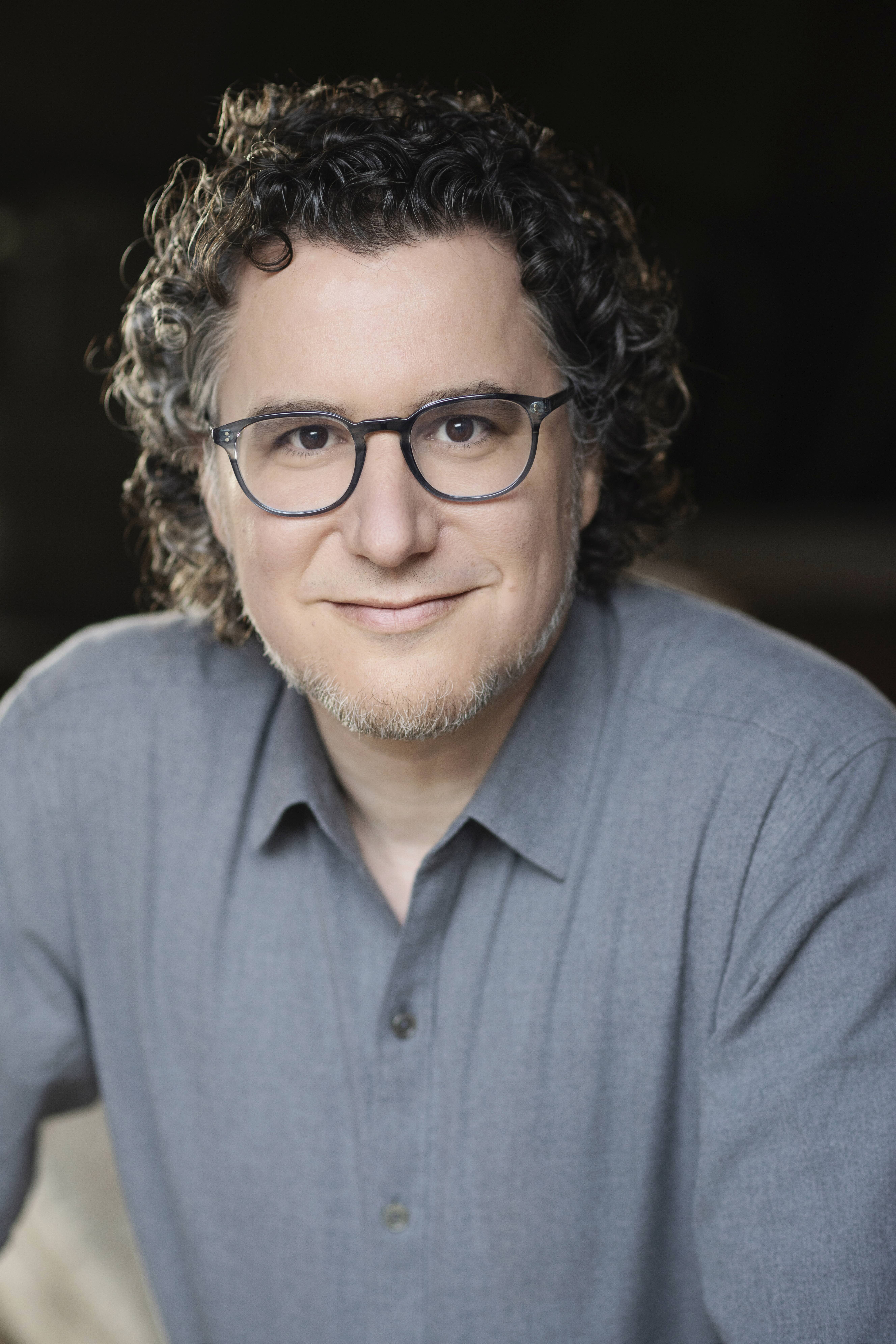
Founder, Long-Term Stock Exchange
Over the last two decades, Eric Ries's ideas about continuous innovation, long-term thinking, and market reform have reshaped company building and management practices. In recent years he has also focused on rethinking R & D and reorienting governance to protect mission and purpose, particularly in the field of AI. Eric is the author of the New York Times bestseller The Lean Startup; The Startup Way; and Incorruptible. As a founder and co-founder, he has put his own ideas into practice with The Long-Term Stock Exchange (LTSE); Answer.AI, an AI R&D lab; the Lean Startup Co, which teaches and supports the implementation of Lean Startup methodology; Virgil, a legal services startup; and IMVU, where the ideas that became the Lean Startup method were forged. On his podcast, The Eric Ries Show, he talks to guests including world-class technologists, thought leaders, executives, and others working to build profitable companies for the long-term benefit of society. Eric has served as an entrepreneur-in-residence at Harvard Business School and IDEO. He lives in the San Francisco Bay Area with his wife and three children.