Spotify
 Apple Podcasts
 Amazon Music
 Overcast
 Castro
 PocketCasts
 Castbox
 RadioPublic
 RSS Feed
 Product Before Token | Sal Ternullo | SVRN & A100x Ventures [EP. 315]
![Product Before Token | Sal Ternullo | SVRN & A100x Ventures [EP. 315]](https://img.podpage.com/o7XFicwNzZA4uJK6eRMBot8ZkMwL89bZ2IOV_9YhMpk/rs:fit:0:130:1/dpr:1/q:75/aHR0cHM6Ly9tZWRpYS5wb2RwYWdlLmNvbS9zaG93cGFnZS91cGxvYWRzL2ltYWdlcy80OTBjOWFiNy0zYjFmLTQ2YTUtYTRmNi0xOWE4MmVlZGM0MDAuanBn.webp "Product Before Token | Sal Ternullo | SVRN & A100x Ventures [EP. 315]")
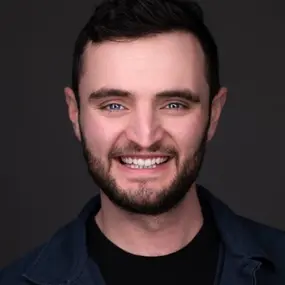
Pete Townsend is joined by Sal Ternullo, CEO of SVRN and Managing Partner at A100x Ventures, for a conversation about how to tell the difference between a token that represents ownership of the value-creating thing and one that's an accelerant bolted onto something else.
Product Before Token | Sal Ternullo, SVRN & A100x Ventures
There's a clean test that cuts through every token pitch landing in venture inboxes right now. Is the token actually representing ownership of the value-creating thing, or is it an accelerant bolted onto something else?
Most of what's out there is the second one dressed up as the first.
That's the conversation Pete sits down with Sal Ternullo to have on EP 315 of MoneyNeverSleeps, and it's one the industry has been quietly repricing all year.
Sal is CEO of SVRN, a NASDAQ-listed company, and Managing Partner at A100x Ventures. Before that he was at KPMG co-leading their Crypto and Digital Asset advisory practice, and before that he spent three years at State Street on emerging technology risk and IT audit. Pete and Sal nearly overlapped on the institutional plumbing side, with Sal at State Street while Pete was finishing up his fund services career at BNP Paribas. That auditor's instinct is what Sal has brought to how he underwrites tokens today.
The reframe: this isn't tokenomics, it's value accrual
The industry spent years tolerating tokens with no real claim on network cash flows. Sal called it earlier this year: that era is over. The tokens working in this cycle have a defensible answer to where value sits and how it gets back to holders. What a team picks, and why, says a lot about where they believe value should accrue, and who they think the token is actually for.
The shift was partly regulatory. The bolt-a-token-onto-everything pattern of the last cycle came from teams trying to maneuver through regulatory gray space to keep tokens outside SEC remit. That defensive posture is fading. What's replacing it is something harder: tokens with clearly defined value accrual mechanics and ownership primitives around a real product or network. The market is starting to reward them. Many of the ones that can't find their path in this direction won't make it.
As Sal puts it on the episode: "The best founders that we've invested behind have a very, very strong view as to why the technology that they're building needs to be implemented in a decentralized form factor in order to reach global ubiquitous scale and adoption."
Underwriting before the chart exists
Pete recorded an episode with Pranav Kanade of VanEck in mid-2024, where Pranav laid out a framework for valuing tokens in liquid markets: wait 18 months post-TGE, watch the drawdown, see who's still building, then diligence the team like a VC. Two years on, the market is repricing along those exact lines.
But Sal doesn't have that luxury. At A100x he's writing checks at pre-seed and seed, 18 months before the chart exists. The only signal is what a team picks and why, and whether they have real conviction on decentralization or are bolting a token onto an equity business.
Sal's view: build the product, understand the user behaviors and the things you want to incentivize and disincentivize, and once you have a product that people use that is useful in real life, then you can start to contemplate how to capture the value of that product inside the software design through a native token. The race to TGE that defined the last cycle, with its market maker games, centralized exchange listings, and the gouging that came with both, is largely over. And Sal welcomes it.
The cap-table problem nobody wants to talk about
If value is genuinely going to accrue to the token, what is the equity worth? It's the question that breaks most early-stage crypto cap tables. SAFEs with token warrants. Priced rounds that may or may not happen. Series A leads who can't touch tokens from a regulatory remit but sit on the board with full visibility. Founders who promised value would accrue to the token at the seed stage, then watched their cap stack dictate otherwise by the time they raised their A.
Sal walks through what alignment actually looks like across the journey, and why the absence of it is one of the quieter reasons good projects underperform.
Chapters
00:00 Bad Tokens Ruin Good Projects
00:30 Welcome Sal Ternullo
01:10 What Changed in Token Value Accrual
03:00 Equity vs Token: Where Does Value Accrue
04:55 Signs a Founder Has Real Conviction
06:15 Ownership or Loyalty Points
08:30 Tokens After 18 Months: The Pranav Callback
10:00 The Race to TGE Game is Over
11:30 The Cap Table Reality
13:00 The Question Founders Should Ask
Where to find Sal
X: @sal_ternullo
Email: sal@svrn.net
SVRN: svrn.net
A100x Ventures: a100x.vc
[00:00:00] Pete Townsend: I've seen too many bad tokens ruin good projects.
[00:00:03] Sal Ternullo: the best projects that we've actually seen reach scale, like from day one, have a very strong view as to why the system needs to be decentralized. And then working at the edge of how do we actually build the mechanics around the native token in that system to accrue value?
[00:00:17] Pete Townsend: This is Money Never Sleeps, sharp riffs, big ideas, and real insights from smart people. I'm Pete Townsend, GP at Norio Ventures.
[00:00:24] Pete Townsend: Let's go.
[00:00:30] Pete Townsend: So my guest today is Sal Ternullo. Sal is the CEO of SVRN, a Nasdaq-listed company. He's also managing partner at A100x Ventures. Sal's based in Boston, which is a city that I left 26 years ago, but I still somehow say that it's where I hail from.
[00:00:46] Pete Townsend: And Sal and I have looked at or invested in some of the same deals, and we've got a similar heritage in financial plumbing. So Sal, welcome to Money Never Sleeps.
[00:00:55] Sal Ternullo: Thanks, Pete. Great to be here.
[00:00:57] Pete Townsend: So listen, Sal, you sent me over a note earlier this week, and a couple of lines jumped out at me. Token design strategy is changing. The market spent years tolerating tokens with no real claim on network cash flows, but that's over. Now, as far as I'm concerned, I've seen too many bad tokens ruin good projects. And the clean test I keep coming back to is whether the token represents ownership of the thing that creates value in the project or whether it's an accelerant bolted onto something else. And most of what I see is the second one dressed up as the first.
[00:01:33] Pete Townsend: But let's start where you teed this up, Sal. The market tolerated tokens with no real claim on cash flows for years, but that era is over. What changed, and how do you know?
[00:01:46] Sal Ternullo: I think it's been evident over the past specifically three to six months as we've kind of had this slow climb, you know, bear market to some extent bottoming and slow climb out. I think the reason that we ended up in the place that we were in terms of just bolt the token onto everything in that second camp that you were describing was partly driven by the regulatory environment and trying to maneuver through regulatory gray space to ensure that tokens would not end up within a securities definition in the US market and under the SEC remit.
[00:02:17] Sal Ternullo: And I think the market is now kind of correcting itself, partly regulatory, but also where tokens that do have value accrual mechanics defined and ownership primitives around a network, a product, et cetera, are being rewarded in the market today.
[00:02:31] Sal Ternullo: I think we're gonna continue to see this play out. We'll probably see stronger beta by projects that have real strong mechanics around this value accrual dynamic. And many of the ones that cannot find their path in this direction will not make it.
[00:02:44] Pete Townsend: The way that I've looked at this for years is that when you are at the earliest stage of a project that's building on chain, that you can set things up through the investment that you raise to say that, "Well, if I'm gonna raise through an equity instrument, that's because I think that the value of what I build will accrue to the equity."
[00:03:05] Pete Townsend: And the equity is usually representative of a centralized operating company that's generating revenue. The other side is that if you think that you're going to go the decentralized route with your project, that you will end up building something where the value accrues to a token. And it's hard to do both.
[00:03:23] Sal Ternullo: in my view, it's very much project dependent based on what is actually being built and delivered to the market.
[00:03:29] Sal Ternullo: And it's oftentimes hard nowadays to get investors buying into a simple agreement for a future token or a SAFT, which was all the rage in 2016, '17, given that they often do not offer the investor protections and recourse mechanics that investors like to see. , So it's this interesting kind of tension.
[00:03:48] Sal Ternullo: We talk about economics as it relates to token mechanics and the design of the system itself, but when you lift up from that level and you look at the actual kind of fundraising mechanics for equity versus token, there's a lot of tensions in that as well. And I've seen that play out in, in both directions favorably and unfavorably.
[00:04:07] Pete Townsend: When you are getting into the nitty-gritty with someone, Sal, are there signs that you look for when they're talking about where the value will accrue to? where it's clear that, listen, this is moving in a decentralized direction, while there may be a equity operating company at the beginning, that that will largely fall away as they move towards a true decentralized status. Are there things that you look for where you can see that they're thinking about how the value will accrue?
[00:04:36] Sal Ternullo: Oftentimes it's a very opinionated take from a founder at that stage where you can see that even if they only have 60% of the mechanics that they intend to implement designed and baked today, that that is the direction of where the inertia will continue to, to push them. That's very different from a founder who wants to build an equity path business and then bolt on a token and throw a staking mechanic on it and call that, you know, tokenomics.
[00:05:03] Sal Ternullo: It's a very different kind of approach.
[00:05:05] Pete Townsend: Totally. Totally. You also said that what a team picks and why says a lot about where they believe value should accrue and who they think the token is actually for. Now, that's at the heart of it for me. When you're at the pre-seed or seed stage, how do you tell whether the token does represent ownership of the value creating thing,
[00:05:25] Pete Townsend: or like you said, let's just give it a staking mechanism and it's just a centralized operating company that couldn't raise equity?
[00:05:32] Sal Ternullo: I think the best projects that we've actually seen reach scale, like from day one, have a very strong view as to why the system needs to be decentralized. And then working at the edge of how do we actually build the mechanics around the native token in that system to accrue value? The most effective approaches of that, it's like basically how do you reflect the demand economy in the token?
[00:05:52] Sal Ternullo: And there's clear mechanics now today that are actually working in that regard.
[00:05:57] Sal Ternullo: I think empirically we haven't seen, at least until recently, the correlation between those strong mechanic designs in terms of buybacks or treasury mechanics around buybacks, actually reflecting in price. But I think, you know, as of Q1, Q2 this year, we are starting to see that, which for me is a welcome change in the market.
[00:06:17] Pete Townsend: you're seeing this base intrinsic layer of value emerge?
[00:06:21] Sal Ternullo: Yeah, we are. And there's, there's arguments on both sides of this. There are still some scenarios. I think you probably saw the X thread and discussion around Pump.fun, and, you know, they've spent $350 million of revenue buying back token. Token price doesn't reflect that. That's an example of we're not seeing empirical data on market prices reflect this.
[00:06:40] Sal Ternullo: In, in each of the examples where it has not been the case, I think there's a broader rationale to that. And for Pump.fun specifically, you know, meme coins were effectively the tarnish of the last cycle in many ways. And so I think there's narrative lag that causes price to not follow these fundamental design elements,
[00:06:59] Sal Ternullo: whereas in other cases over the last, you know, 60, 90 days, we've seen strong beta on NEAR protocol largely driven by NEAR intents and the revenue that's being generated and facilitating buybacks of NEAR tokens. And even just yesterday, we saw a completely decoupled move in the asset that I think is driven by fundamentals and then recognition of investors in the market who are, are kind of cuing on that narrative now.
[00:07:26] Pete Townsend: Yeah, it's super interesting and it's amazing what time does, right, to be able to, to track these things. I had Pranav Kanade from VanEck on the show in the middle of 2024, and he had a framework for valuing tokens in liquid markets, which was basically wait 18 months watch the drawdown, see who's building, dive in and diligence them like a VC would. And when you're looking at these projects at the pre-seed or seed stage, though, you don't have that luxury. So when you're writing the check 18 months before the chart exists, like when the only signal you have is what a team picks and why,
[00:08:10] Sal Ternullo: Mm-hmm.
[00:08:10] Pete Townsend: you know, there's gotta be a true method to this in order to try to get them right.
[00:08:15] Sal Ternullo: Yeah. Mm-hmm. Yeah. Yeah, and my, my view on this has always been like the race to TGE and getting the token out and playing the market maker games and pursuing the centralized exchange listings, getting gouged in doing so, like that whole game has never been attractive to me. It plays on these perverse incentives of liquidity . VC liquidity in traditional equity path companies is a 12 to 15 year game, right?
[00:08:38] Sal Ternullo: When you have scenarios that in two to three years your position is fully liquid.
[00:08:42] Sal Ternullo: At four, if you want to put a, call it a four-year vest, the product has not reached maturity . It is certainly not saturated in market adoption. And so my view when we're investing early stage has always been build the product, understand the user behaviors
[00:08:57] Sal Ternullo: and the things you want to incentivize and disincentivize, and once you have a product that people use that is useful in real life , then you can start to contemplate how do we actually capture the value of that product inside the software design through a native token?
[00:09:10] Pete Townsend: It's a different market now is what it really feels, you know, big time than when it was five, six years ago, where, you know, VCs were selling their fund to LPs on the basis of, "We're gonna give you liquidity within 12 to 18 months."
[00:09:22] Sal Ternullo: I think that, I think that game is largely over. There always will be outliers and that still could happen in certain examples, but, yeah, I don't think that's ever gonna be the name of the game again. And candidly, I, I welcome that and I'm excited about that. I
[00:09:34] Pete Townsend: Me too. Me too. All that,, all that crap about dumping on retail and these crazy things you need to get into I'm just, I'm so done with them.
[00:09:41] Pete Townsend: but let's get into the mess for a second, right? If the value is genuinely going to accrue to the token, what is the equity worth?
[00:09:50] Sal Ternullo: I wish I could be like, "Here are the, here's the exact convention and this is what makes sense for every single project." But I actually believe that it varies to some extent based on the project, uh, where they're building on the technology stack between, you know, historically layer one protocols versus middleware components or applications.
[00:10:08] Sal Ternullo: What we generally advise now is build a product that is feature-rich, that gets to scale adoption before you contemplate token design, generally speaking, requires a pre-seed, seed and potentially a Series A financing round. When you get past the seed phase, generally speaking, you start to run into the frictions that, come with different investor mandates and their willingness or ability from a technology and regulatory remit to actually custody hold and touch tokens.
[00:10:38] Sal Ternullo: And so the founder product investor alignment across the journey to build a system that ultimately focuses on accruing value in the token is super important, I can look at examples of companies who had a Series A led by an investor who cannot touch tokens from a remit point of view But they promised in the pre-seed and seed financing rounds that we're going to build a decentralized system, value will accrue to the token, it's gonna be 100% focused on that side.
[00:11:05] Sal Ternullo: And then all of a sudden, their cap stack dictates otherwise, and you end up in a really tricky position as a founder where, you know, you have this huge incentive conflict, probably the Series A lead on your board of directors privy to everything that's happening there, no exposure to the future value accrual on the token side.
[00:11:23] Sal Ternullo: But having alignment to the vision to we're going to accrue value inside of a token that is used in this product, that is the path that I think investors will embrace and that they still have the investor protections. They can also have exposure to the upside on an economics basis, and that is on a longer horizon of a three to four or five-year build versus raise a SAFT ,18 months, TGE, have a half-baked product with weak mechanics that ultimately goes to zero.
[00:11:49] Pete Townsend: So true. So true. Founders need to have the patience and discipline to find the investors with the patience and the discipline rather than the 12 to 18 month, you know, dollar signs in the eyeballs.
[00:12:04] Sal Ternullo: The fundraising environment for founders and for funds as well has been incredibly challenging the last 18 to 24 months.
[00:12:09] Sal Ternullo: I think it's starting to soften to some extent. We've seen some huge raises with Haun and a16z and, and Dragonfly, and I think there's probably 10 more funds that have not yet announced, you know, $100-plus million raises that will come out over the next six months.
[00:12:23] Sal Ternullo: I also appreciate the reality of how challenging it has been to form capital. And so when you're in a difficult scenario and, like, the company's gonna die in 60 days, do you make a trade-off like this and try to navigate?
[00:12:34] Sal Ternullo: There's a different kind of decision model in that moment.
[00:12:37] Pete Townsend: Yeah, absolutely. I just feel like some of the time it's just if, if you could just have a, a, a half hour conversation with one of these teams and just kind of point out some of the pitfalls that others have made in the past, they'll get a lot more clarity around that and generally, end up going in the right direction.
[00:12:52] Pete Townsend: So,
[00:12:53] Sal Ternullo: I agree with you.
[00:12:54] Pete Townsend: Last one for you, Sal. What's the question you wish more founders walked in with an answer to when they pitch you?
[00:13:01] Sal Ternullo: That's a great question I mean, the reality of this is that we accept, especially at the pre-seed phase, it's like what we invest into in that moment of time is maybe 10% of the time what they actually build. It's this continuous process of product iteration through customer feedback loops and market loops.
[00:13:18] Sal Ternullo: It would probably be something to the effect of like, "Are you willing to underwrite me when the moment comes that we pivot for the third time?
[00:13:25] Sal Ternullo: And will you still back me to see that third pivot to product market fit and scale?" And I think our point of view is always, "Yes, we certainly will." We've had, you know, in the second fund, A100X Fund 2, there's 24 companies. Probably half of them have pivoted from the pre-seed phase into seed. And I think the ones that are more aggressive and decisive in those moments, generally speaking, are more successful.
[00:13:50] Pete Townsend: Totally. Well, Sal, listen, like financial plumbing, it takes a trained eye to know what to look for and what to walk away from, right? So thanks for bringing yours to this chat. Appreciate it.
[00:14:02] Sal Ternullo: Great to see you, man.
[00:14:03] Pete Townsend: Good to see you too.
[00:14:04] Pete Townsend: What's the best way for people to get in touch?
[00:14:07] Sal Ternullo: I'm on X, on LinkedIn, whatever you wanna reach out. If email's preferred, sal@svrn.net. But you can find me on X @sal_ternullo
[00:14:18] Pete Townsend: f Don't forget to follow or subscribe wherever you get your podcasts. Helps others to find the show, and it means a heck of a lot to me. Till next time. See ya.
[00:14:27] Sal Ternullo: See ya. Thanks, Pete.