Spotify
 Apple Podcasts
 Amazon Music
 Overcast
 Castro
 PocketCasts
 Castbox
 RadioPublic
 RSS Feed
 The Onramp Bringing TradFi Onchain | Martin Watkins | Montis [EP. 317]
![The Onramp Bringing TradFi Onchain | Martin Watkins | Montis [EP. 317]](https://s3.us-west-1.amazonaws.com/redwood-labs/showpage/uploads/images/0edb2bfe-cbe5-431c-9da6-01beefe8d42c.jpg "The Onramp Bringing TradFi Onchain | Martin Watkins | Montis [EP. 317]")
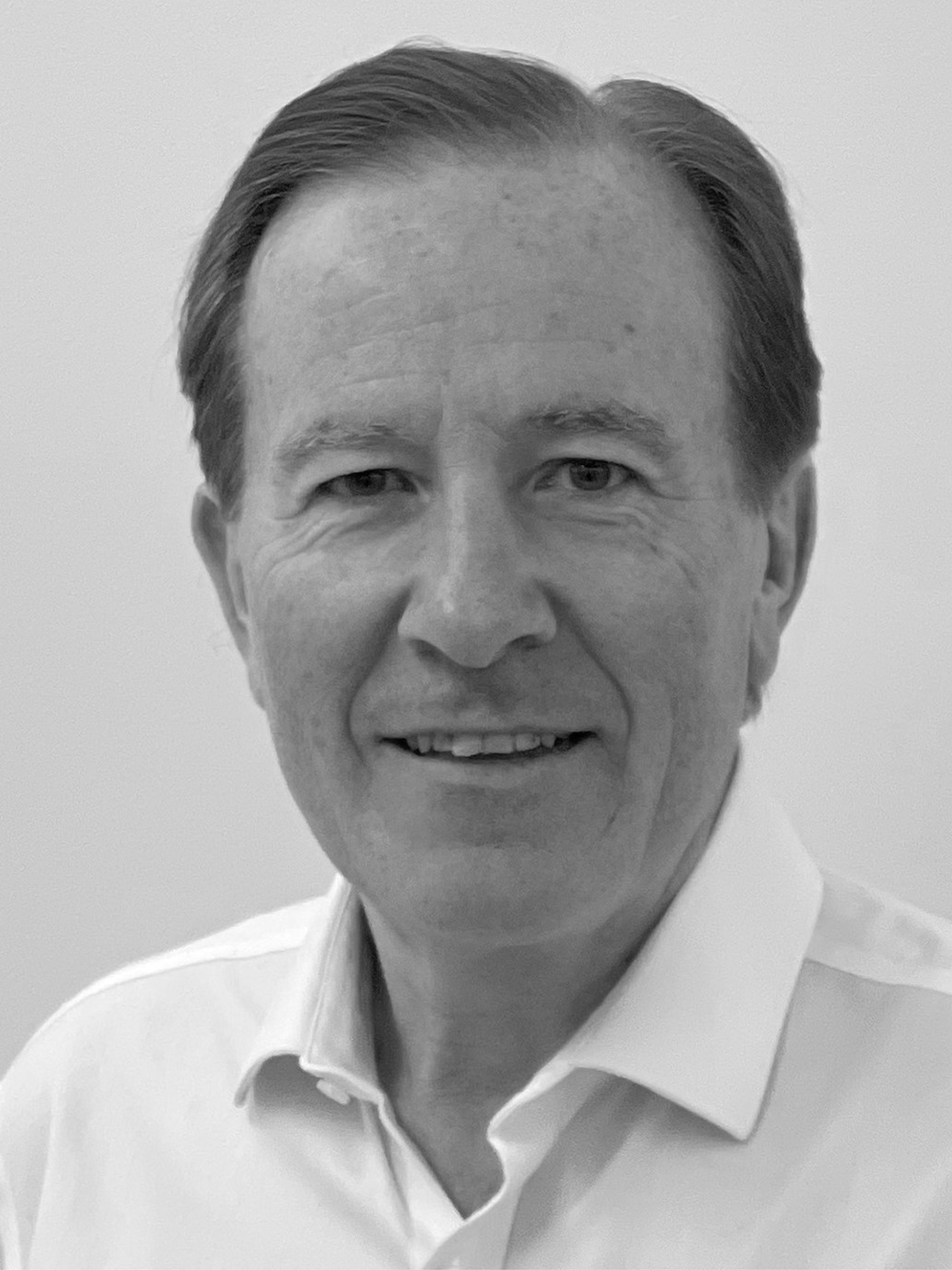
Pete Townsend is joined by Martin Watkins, CEO of Montis Group, to discuss what a blockchain-native central securities depository actually does and why it matters for the future of tokenized assets.
The Onramp Bringing TradFi Onchain
Martin Watkins has spent his career at the center of global financial market infrastructure — running clearing operations at AtosEuronext, leading post-trade transformation at Euroclear UK, and advising exchanges and CSDs globally at EY. In 2020, Graham Rodford and the Archax team asked him to design and build something that didn't exist: a blockchain-native central securities depository built from the ground up under CSDR regulation. Four years later, Montis Group is approaching the end of that regulatory road.
Why the Regulatory Road Was the Point
Under CSDR, Montis took the same four years to reach authorization that Euroclear, Clearstream and Euronext took. That's not a footnote — it's the moat. From a technology side it puts Montis ahead of the incumbents. From a regulatory side it puts them ahead of any new entrant who thinks they can shortcut the process. As Martin puts it: "We've done the hard yards."
What a Digital CSD Actually Does
A blockchain-native CSD can issue traditional securities and natively digital securities onto the same blockchain, meaning custodians can hold all their collateral in one place. Earlier this year the European Central Bank confirmed that DLT-issued securities are eligible collateral — a significant step that makes the new infrastructure compatible with the existing financial system rather than parallel to it. The practical implications run from intraday margin calls to securities financing to real-time proof of reserves, the kind of transparency that would have changed the calculus in events like the UK gilt crisis and the Silicon Valley Bank collapse.
The 24/7 Problem
Tokenized fund wrappers can operate around the clock, but the portfolios underneath them still run on daily NAV cycles, T+2 settlement and market hours. Luxembourg's Blockchain Law IV and the Control Agent mechanism are how you start closing that gap — moving tokenized units with legal certainty rather than waiting for the whole industry to execute a big bang transition. Adoption doesn't require everyone to move at once. Those leading the way can give the benefits of tokenized securities to their clients now, while more conservative participants move at their own pace.
The Irish Question
Ireland has over €5 trillion in fund assets and an active regulatory conversation around tokenized money market funds, with settlement finality under Irish law the most commonly cited obstacle. There are competing legal views on whether existing Irish law is sufficient or whether company law needs updating for both PLCs and ICAVs. Once Montis has its Luxembourg CSD authorization, the Control Agent mechanism under Blockchain Law IV provides a route to legal certainty around settlement finality for Irish-domiciled funds under existing EU passporting mechanisms — without requiring any change to Irish law.
The Velocity of Capital
The deeper prize is what legal certainty at the point of settlement unlocks for portfolio managers. At the precise moment a transaction settles, positions update instantaneously, and the asset can immediately be reused — repoed out, put through other forms of securities financing, or deployed elsewhere. The result is not disintermediation but a better division of labour: corporates and governments raise money cheaper and faster, investors are closer to the action, and intermediaries focus on work that genuinely adds value.
What Comes Next
The infrastructure is being built. The regulatory framework exists. The ECB has confirmed eligibility. The question now is who moves first — and whether the right people in the right institutions decide it's worth doing before someone else does it for them.
Subscribe on Spotify: https://open.spotify.com/show/4F8uOLxiscYVWVGEfNxTnd
Subscribe on YouTube: https://www.youtube.com/@moneyneversleeps1814
Subscribe on Apple Podcasts: https://podcasts.apple.com/ie/podcast/moneyneversleeps/id1455819294
CHAPTERS
00:00 The doom loop that tokenization solves
00:27 Introduction
01:13 Martin Watkins welcome
01:18 30 years inside the plumbing of capital markets
03:50 What a blockchain-native CSD does differently
05:48 The Friday afternoon collateral problem
06:22 The 24/7 problem in tokenized funds
07:46 The Irish question: settlement finality and €5 trillion in fund assets
09:27 Legal certainty, portfolio managers and the velocity of capital
10:39 Why the market infrastructure isn't there yet — but nearly is
11:20 How to reach Martin and Montis
Sharp riffs, big ideas and real insights from smart people — all in under 15 minutes. Hosted by early-stage investor Pete Townsend with the people rebuilding money, markets, and the internet from the ground up.
moneyneversleeps.ie
LinkedIn: https://www.linkedin.com/in/petetownsendnv/
X/Twitter: https://x.com/PeteTownsendNV
Instagram: https://www.instagram.com/petetownsend353/
Email: info@norioventures.com
[00:00:00] Martin Watkins: if we look back at some of the major systemic issues we had, Silicon Valley Bank, well, we now have real-time onchain proof of reserves. The mini budget, that the UK had with Kwasi Kwarteng, we now have instant collateral. We've eliminated the redemption to cash doom loop that hit people who were trying to move those money market funds and sell them at a time when everyone was a seller and no one was a buyer.
[00:00:27] Pete Townsend: This is Money Never Sleeps: sharp riffs, big ideas and real insights from smart people. I'm Pete Townsend, GP at Norio Ventures. Let's go
[00:00:38] Pete Townsend: My guest today is Martin Watkins, CEO of Montis Group, and he and the Montis team are building one of the missing pieces in the tokenized asset stack, a blockchain-native central securities depository or CSD. Longtime listeners know Graham Rodford, who was on the show back in 2019. Graham is CEO of Archax, the FCA-regulated digital asset exchange and a key part of the ecosystem that Martin is building with it. Martin and I connected at an event at the London Stock Exchange recently, and I was intrigued by the Montis story, so here we are.
[00:01:13] Pete Townsend: Martin Watkins, welcome to Money Never Sleeps
[00:01:16] Martin Watkins: Hi, Pete. Pleasure to be here.
[00:01:18] Pete Townsend: You spent 30 years inside the plumbing of global capital markets. What did you see from the inside that made you decide to build something new rather than keep advising on the existing system?
[00:01:30] Martin Watkins: So when I was to look at the last 30-odd years, the focus for market infrastructures has always been on the operational resilience, the prudential approach, and making sure that there's absolute precision around the law, what can and can't be done.
[00:01:44] Martin Watkins: But that also came hand-in-hand with archaic processes, paper-based systems. You even see the latest announcements from Euroclear and Clearstream saying that they are digita- digitizing the primary issuance platform Funnily enough, behind that headline, they're actually removing manual processes and moving paper.
[00:02:05] Martin Watkins: So it's not a big step forward, but, hey, it's an improvement. But those batch processing days and the opacity, not knowing when something settles, or at least until two, three, four, five days later, they're moving on. You know, the world has changed already.
[00:02:19] Martin Watkins: In 2015, I was working on blockchains for the first time. I was seconded when I was at Capgemini to the Royal Mint to work on tokenized gold with the Chicago Mercantile Exchange. I then worked with Paxos and Euroclear to try and create a JV around digital gold, only to find that it doesn't work when you try and bring the incumbents, the old style together with the dynamic new of Paxos and Chad Cascarilla.
[00:02:45] Martin Watkins: So that was clear, but it wasn't until the likes of BlackRock with BUIDL in March 2024 came around, the tokenization and aspects really started to take off. But the journey for me, you mentioned, it started when Graham Rodford and the team at Archax reached out, and that was 2020.
[00:03:02] Martin Watkins: I was ex Crest, so I knew some of the problems, but Graham then said, "Hey, can you come and design Montis and start developing and launching those iss- those, the CSDs, but a digital one based on blockchain technology?" And so we've just come to the end of our, our really heavy, hard four-year road of getting the same regulations as those big incumbents.
[00:03:25] Martin Watkins: And actually, funnily enough, under CSDR, we took the same length of time, the four years that Euroclear, Clearstream, and Euronext took. But it's given us a strategic moat from a technology side over the incumbents and from a regulatory side over any new entrant who thinks they can hit this grade in a short period of time.
[00:03:45] Martin Watkins: We've done the hard yards, Pete, and we're looking forward to the timing being right for us to expand
[00:03:50] Pete Townsend: One of the things that I noticed about the way that you talk about Montis is that most people in the tokenization conversation focus on the token, but you're focused on the layer underneath. So tell me, what does a blockchain-native CSD do that a traditional CSD doesn't, and why does it matter?
[00:04:10] Martin Watkins: A digital CSD can issue traditional securities and natively digital securities onto the same blockchain.
[00:04:18] Martin Watkins: What that really means to the custodians and so on is they can hold all the collateral in one place. Earlier this year, the European Central Bank confirmed that DLT-issued or DLT CSD-issued securities are eligible. So the fact that these digital instruments held in the same wallet, we'll call them securities accounts, but in the same wallet for the same banks can be used very, very, efficiently and seamlessly, to hit, intraday margin calls, to be pledged, to be able to be transferred, to be short stop shorted, all the different securities financing.
[00:04:56] Martin Watkins: And probably the key element of what's different is if we look back at some of the major systemic issues we had, Silicon Valley Bank, well, we now have real-time onchain proof of reserves. The mini budget, that the UK had with Kwasi Kwarteng, we now have instant collateral. We've eliminated or pseudo eliminated the redemption to cash doom loop that hit people who were trying to move those money market funds and sell them at a time when everyone was a seller and no one was a buyer.
[00:05:30] Martin Watkins: And even then, looking at Lehmans and so on, who technically were not insolvent, but they had a major cashflow problem, that transparency is there for everybody with the new technology, but also the new laws and the new ways of operating with tokenized assets
[00:05:48] Pete Townsend: The example that I usually talk about to people is that imagine it's a Friday afternoon and you're trading OTC derivatives. You get a call from your counterparty saying that, "Listen, because of the the market activity, we're gonna need you to post some more collateral." Usually, it's a Friday afternoon.
[00:06:08] Pete Townsend: That means you're shut down trading until Monday, maybe Tuesday at worst. But with onchain assets, you can move those assets immediately. Within seconds, they're in the collateral account and you're back to trading again.
[00:06:22] Pete Townsend: And I, I wanna focus for a second on what we call the 24/7 problem, in that the fund wrapper itself, when it's tokenized, it can run 24/7. But the portfolio underneath it, unless the securities that the portfolio is holding have been tokenized as well, that portfolio still operates on old school market conventions.
[00:06:42] Pete Townsend: How does a digital CSD start to close that gap?
[00:06:45] Martin Watkins: So for example, we're in a position where under Luxembourg law, they've created Blockhain Law IV which has the existence of something called a control agent.
[00:06:58] Martin Watkins: Now, a control agent can actually take the registered securities as they currently are, which are the sort of things that we've seen being pledged as money market funds,
[00:07:07] Martin Watkins: But we can move those assets as units, tokenized units, much quicker and with legal certainty, and it's the legal certainty that comes down as the biggest element to this. Because now you can have tokenized securities and traditional securities sitting in UCITS.
[00:07:24] Martin Watkins: Adoption is not a question of when do we suddenly get everyone lined up and we do a big bang? You're able now to have those who are leading the way already giving the benefits of tokenized securities upfront into their clients, and others who are more conservative, which is not a problem, can handle their clients in the way they want.
[00:07:46] Pete Townsend: Closer to home here, as I mentioned, living in Dublin, but Ireland overall has five trillion euro of fund assets and an ongoing regulatory conversation around the tokenization of money market funds and funds more broadly. One of the things that keeps sticking its head up is settlement finality, right?
[00:08:07] Pete Townsend: And was asset A exchange for asset B, and can we prove that onchain or on a blockchain and getting legal clarity around that. Under Irish law, that's something that people are pointing to as a potential obstacle. And there have been legal calls made by one firm that says what's here in Ireland is sufficient, and others have said we need Irish company law to be updated both for the PLC as well as the ICAV, which is a popular fund structure here.
[00:08:34] Pete Townsend: So once Montis has its Luxembourg CSD authorization, though, what might that unlock for Irish domiciled funds?
[00:08:43] Martin Watkins: It opens an opportunity subject to validating the laws in each place, it allows us the opportunity to actually be able to transform those assets into a tokenized format, that we'd be able to offer legal certainty around settlement finality on a basis of DVP.
[00:09:03] Martin Watkins: So from a industry perspective, steps forward that the financial institutions have to always be careful for is when they actually transact, and you've made the point there, Pete, is, is the asset actually transferring? Do I truly own it or do I own a representation of it and so on? And that's where from a Montis point of view,
[00:09:27] Martin Watkins: if the instrument is issued onto Montis, we give you absolute legal certainty when settlement happens.
[00:09:33] Martin Watkins: Think about your portfolio manager who now may have a global custodian managing their account. And at the point that that transaction settles, that precise moment in time, that portfolio manager's information completely updates and the ability then to take that asset and to increase the, the velocity and the reuse, repoing it out, putting it through other forms of securities financing, or actually having the cash, using the cash for another format.
[00:10:06] Martin Watkins: Why can't someone constantly be getting a, a yield on the cash, a yield on the asset, and the moment they transfer it, they get the reverse.
[00:10:16] Martin Watkins: They get the yield on whichever one they've, they've transferred across. So we're in a constantly moving world, and the great thing behind that is that enables the, sell side firms being the custodians and being the broker-dealers to actually move the assets around far more faster, creating an immensely amount, a greater amount of liquidity, which is good for all.
[00:10:39] Pete Townsend: The tokenization of funds needs to help you to sell more. And it's not just existing product, it's new, innovative products that people have been thinking about conceptually but haven't been able to do yet because the market infrastructure isn't there.
[00:10:54] Pete Townsend: But with things like what we've been talking about here today, Martin, and specifically with Montis as a digital CSD, a blockchain native CSD, that's unlocking a great deal of these new flows.
[00:11:07] Martin Watkins: I think the final thought on this, Pete, is this is an immense transformation of the market, and it's a really exciting time to be here. And Pete, keep doing what you're doing because money never sleeps.
[00:11:20] Pete Townsend: Absolutely. Thank you, Martin. What's the best way for people to get in touch?
[00:11:25] Martin Watkins: Best way to get in touch with me is to email me at info@montis.digital. That's on our website, info@montis.digital, best way to get in touch
[00:11:37] Pete Townsend: Wonderful. That's great. And for all of you out there, thanks for watching and listening, and don't forget to follow or subscribe wherever you get your podcasts. It helps others to find the show. It means a heck of a lot to me. Till next time. See ya.