Do You Believe in Gravity?
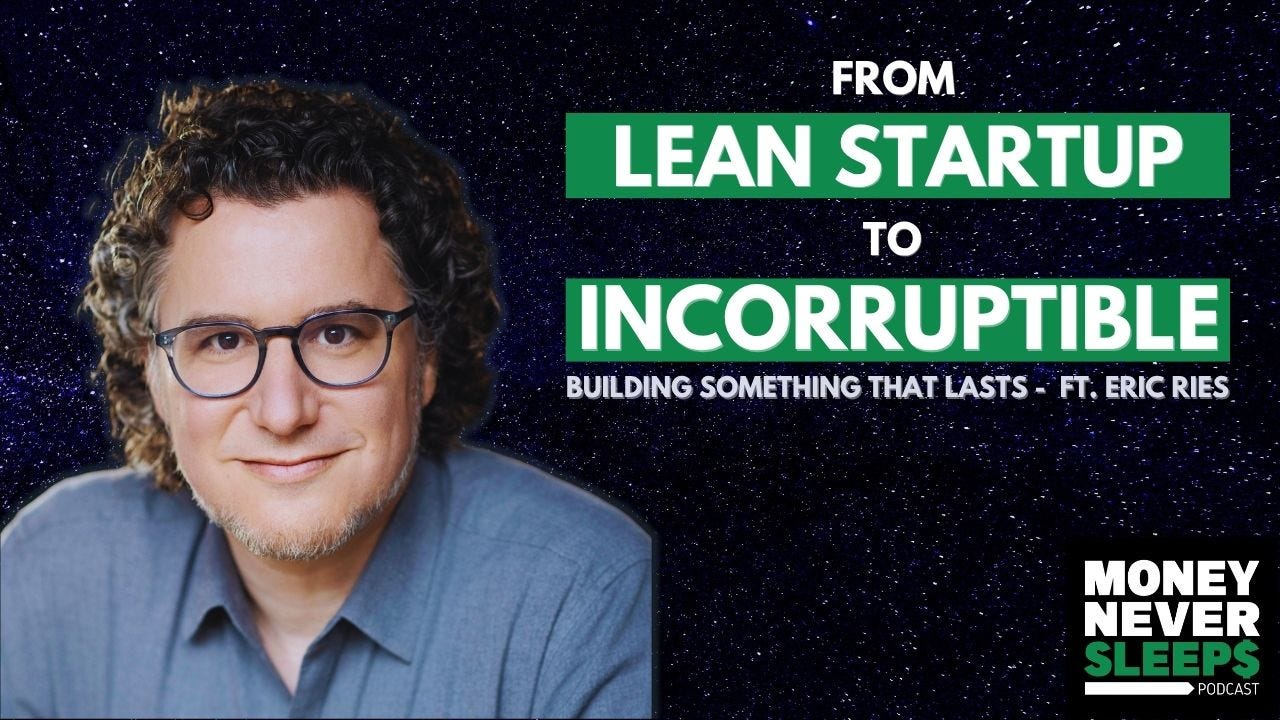
I’ve been thinking about a dinner party story Eric Ries told me.
(Yes, that Eric Ries, author of The Lean Startup)
Someone suggests a restaurant they haven’t visited in a few years. First bite. Person next to Eric pulls out their phone. “Sorry, I could taste it. This place has been taken over by private equity.”
Everyone around the table had a version of the same story. A brand they loved. A product that used to mean something. The moment they noticed it was gone.
Eric calls the force that does this financial gravity. I’ve been calling it something else for the last eight years - another story for another day - but it doesn’t seem to fit anymore.
I asked Eric to tell the story on the show - here’s a snippet of it.
The force that doesn’t need your permission
Here’s the thing about gravity. You don’t have to believe in it. It operates whether you do or not.
In traditional finance, I watched it work like clockwork. A company builds something real - genuine quality, genuine trust, a customer relationship that took a decade to earn. Then it grows. Then it gets valuable. And then the question that was never on the agenda starts showing up in every meeting: what might the market think?
Not what customers want, or what the mission requires, it's what the market might think.
The word ‘might’ is the tell. Eric pointed it out, and I haven’t been able to unhear it since. Gravity is always operating on what something might want, not what it actually said. It’s the ghost in the room. And once it’s there, it doesn’t leave.
I’ve watched CEOs of public companies describe the exact same moment. Before the IPO, they were building. After? Everyone’s watching the ticker. Same people. Same values. Different gravitational field.
In crypto, we didn’t just miss this; we accelerated it.
Last month, I virtually sat across from Amor Sexton, Global COO of Blockdaemon, and we talked about what actually happened to Drift and Kelp. $577 million gone in 18 days. The headlines called them hacks, but they weren’t. The smart contracts did exactly what they were told to do. The problem was governance - who had the keys, who could override what, and what the incentive structure was when things got hard.
Amor’s thesis: the losses that are defining this year’s DeFi calendar were governance and operational failures dressed up as security incidents. The code was fine. The humans around the code were operating without the structural guardrails that traditional finance spent decades building the hard way.
And I’ve said it on this show before: I’ve seen bad tokens ruin too many good companies in this space.
Here’s what I mean. A founder spends two years building something real with genuine product, genuine users, and genuine network effects. Then the token launches. Day one, the price spikes (or not). Six months later, you can’t find the original whitepaper on the website. The product roadmap has stopped optimizing for users and started optimizing for token holders. The gravity field shifted the moment the token started trading, and nobody on the team saw it happen because it happened in every individual decision that seemed reasonable at the time.
Recalling a story from a founder who shared a crypto VC’s request of him nails this point:
“I don’t want you building a company, I want you pumping that token!”
That’s financial gravity. And in crypto, we handed it a lever with 100x the mechanical advantage of a public equity listing and wondered why it pulled harder.
Last month, Sal Ternullo told me the ‘race-to-TGE’ (token generation event) game that defined the last cycle is largely over. The founders who are winning now are the ones who built the product first and designed the token second. And, they walked into a pitch meeting with a real answer on value accrual, not a whitepaper and a launch date.
That’s the same insight from a different angle. Sal was talking about token economics. Eric is talking about corporate structure. But the underlying principle is identical: if you don’t build the right architecture at the beginning, the financial gravity that arrives with your success will use that architecture against you.
Product before token, never be broken.
Structure before scale, never go stale.
Same discipline, same moment in the journey, same consequence if you skip it.
The structure is the answer, not intentions.
The thing I took from this conversation (and from reading the manuscript of Eric’s new book Incorruptible in preparation for it) is something I’ve believed for a long time but couldn’t quite articulate cleanly: a great team can build something extraordinary and still lose it, not because they were beaten by a better team, but because they never built the structure to protect what they created. Good intentions don’t survive a hostile cap table, a PE takeover, or a token that starts trading before the product is ready. The architecture either holds or it doesn’t, and by the time you find out which, it’s usually too late to fix it.
Eric’s not making a moral argument; he’s making an engineering argument. The forces that corrupted your favorite brand, your favorite protocol, your favorite company - they didn’t need a villain. They just needed the absence of structure designed to resist them.
The Novo Nordisk story hit me harder than I expected. A hundred years ago, a Nobel laureate and his wife - who nearly died from diabetes - built an insulin company and immediately worried about what would happen when it became valuable. They worried about it in 1923, before Martin Shkreli by fifty years, and before the modern pharmaceutical pricing debate by three generations. And they built a non-profit foundation to hold the mission permanently, with a for-profit subsidiary underneath it to raise capital.
That structure protected more than $500 billion in shareholder value. Because it was designed, from day one, to resist the thing that would eventually come for it.
Eric asked every founder he spoke to the same question about that: are you sure you’re smarter than a Nobel laureate?
I’ve been in enough board meetings, on enough cap tables, and through enough cycles to know the honest answer is almost always no.
The pattern
What I keep seeing across this show, across every conversation where a guest talks about what went wrong, or what almost went wrong, or what they did differently, is the same thing Eric is describing.
The companies that last are the ones where someone, at the beginning, sat down and asked: what are the forces that will eventually come for this? And then built something designed to resist them.
Not a mission statement, values document or good intentions on a wall in the meeting room of their first office.
Structure.
Rob Viglione at Horizen Labs is building cryptographic infrastructure because he understands that in an agentic economy, the architecture of trust has to be baked in at the protocol layer. You can’t rely on the humans to behave correctly every time - that’s the same insight. Amor Sexton is arguing that DeFi needs TradFi-style operational risk infrastructure because the alternative is watching the same failures repeat themselves at increasing scale. That’s the same insight. Sal Ternullo is telling founders that the token comes after the product, not before it, because the gravity that arrives with a live token will exploit any structural weakness you left unaddressed. That’s the same insight.
Eric Ries has been watching this pattern play out across every industry for fifteen years and finally wrote the engineering manual for fixing it.
The pattern is always the same: build something worth protecting, forget to protect it, and then watch someone take it.
The question is whether you decide to do something about that at the beginning, when it’s a two-page filing in Delaware and a conversation with your lawyer, or at the end, when it’s a wake.
Where this leaves me
Financial gravity is not a crypto problem. It’s not a startup problem. It’s not even a business problem in the narrow sense. It’s a design problem, and like all design problems, it’s much cheaper to solve at the beginning than at the end.
At Norio Ventures, I’m not looking for founders with a mission statement up on some wall. I’m looking for founders who understand the forces that will eventually come for what they’re building and have thought carefully about the architecture they need to withstand them. The structural decisions, cap table design, the legal charter, and the mission guardian. The discipline to balance vision with execution.
These are not administrative details. They are the difference between building something that lasts and building something that becomes someone else’s golden goose.
If you’re building in crypto, fintech, or AI and thinking about these questions, I’m always happy to hear from founders working along these lines.
A companion thread
If you’ve been listening to MoneyNeverSleeps recently, you’ll recognize these themes across the recent run of episodes.
In EP 314 with Amor Sexton at Blockdaemon, the conversation was about what DeFi’s biggest losses of the last year had in common and why calling them hacks missed the point entirely.
In EP 315 with Sal Ternullo at A100x Ventures and SVRN, the question was whether the race-to-TGE era is finally over and what discipline looks like in the next cycle.
In EP 310 with Rob Viglione at Horizen Labs, we talked about what it means to bake trust into the protocol layer rather than relying on the humans around it to behave correctly.
And in EP 316 with Eric Ries, all of it converged into a single framework - financial gravity - and a single founder question: what does the structure that resists it actually look like?
None of those episodes used the same language, but they were all circling the same thing.
Til next time
A note on The Geometry of Fintech Part III: it’s coming, but I’m going to let it breathe for a couple of months. The ideas are still forming, and I’d rather wait until there’s something genuinely new to say than publish it half-baked.
One other thing worth mentioning, and I say this without naming anyone specific, but it happened more than once in recent months. I ran into a former guest who had no idea the show had moved to a new format. Hadn’t seen it come through. Wasn’t sure what I was up to.
So for anyone who’s been away or hasn’t checked in since the older episodes: MoneyNeverSleeps has changed. The show is now video-first on YouTube, under 15 minutes per episode, drawn from a tighter recorded conversation. I’ve been doing this intentionally because the most interesting part of a 45-minute podcast was always packed into about 15 minutes, and I spent years listening to the good stuff get buried in the back half of a long episode. The new format puts the best of the conversation front and centre, without the self-indulgent detours I used to let myself take.
The feedback has been really good. People are finishing episodes, guests are sharing them, and the show feels sharper.
If you’ve been listening for a while, thank you. If you’re new here, welcome. Either way, the full back catalogue of 316 episodes is at MoneyNeverSleeps.ie, reorganized into themed playlists so you can explore by topic rather than just scrolling chronologically.
📺 Video on YouTube
🎧 Audio and Video on Spotify
🎧 Audio on Apple Podcasts
🔎 Deeper-dive shownotes on MoneyNeverSleeps.ie
If this way of thinking resonates, follow along here. I’ll be writing more regularly - not show notes, but reflections like this one, connecting the threads across episodes as they emerge.
And if you’re building - particularly in crypto, fintech, or AI - I’m always happy to hear from founders thinking along these lines.
🔗 Connect on LinkedIn
❎ Follow me on X/Twitter
A quick note: if you’re receiving this and don’t remember signing up, it’s likely because we’ve interacted through Norio Ventures, MoneyNeverSleeps, or at a CryptoMondays event. If this isn’t for you, no hard feelings, and you can unsubscribe below. If it is, welcome back. More to come.