Spotify
 Apple Podcasts
 Amazon Music
 Overcast
 Castro
 PocketCasts
 Castbox
 RadioPublic
 RSS Feed
 The Love-Hate of Tokenization: A Trader's Reckoning | Steve Whyman | [EP. 325]
![The Love-Hate of Tokenization: A Trader's Reckoning | Steve Whyman | [EP. 325]](https://img.podpage.com/dNMbb30o0goH321aH_bbShnU9ftigvMMgOiGhIxY8Io/rs:fit:0:130:1/dpr:1/q:75/aHR0cHM6Ly9tZWRpYS5wb2RwYWdlLmNvbS9zaG93cGFnZS91cGxvYWRzL2ltYWdlcy9kNzkwZTkxZi03ZTQ3LTRkODQtODNkNC02NWI2YmQyM2NkNWYucG5n.webp "The Love-Hate of Tokenization: A Trader's Reckoning | Steve Whyman | [EP. 325]")
The Love-Hate of Tokenization: A Trader's Reckoning
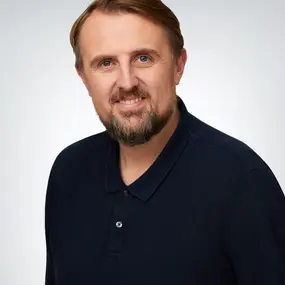
Pete Townsend is joined by Steve Whyman, a trader who spent 20 years running fixed income books at Bear Stearns, ABN AMRO, and BlackRock before running digital assets and tokenization inside Fidelity International, then leaving in 2025 to build onchain-native. He's one of the sharpest sparring partners Pete has on this subject, and the reason is simple: he has lived both sides of it, the trading desk and the tokenization build.
Why a trader jumped
Most tokenization stories get told by product people or infrastructure builders. Steve tells this one from the seat almost nobody occupies on the show: someone who ran a book and thought in settlement risk, financing cost, and collateral. What he saw across two decades of trading EM access product and structuring leverage finance was the same broken thing every time, liquidity bifurcated across wrappers, SPVs, and CLNs, each settling on someone else's structure. When he first came across blockchain, the appeal wasn't a nirvana state. It was that every instrument could finally sit on the same settlement rail. A friction remover, in his words, for a problem most of the market has spent years papering over rather than fixing.
What a desk actually needs
The conversation gets specific about adoption, and this is where Steve's desk-level view does work no founder guest can. A trading desk does not buy technology, he explains. It looks for better liquidity and a more reliable operating system, and the decision runs through the risk officer and head of operations as much as the trader writing the tickets. Before anyone touches a tokenized instrument, they need certainty on legal title, recourse, liquidity, and transparency, and then the unglamorous part, operational integration into the systems asset managers already run. He likens it to an F1 pit stop, where every person has one job in a ten-second window and the whole trade depends on all of them doing it. Miss one, and the cost lands on the asset manager's own bottom line.
Five wrappers, one stock
The core of Steve's frustration is fragmentation. Tokenization has been built issuance-first, everyone racing to get an asset onchain, almost nobody thinking about settlement or how positions net. Five issuers can wrap the same underlying stock five different ways, and those wrappers do not net against each other because they are fundamentally different legal instruments. Some carry rights, some carry none. He points, without naming names, to wrappers that traded over a weekend with no legal recourse, where the issuer simply walked away and holders found they had no ownership and no voting rights. His view is that everybody should be doing this the same but better. What the industry has actually done is add layers.
The wings of finance
Steve's most original frame is what he calls the wings of finance. At the core sit treasuries and equities, and everyone fixates on the equity, the bright shiny thing they want to own. At the wings sit financing, collateral, and alternatives, the pieces everyone forgets. His argument is that the real prize of a shared settlement rail is not trading the shiny equity faster, it's moving the same collateral across five locations, going from just-in-case financing to just-in-time. That is where tokenization adds genuine utility, and it's the part the market is underbuilding while it chases tokenized Tesla.
The question that comes next
The conversation closes on where the tension sits now. Can AI agents settle trades 24/7 when a smart contract can't legally own a security and a human still has to press the button? Steve is honest about the love-hate of it all. He was pulled in by the composability the technology makes possible, and he left a safe salary at a phenomenal institution not to take another job but to push the thing forward. Some of what he tried has stuck and some hasn't. His read is that the technology was never the problem. Adoption is, and that's a problem worth stepping in to solve rather than standing outside and complaining about.
Connect with Steve on LinkedIn. More on the projects he's building at The Programmable Credit Protocol, and catch him at Solana Breakpoint in London this November.
Watch or listen:
YouTube: [YOUTUBE URL]
Spotify: https://open.spotify.com/show/4F8uOLxiscYVWVGEfNxTnd
Apple Podcasts: https://podcasts.apple.com/ie/podcast/moneyneversleeps/id1455819294
Chapters
0:00 Cold open
0:24 Intro: Steve Whyman, from fixed income to onchain
1:10 What made a 20-year trader jump: the rails are the same
3:42 What a desk actually needs before it touches a tokenized instrument
5:42 The F1 pit crew: why adoption is operational, not technical
6:52 The fragmentation problem: five wrappers, one stock, no netting
9:53 Same but better, or just adding layers?
10:35 The wings of finance: financing and collateral, not the shiny equity
11:28 Can AI agents legally settle 24/7 when a smart contract can't own a security?
12:09 The love-hate: going native, and what stuck
14:08 Where to find Steve, and Solana Breakpoint
MoneyNeverSleeps: sharp riffs, big ideas, and real insights from smart people, in under 15 minutes. Hosted by early-stage investor Pete Townsend, GP at Norio Ventures.
moneyneversleeps.ie
LinkedIn: https://www.linkedin.com/in/petetownsendnv/
X: https://x.com/PeteTownsendNV
Instagram: https://www.instagram.com/petetownsend353/
Email: info@norioventures.com
MoneyNeverSleeps ep 325 Steve
[00:00:05] Steve Whyman: All of those things in that full spectrum can live on the same settlement rail. And those things don't net off against each other if they are fundamental different legal wrappers
[00:00:14] Steve Whyman: This is the core of my frustration is everybody should be doing this, should be doing it the same but better. And we've not seen that. What we've actually seen is adding layers.
[00:00:24] Pete Townsend: This is Money Never Sleeps. Sharp riffs, big ideas and real insights from smart people. I'm Pete Townsend, GP at Norio Ventures. Let's go.
[00:00:36] Pete Townsend: My guest today spent about 20 years trading fixed income at Bear Stearns, ABN AMRO, BlackRock, and Fidelity International, and then he ran digital assets and tokenization inside Fidelity International for about three years.
[00:00:48] Pete Townsend: Then he left in 2025 to build onchain native. He's one of the sharpest sparring partners I've got on this stuff because he's lived both sides of it. Steve Whyman, welcome to Money Never Sleeps.
[00:01:00] Steve Whyman: Thank you very much. Pleasure to be here. Yeah, I'm looking forward to this.
[00:01:03] Steve Whyman: As you say we spend a lot of time going backwards and forwards on all sorts of topics, so I'm, I'm, I'm intrigued to see where we're gonna end up today
[00:01:10] Pete Townsend: Awesome. Love it. So listen, Steve, 20 years trading fixed income, and then you jump. What did you see in tokenization from the trading seat that made you walk out of the corporate world?
[00:01:22] Steve Whyman: The frustration I saw isn't just about what tokenization was. It was about the constant problems I saw in various different desks I sat at.
[00:01:32] Steve Whyman: When I was trading EM, EM access product when I was trading leverage finance or structuring leverage finance I think the, the problems were really s- were really very similar in that you were using wrappers of all sorts of types, usually on banks' balance sheets, SPVs, CLNs, something or other, bifurcating liquidity, and all of these things were settling, yeah, okay, on Euroclear or they'll be listed on Clearstream, but you were always beholden to someone else's liquidity and someone else's structure for the most part.
[00:02:01] Steve Whyman: And so when I first stumbled across blockchain or distributed ledger technology I was like struck by the most awesome opportunity that all of a sudden the rails are the same.
[00:02:12] Steve Whyman: And it doesn't matter if I'm trading access product into onshore Sri Lanka, as we were at the time, or D- or Mozambique, or if I was trading leverage finance and trying to get access to various different loan product, this could all settle and be used with the same wrapper. And that was one of the most exciting things.
[00:02:30] Steve Whyman: So it was less about what I saw was really compelling. It was seeing that, ah, there's, here's a solution for a broken problem that most people don't even realize is broken because we've spent so long within the financial markets papering over the cracks of what doesn't work and coming up with solutions upon solutions for sort of old, antiquated, fragmented records, settlement delays, reconciliation, collateral mobility.
[00:02:52] Steve Whyman: I mean, the list goes on, right?
[00:02:54] Steve Whyman: I never looked at blockchain and went, "Oh there's the Nirvana state. All of a sudden we're gonna fix all of these problems."
[00:02:59] Steve Whyman: But I did see that it could... It was a friction remover, and all of a sudden having these things on the same rails, it was more about the, the opportunity set that we could reset an architecture that people could adopt and buy into.
[00:03:12] Steve Whyman: It wasn't a technology problem, which is core to the attractiveness of blockchain. It was a, okay, this is an adoption problem, or that's just an understanding problem and
[00:03:20] Steve Whyman: what's the regulation that's stopping us doing this? Well, nothing. Okay. Can it go in here? What, what's the investor appetite? All those things that you do on a daily basis to work out whether you should make a good investment and what that investment looks like, were problems that I was solving for, to your point, 20 years.
[00:03:36] Steve Whyman: And it felt this was just exactly the same opportunity, but in a whole tidal wave of opportunity
[00:03:42] Pete Townsend: So when you kinda turn that around, I was looking at that from a post-trade perspective, right? Because that's the part of the financial plumbing that I was in. You're looking at it from a trading perspective.
[00:03:53] Pete Townsend: When you started thinking about tokenization from the perspective of running a book, what do you think a desk would need before it would touch a tokenized instrument?
[00:04:03] Steve Whyman: A desk, to your point, does not buy technology. Invariably, it just doesn't. Like, I-it's an adoptive of the firm, yes, often led by heads of trading or the guy that trades who believes this, this will help him be more efficient to price that risk or to get that risk from A to B.
[00:04:18] Steve Whyman: It looks for better liquidity, and it looks for a more reliable operating system, which is, I think is, you know, that's, it sounds really simple to say, but it does. And then what happens is that risk officer at that firm or that operations, the head of operations said, like, signs off, "Yeah, actually, that will make us more operationally resilient. And so therefore I can endorse that."
[00:04:41] Steve Whyman: So the budget is then split not just by the guy who's writing the tickets and making the trades, but by the guy that's downstream making them more efficient. So think it, it's a process of adoption is what I'm trying to say.
[00:04:53] Steve Whyman: You need to make sure that you've got reliability, you've got legal recourse, you've got liquidity, and then you've got transparency, which is everyone talks about blockchain, but actually, I mean, transparency of price, transparency of movement, who are you relying upon?
[00:05:07] Steve Whyman: When I think about my buy side head the amount of fintech firms I've spoken to over the years and some really clever people from, and, you know, much cleverer than I am, that have got much more experience doing origination or debt origination or structuring.
[00:05:21] Steve Whyman: And I'm like, "Yeah, but can you onboard into the OMS of all the asset managers?" Or, "Do you know, even know what an EMS is? And how do you reconcile back to the accounting system?" And they're like, "Sorry, what?" I said, "Well, you're never gonna get adoption." Simple as that. It just all of these things come into a big decision-making process, which is not just the guy sitting there pressing the buttons thinking he's the smartest man in the room.
[00:05:42] Steve Whyman: It's a team and, you know, you liken that to an F1 car, right? Where the, everyone comes and like there's a guy that comes down and he holds a tire. There's a guy that puts the tire on. There's four guys that, that drill it in. There's a guy that does the fuel. There's a guy that holds the fuel line, right?
[00:05:54] Steve Whyman: There's a guy that wipes the visor. Everyone needs to do their job in that ten-second window for every single trade to happen. And I think there isn't always and definitely from a fintech point of view, but even sometimes across the industry, a real understanding or realization of every team on every trade, quite frankly.
[00:06:15] Steve Whyman: And otherwise something goes wrong and that's when... When you're sitting an asset manager, that's when you start to lose money because, not because you made the bad investment decision, but something went wrong and it's your bottom line that makes the client whole. It doesn't come out of like, "Oh, well, I can just wash that.
[00:06:31] Steve Whyman: I can push that." No, your operating error means it's your cost. So you're making that client and that fund whole on whatever that cost was. And that's when it starts to bite. And that's when you really need to, you know, that's when people start to focus. So to your point, adoption is a much bigger thing.
[00:06:45] Steve Whyman: It's just not can I mint? Can I burn? Can I see? Can I push? Can I... Oh, is there a price? Can I click it? It's all the other bits and pieces around it.
[00:06:52] Pete Townsend: Yeah. I love the F1 analogy. That really works. You know, that really works. And there's this promise that people just point to when they talk about tokenization, but there are some gaps, right?
[00:07:09] Pete Townsend: Where do you see those gaps right now between how it's actually working in the early days of what, having $40 billion worth of real world assets on chain and what's actually being built, right?
[00:07:25] Pete Townsend: And I wanna get into that fragmentation. Things like, you know, you've got five issuers, five different legal wrappers around the same stock, none of them netting against each other. You know, wh- where is this gap to be able to make this all happen?
[00:07:38] Steve Whyman: At its inception, it's because people think issuance first, as we've just discussed, right? They don't think se- no one thinks about settlement, no one thinks about it- integration from that perspective.
[00:07:48] Steve Whyman: And we spent the last three years as an industry talking about, oh, cross-chain and, and, and modular. And so they think about that. That's great. But if you're gonna move, and we all know that every single blockchain has been courting RWAs and courting institutional securities to come onchain because it's the better settlement layer and invariably it is.
[00:08:10] Steve Whyman: The onboarding of that is a lot bigger.
[00:08:12] Steve Whyman: You talk about something that's really key, which is like how do I-- like how do I net against those things?
[00:08:19] Steve Whyman: And those things don't net off against each other if they are fundamental different legal wrappers.
[00:08:24] Steve Whyman: Some have rights and, and we've just seen some really big examples and, you know, I don't wanna get us in too much trouble, but examples where these things go wrong because we've-- if like there've been wrappers that have had no legal recourse and actually they've been trading over the weekend with no like...
[00:08:38] Steve Whyman: And, and, and we've seen the issuer go, "Well, that's nothing to do with me. I don't..." You don't get the rights, you don't get the voting rights, which is fine, right?
[00:08:44] Steve Whyman: I don't wanna stifle the innovation because the innovation part is what's driven greater and greater adoption. So there's this, there's a really fine balance.
[00:08:52] Steve Whyman: But what's really interesting is that, as I say, as an industry, and I like to think I'm now one foot in both camps, but definitely when I'm leaning on my, my, my DeFi hat on we've courted all these, these securities to come onchain. Well, that comes with a lot of regulation, so be careful what you wish for.
[00:09:09] Steve Whyman: And that exactly is at, at, at your, at the crux or the core of how do you net these things off? How do I use them? How do I get utility for institutional guys? And maybe everyone who's been doing this today has never thought about institutions.
[00:09:22] Steve Whyman: But at the same time, you talk to any leader of a blockchain or, or anyone who's doing business development or anyone's even they're trying to get the DTCCs, the, the NYSEs, and that's what we're seeing. These guys are coming on to use this technology.
[00:09:38] Steve Whyman: Well, actually just be careful because actually that means that you are gonna become obsolete really quickly if you are the greatest exchange. And we're starting to see consolidation, right? Because the cost of running these things is a lot greater when you're gonna do it with the right wrapper. So it's gonna be a really interesting time.
[00:09:53] Steve Whyman: But we're also starting to see more and more people understand that it's the legal recourse, it's the legal wrapper. It's that you don't need to rewrite the rule book to use this technology. In fact, in many ways, if you think about the fund industry, people are realizing that the fund industry is dynamic enough that, and it talks about registry of fund ownership.
[00:10:12] Steve Whyman: It allows for the utilization of almost any technology. It doesn't dictate which technology it has to be. Now, obviously, as the provider, you have to be comfortable with that technology, and you have to sign that off as your, through your own risk officer and your own compliance officer.
[00:10:24] Steve Whyman: This is the core of my frustration is everybody should be doing this, should be doing it the same but better. And we've not seen that. What we've actually seen is adding layers.
[00:10:35] Steve Whyman: So I'm, I've always been a big advocate that the best fit use of blockchain is what I would call the wings of finance.
[00:10:43] Steve Whyman: So if we, if you think at the core, or even as a bond guy, I shouldn't really say this, but the core is you've got treasuries and equities, right? Everyone sees the equities as the bright, shiny object they wanna own. At the wings, you've got financing and collateral, which everyone always forgot about, and you've got alternatives.
[00:11:00] Steve Whyman: All of those things in that full spectrum can live on the same settlement rail. That's exciting. But this is what it adds greater utility to. The reason everyone's focused on this bright, shiny object in the middle is because you can build the rails and people and get adoption, and you can see it because we want access to that.
[00:11:18] Steve Whyman: So I think, you know, the, the nirvana state of interoperability 24/7 settlement. Do you actually need 24/7 settlement? That's a whole another different problem.
[00:11:28] Pete Townsend: If the agents are doing it
[00:11:30] Steve Whyman: Well, but the, but can the agents do it, right? Are, Are they legally bound? For a security and for a bank who's providing that liquidity or trading that. Yeah, great, I've got this program, hopefully I can trade.
[00:11:40] Steve Whyman: But invariably the way a bank works or the way an asset manager works at the moment, and this might change and we're seeing, you know, we're seeing all sorts of concern now from the AI community about what regulation for AI looks like. But if you think about that, that for the next thing, that power of AI being able to program and really make decisions and then tell its asset on chain and the cash what to do, that's great.
[00:12:03] Steve Whyman: That, that allows you 24/7 programmably trading and settlement.
[00:12:07] Steve Whyman: And, And we're on that trajectory
[00:12:09] Pete Townsend: We are. We are. And you speak so passionately and positively about this, Steve, and I know that behind the scenes you also have some frustrations around this, you know? You went native. Some of it stuck, some of it didn't. Is this a love-hate relationship for you?
[00:12:29] Steve Whyman: Yes. I think that's the nicest way anyone's ever put it to me. So 100%. You're right. you know, I got ex- enticed by the opportunity set. I, I definitely-- It wasn't until you lift the lid that you realize just how fractious some of the relationships are across chains and how like, like, oh, you know.
[00:12:46] Steve Whyman: And don't get me wrong, egos at ev- and we've seen this in every walk of life, As a human race we've got to understand that we've got to get out of our own way sometimes to see true innovation.
[00:12:57] Steve Whyman: The composability aspect of what we could do with this technology is so compelling. So compelling.
[00:13:03] Steve Whyman: And every time I think a little bit about, "Ugh, did I make the right decision?"
[00:13:07] Steve Whyman: I realized, well, I didn't leave a safe salary job at a really phenomenal institution to take another job.
[00:13:16] Steve Whyman: Well, okay, I better step in and start doing something about it rather than just moan about it." So I've got to step in and I've got to be that person.
[00:13:23] Steve Whyman: And so I have to be very mindful of when I'm saying, "Well, that doesn't work," and, and my frustrations. Like, yeah, but, like, it is, it's moving the, it's moving the ball forward. And I'll use an American football analogy. It's just, it, well, it might be one two-yard play, but we're still going forward, and that's what we need to get to the fourth down, like to get to our fourth down and get, and get the next set of downs, right?
[00:13:43] Steve Whyman: So, you know, for those of people that know I'm a rugby player, apologies if I've just killed that analogy for all the American footballers out there, but that's the way I think about it.
[00:13:51] Pete Townsend: I think with how long it took me to learn the rugby rules, I think you're probably good using an American football analogy, Steve. Listen, I'm definitely sensing more love than hate in this relationship, so that is
[00:14:03] Pete Townsend: everything going in the right direction. What's the best place for people to go to learn more about what you're building?
[00:14:08] Steve Whyman: So I'm a big user of LinkedIn, so please, like, you know, connect with me on LinkedIn. There's a couple of projects I'm really very passionate about that are gonna come to the fore in the next couple of weeks. And one of those is from the Semi Liquid team that we launched at Abu Dhabi Finance Week last year.
[00:14:22] Steve Whyman: On Telegram, I'm on LinkedIn, and I, and you'll usually see me floating around a, another tokenization function somewhere. So please come up, talk, get engaged, ping me. I'd love to talk to whoever wants to criticize or challenge all my current, my current thinking.
[00:14:38] Steve Whyman: 'Cause that's where, that's how you learn
[00:14:39] Pete Townsend: Will people see you at Solana Breakpoint November in London?
[00:14:42] Steve Whyman: Oh, most definitely. Yeah, I'll be at Solana Breakpoint.
[00:14:44] Steve Whyman: I'll try and avoid being on main stage, although some of the projects I'm working on will most definitely be on, on main stage, that's for sure
[00:14:51] Pete Townsend: Absolutely. Well, listen, thanks again, Steve. This has been fantastic. I think we just scratched the surface again in these chats that can go on for hours. So, I really appreciate you coming onto the show.
[00:15:01] Steve Whyman: Mate I, it's absolute pleasure, and I look forward to coming back again at some point and us going even deeper into some sort of nerdy conversation around something. It's a pleasure as always.
[00:15:10] Pete Townsend: We will.
[00:15:11] Pete Townsend: And listen, to all of you out there, thanks for watching and listening. Don't forget to follow or subscribe wherever you get your podcasts. It helps others to find the show, and it means a heck of a lot to me. Till next time. See ya