Spotify

 Apple Podcasts

 Amazon Music

 Overcast

 Castro

 PocketCasts

 Castbox

 RadioPublic

 RSS Feed
193: Express Yourself | Amor Sexton, Blockdaemon and Web3 infrastructure

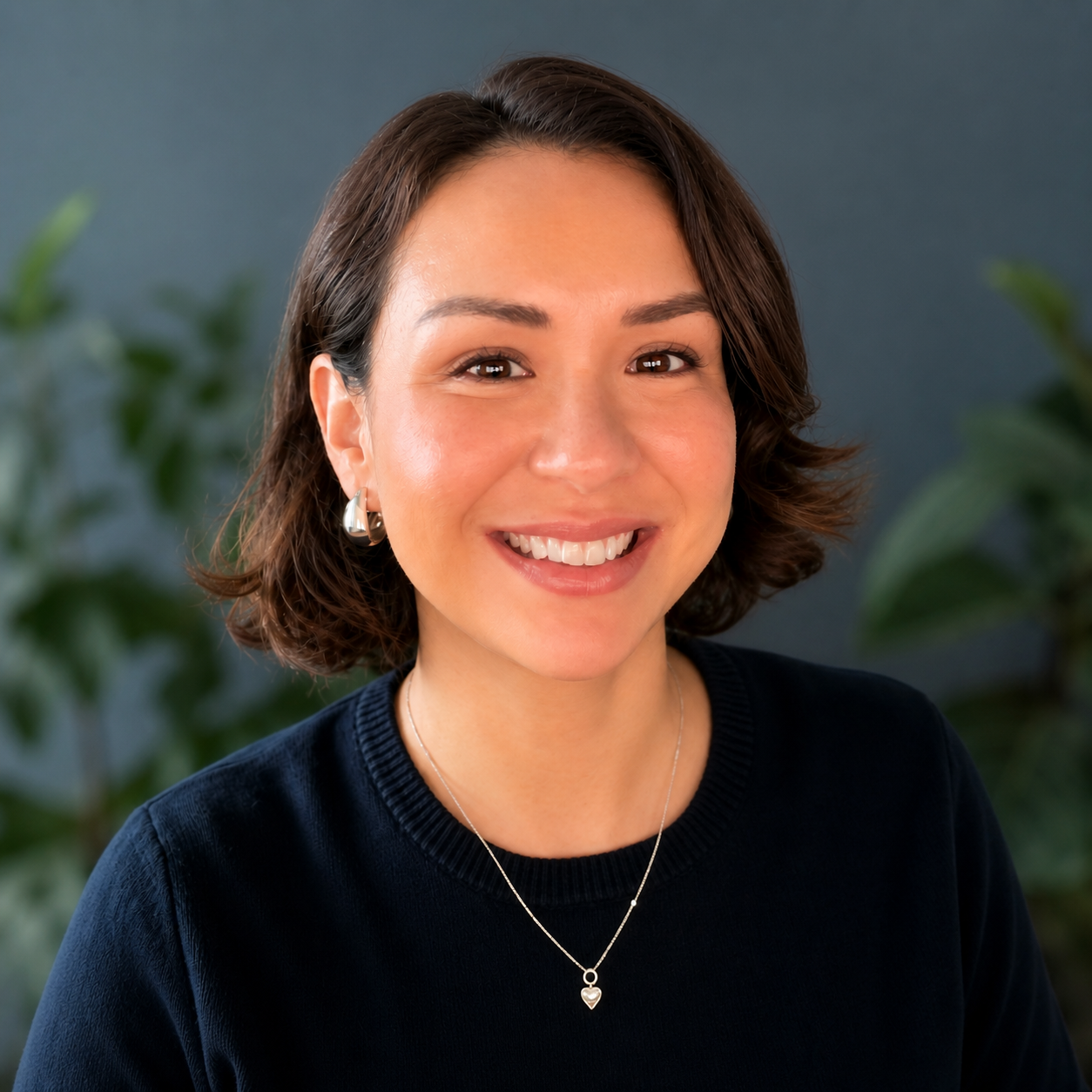
Amor Sexton is Head of International Operations for Blockdaemon, the leading independent blockchain node infrastructure to stake, scale, and deploy nodes with institutional-grade security and monitoring. Amor is an experienced global leader with extensive commercial, legal and operational experience, and a diverse background that includes operations, strategy and commercialization, marketing and communications, regulatory and legal, and design and delivery of enterprise-grade products and solutions.
This episode of MoneyNeverSleeps is sponsored by SecuriCentrix. SecuriCentrix is a trusted cyber security company with offices in Dublin, Cape Town and London. SecuriCentrix provides expert advisory services, primarily in the finance and fintech industries, with tailored security solutions to fit your specific needs and regulatory challenges.
In this episode, Amor and Pete Townsend talk through her path into blockchain that led her to Blockdaemon, and also dive into:
- How her legal experience and time working in innovation, technology and financial services gave her the horizontal view of what it takes to run a business, especially in the crypto and blockchain space.
- The unexpected legal parallels between bitcoin and native tribal fishing rights in Australia and the trigger for Amor’s entry point into crypto and blockchain.
- Amidst all of the noise and the hype, how the simplicity of providing an easier way for people to participate in networks enables web3 ecosystem growth.
- How the institutional infrastructure space in crypto and blockchain and institutional client expectations of resilient internal processes and practices can help drive overall blockchain adoption.
- How the incredibly complex network upgrade that was the Ethereum Merge proved that a decentralized network can operate at scale.
- How Amor’s insatiable curiosity, her tendency to think around corners, join abstract dots and break down a problem into its individual components have impacted her ability to adapt to such a broad range of activities in business..
- How expressing yourself in such a way that is attuned to your audience brings people along with you for the journey, whether it be a colleague or a client you’re trying to win.
- Amor’s creative outlet and how to wind down after a 12-13 hour day by cooking for family and friends.
LINKS:
Connect with Amor Sexton and learn more about Blockdaemon
Follow Blockdaemon on Twitter
Episode title inspired by Express Yourself by N.W.A.
Leave a review and subscribe on Podchaser | Apple Podcasts | Spotify | Google | Overcast
Check out our MoneyNeverSleeps website
Follow MoneyNeverSleeps on Twitter
Follow Eoin Fitzgerald on Twitter
Follow Pete Townsend on Twitter
Get in touch at info@moneyneversleeps.ie
--- Support this podcast: https://anchor.fm/moneyneversleeps/support
0:11 Hey there, I'm Pete Townsend, and this is money, never sleeps. We look inside the minds of entrepreneurs, and at the crossover of startups, Enterprise Finance, technology and Life. As We Know It, This episode of money. Never sleeps is sponsored by security. Centrex security, Centrex is a trusted cyber security company. With offices, in Dublin, Cape Town, in London, secure. Centrex provides expert advisory Services. Primarily in the finance and fin Tech Industries with tailored Security Solutions to fit your specific needs and Regulatory challenges on the show this week. We've got hi, my name is a more Saxon and I'm head of international operations for Bluff. Damon black demon provides institutional grade blockchain infrastructure enabling businesses such as exchanges Banks, custodians, trust lenders, protocols and others to steak scale and deploy nodes, featuring MPC. Eeyore multi-party, Computing multi-chain, apis, and proof of stake, validation.
1:05 In this episode, a more and I talk through her path into blockchain, that led her to block Damon including some of the highlights of her time with City BNP Paribas and coinbase in the last decade. We also dive into block Damon and the impact of the etherium. Merge on the Block, Damon strategy. Finally, we Riff on the character traits that have enabled. A more to become an experienced Global leader with extensive Commercial Legal and operational. Variants the diverse background that includes get ready for this operation strategy, and commercialization marketing, and Communications Regulatory, and legal, and design, and delivery of Enterprise grade products and solutions. All right here on money, never sleeps.
1:51 Hey, I'm Maura. How's it going? Good, thank you. Awesome. To have you on the show. It's been a long time coming. It's nice to be here. Great. We'll listen, you've done so many things in your career and so incredibly versatile and just thrilled to be having this chat with you and digging in a bit into some of the things that happened that got you to this point, but also learn more about block Damon and the critical importance of block Damon, too. Overall web through ecosystem and blockchain in general. Okay, so maybe just to get started. Can you share some of the foundational experiences that were critical to getting you to the point in your career that you are right now? Sure.
2:34 I mean I think maybe if we start at the very beginning it sounds like a serious thing to say. It was a foundational point, but I spent the first few years dabbling around a little bit. Wasn't quite sure of the direction. I wanted to had ended up doing a number of different roles from marketing roles to Administration roles getting involved in startups and then I went back to University and got a law degree which kind of set me on the career path that I'm on now and then moved from law into Innovation which is a very unusual jump there was a connection there because I specialized in blockchain and crypto law back in Australia and when I moved to Ireland I wasn't sure that I wanted to re-qualify but because I'd been doing that work.
3:15 I was able to join Citibank and Lead their National digital money portfolio because Legal kind of my legal experience and knowledge is and and crypto experience was helpful in that context. So I think between that and then you know working innovation technology and financial services over the last seven years. The very different roles as you said plus my legal career and then my experience in finance and banking have given me a good horizontal view of what it takes to run a business especially in the crypto space or the Block Chain space. Yeah, incredible. And You know that just in looking at your background and being aware of a lot of it. But seeing even more all of the different colors of this come out and, you know, you've mentioned City and there was BNP power button there. Coinbase block Damon now sales, recruitment media, PR and calms lawyer consultant.
4:09 Advisor blockchain Workshop, facilitator, Innovation manager, digital transformation leader. See, xux operations strategy. Out your role with block, damn it. So that diversity is incredible and to and I think it in the chats that we've had around obviously you know you were wonderful mentor, on our techstars web 3 program and the chats it. We've had around that that your diversity in skills and adaptability really come to 4. So it's you know anything that you can point to in the backdrop of what was the moment in crypto and blockchain for you that made you sit up Up and say, we'll listen, this is an area that I'm going to pursue. Yeah, I think I think one of the things that's guided my career because is just my light, insatiable lack of my insatiable curiosity, I just, I'm always curious, I love a challenge, the media or challenge, the more I like to get in and figure it out.
5:08 And that's probably why I've had so many different roles, but for the crypto one in particular, I was working for a law firm who specialized in startups and we had, it was December 2013, we had in Australia. In start-up walk through our door and Sydney saying that they were Bitcoin merchant services company and we were like, what? Yeah, yeah. And I think what really attracted me to it in the first place was just that challenge that I spoke about the intellectual challenge there at the time. No one even knew what it was, let alone, how to regulate it. And, you know, I remember one of the things I did back at the beginning of my journey and crypto was look at the And tax laws and try and see what was the most appropriate way to tax Bitcoin. And one of the challenges that we had back then was the fact that a lot of the arguments were saying that it's intangible. So you can't exercise property rights over it. We ended up using this argument from a case I'd read about in University with Native title fishing rights for the high court of Australia said, well, something doesn't necessarily have to be tangible for you to exercise proprietary rights. It's kind of funny because it's the one case I didn't read before my exam and it haunted me. You hear that?
6:22 I was wow I did when I got to use it fishing rights yeah native title fishing rights and I think that's what initially drew me to the industry. It was more of the intellectual challenge their groundbreaking Concepts that really challenged the paradigms that had existed for so long. And then from there it kind of a kind of grew with the excitement about the possibilities of the technology could bring but it was really that first, the first kind of major challenge of trying to figure out What it is, how is it different? How can we contextualize it for the knowledge that people have today? That's fascinating because I've been talking about recently to a few different folks that the whole initial cypherpunk effort of where Bitcoin came from in that The Originators of Bitcoin. And I think we all can say with a fair enough degree of certainty that it wasn't just one individual named Satoshi Nakamoto, right?
7:17 The creation of peer-to-peer electronic cash. The Originators of this just set out to prove that you could own data and that there were whether that was some type of value or some type of other data point or file or whatever that you could have this provenance. And this, you could demonstrate that there is ownership of a piece of virtual property or data or something in the virtual world, okay? Using the internet or using distributed computing, could go down a big rabbit hole with this and but the first thing that Happened to say, well, let's see if we can do this because a lot of the people that were involved with this, had tried with this e-cash push before to be able to do something in this space with in creation of a crypto type token.
8:03 And when you talk about things like fishing rights, that just points to this is that, you know, the legal similarities between an intangible piece of data that actually has value and intangible. Whether it's an agreement or whether it is something that is granted Somebody it is the right to be able to actually fish the similarity. There is just so striking that it all came back to that. I just I yeah it's probably one of the high moments in my career mainly because it I did really bad in that exam because I hadn't bothered to read. There was like three major cases that you needed to read. And there's a whole question just on that case and I walked out of that exam shell-shocked, just going. Oh my God, I can't believe you forgot to read that case. And so it was something that he literally hot Victory and I don't know if I hadn't made that mess up at University and if I hadn't forgotten for that exam would, I would have come to mind later on when we're looking a bit quite or not. So I think all the stars aligned, but there are awesome. Awesome.
9:05 And why don't we move into into block, Damon and tell me about the source of your conviction on why? This is a perfect thing for you to be working on right now with the context of blocked a manned and the latest with what's going on with a business. Yeah. Tar. So I guess a little bit about block them and it's really, it's a web three infrastructure company. So the idea is, especially for institutional clients. The idea is that we're essentially the backbone of the web three industry when it comes to infrastructure. So it's use case agnostic. We support many, many different institutional clients for whatever, use case they have and it's everything from nodes to validators, apis and PC technology.
9:48 And I think that's why I like the company. So Much. And I think that's what really drew it to me as well because the industry itself is continually evolving and growing. And I love the fact that because we're infrastructure and we use cast agnostic. We can really play a pivotal role in helping the industry grow and helping the ecosystems grow. But we're not necessarily tied to the specific Trends or the ups and downs. It's not that we're immune, but we're, you know, we as long as we build great technology and we have that Foundation, that our clients can Can use, they can launch whatever, use case they're looking to launch. And we can really kind of support the growth and continued to play a big role in the evolution of the industry without having to guess without having to be tied, to a specific concept of what blockchain can be. Because I think people are still figuring out all the different ways that you can use it.
10:44 And their utilization of the technology is still very much changing and evolving thing. Yeah, definitely. You know that brings to mind to points a more. Is that one? There are? I was looking at this last night for something and I think there's, you know, I have been referencing 30 million, daily, active users of metal mask, wallets. And Madam asked, is the most popular of the web three wallets. There's tons of other ones out there, but that would be where the majority is probably alongside coinbase wallet and a number of others, okay? And it's still like you said, for those of us in this space, it's huge and its massive and important. But the space All from a Global Perspective is still pretty small, but that the, the opportunity for where things will go. Someone was asking me about metaverse yesterday, and the overall economic projections for a metaverse economy, being somewhere in the region of five to thirteen trillion, and obviously, blockchain powers, or at this may not be obviously to everybody, but at least from, you know, the, the the, it were my thesis lies and where my beliefs are, is that Jane is a significant enabler of metaverse and that for that to all operate with fluency and very low latency and being able to have people immersed in these 3D virtual worlds, you're going to need to stand up an awful lot of notes. Write an awful lot of blockchain nodes in order to do that. So even though the industry that block Damon are servicing right now and Incredibly very, you
12:15 know, very successful role in the industry right now on the global scheme of things. It is a small industry Tree. But one that has significantly important growth potential for the global economy as we move ahead. Yeah yeah yeah I think I mean I've been in the industry now since December 2013. So I've seen many different permutations of what the industry is focused on and the way and by that I mean kind of Trends and how they use the technology and I think that's why the infrastructure play is so exciting to me because I've been through a few different iterations and I know there's going to be many more iterations. And I this isn't my idea. It's an idea that actually one of really really smart member of the Sydney. Blockchain Community gave me years ago but he drew the analogy between blockchain and containerization and the shipping industry.
13:05 The idea that what it really gave was this this way to securely move value from point A to point B in value in shipping was the cargo and here it's data. And so I think in the same way that the containerization Really transformed the global economy really because it made it so it made globalization of trade that much more efficient and you know it changed it changed the way. Docks operated. It change the shape of ships. It changed it really had this phenomenal effect across the world. I think I'm not saying the blockchain will have the same level of impact, but I think because that's simple concept of being able to tokenize data, being able to ascribe, Characteristic to that data, whether its identity, whether its Financial, or otherwise, and being able to secure the transfer of that across the network.
14:00 I just think that's, that's just going to mean that. There's so many different things that people can use it for the future. The things we know like metaverse and those things we just they're not even on our radar yet. Yeah. And you're the one thing they all have like you said, is it snows, it's private key management and Technology. It's even I even think that I love. Are you be pretty product to the API Suite because maybe you don't need a node. Maybe you just need to be able to access the network and be able to write two nodes or interact with nodes. And I think all of those different types of ways that we can provide an easier way for people to participate in that works. I think that's, that's really what we do.
14:40 And that's what excites me about it because we can watch the ecosystem grow across all of the different participants in all of the different ways that they want to interact. Yeah, definitely. And like looking back 20 years ago and seeing before the Cycles began with blockchain and crypto was, you know, a little thing called the.com burst in 2001 and being right in the middle of that because I had my dad had asked me back at that point. I was working. I just finished working for Fidelity and he said people what would be a good Fidelity fun for me to put some money into for, you know, 23 years and I said oh there's this great emerging Tech fund that was completely tied to NASDAQ in 2001 and that drop from 5000 like 1,300 Almost mirroring the etherium levels of price drop that we've seen and you know that the companies that came out of that like my uncle was working for someone called Bay networks at the time who ended up being acquired by Cisco, right? All the infrastructure that Cisco built for the internet to start scaling what and they've been incredibly successful Global player now.
15:41 So I'm kind of, I know there are way too many analogies and parallels drawn between what was built. After the.com crash. That was the first one of these, that we had seen in a while in terms of significant Market, drop or the first one that we saw that was tied to kind of over inflation of technology and the valuations around that. And now we've been through probably for crypto Cycles now. But it's the last one, probably the last two that have been the most prominent terms of, at least media attention and seeing the companies that have weather the storm throughout that, you know, picks and shovels. He's kind of where, you know, it feels like the good money's at, you know. Yeah, no definitely I think but I think again that comes back to the idea of recognizing that some things in the industry are going to last the test of time their pervasive and then other things are a trend. I guess the trend of what people happen to be interested in as far as using the technology at a particular point in time. Yeah, you're differentiating between that and I think the media, the media and the general public. If they're not there, what they hear about other trends that, you know, and and that's always going to be What gets the focus and being able to separate the noise from that relates to a specific Trend and looking at the technology and being able to critically, critically analyze that as a kind of a separate opportunity.
17:00 I think is really important. It's just like, you know, people use the internet for many different things and you don't kind of say the internet is tuned and never going to go anywhere. You look at the particular things and activities and people are carrying out using web to technology in the interim. Let me take a minute to tell you more about our sponsors security Centric. Strives to be the trusted partner that secures your information assets deemed critical for your business security. Centrex also delivers the highest level of security, expertise and support to their clients. Even further security, Centrex provides independent cyber security assessments and advisory against best, practice industry, standards and compliance Frameworks working, as an extension of your team.
17:48 Reset tricks helps you recognize and controlled data risks to your business by understanding your level of risk, in short security, Centrex provides many solution offerings from assessment and advisory managed Security Services Cloud infrastructure. Validation vulnerability management and testing and payment security. Get in touch with the team at security. Centrex.com to learn more or email info at security. Centrex.com, that's SEC. You Ric entr. RI x.com. And well, as I'm looking to rebuild my investment thesis for the next text arts program.
18:28 I am pointing to infrastructure, right? And one of the things I'm thinking about that, I want to get your Insight on is that right now in the crypto space, there are a lot of propositions that are consumer focused or individual focused. And that would be based on perhaps bringing a token, a market that incentivizes users and developers and that is Intrinsically linked to your value proposition in the to our package together. You build a decentralized network, you scale that over five years, your token eventually becomes representative of the value of what you've created. Okay and there's obviously a lot of regulatory lenses on this now, in terms of what is a token and is at a security or is it not a security and that is changing.
19:13 It feels like in the US on a daily basis at least but in the you know in Europe we have the mica or Mica depending upon how you want to. Say it. I never pick one or the other. Yeah, regulation Mica Mica. Okay, thank you. Like, the artist who was surprisingly. I was at a, what was it? The oxygen music festival in Ireland years ago and Mica the artist was surprisingly good. I didn't go to see Mica, but he played there and he was surprisingly a good Entertainer but my Australian accent notoriously butchers things. I said wouldn't necessarily use my okay my daughter watches this Australia. Oh, called little lunch and she's now trying to mimic the Australian accent and she's getting quite good at that. She's getting quite good at that clench your teeth when you talk, apparently, that's the secret to it. There you go.
20:04 Okay. I'll clue her in on that. I'll let her know, but the, you know, where was I going with this? It. Oh, okay. So, you know, where where I'm thinking about this is obviously the regulatory lens on consumer, Focus or individual Focus, web three propositions. And that, you know, you I've worked in both the regulated blockchain and crypto space and now the space that doesn't require regulation. It doesn't have regulation on top because it's infrastructure. How are you thinking about, what has it been like for you and working the regulated Space versus working in that this space? It doesn't require regulation in terms of seeing projects and products and initiatives grow and it, you know, and start to scale on the market. Yeah, I I probably have a unique view on this because I spent years practicing as a lawyer.
20:50 So I don't think I necessarily And I have the same view. The lot of people doing the industry. I think that there's definitely a compliance burden and there's definitely a lot of administrative overhead that comes with being regulated but in the infrastructure space I actually think in the kind of institutional space let's say not just infrastructure but in the institutional space, actually think that regulation can drive adoption and can drive interest in the market because a lot of your clients are themselves regulated institutions or it give you think about it. What does regulation bring In regulation, brings a level of oversight, which gives people comfort in the fact that their counterparty or the business of they're interacting with is a legitimate business, that's resilient. And has certain very important processes and controls in place. And I think when you operate in the institutional space weather Institute infrastructure, otherwise clients expect a certain level of behavior from you. They expect you to have this resilient Internal processes and practices you know getting ISO certified. Like we are that's a really big deal because that gives people a level of comfort.
21:59 How we run our business, having an AML and compliance program actually gives people a level of comfort as well? Whether or not you're, you're required to have one by law. I think. I think the institutional space is is different to retail in that the expectation. Even if there is no regulatory expectation, the expectation from your clients is that regulated or not? You hold yourself up. Up to a certain standard and you operate at a certain level and often that reflects the requirements that you would have under regulation, it kind of regulatory regime as well so she can potentially be a good thing in our space. It can well like, you know looking at the different certification processes that I went through when I was in traditional finance and now looking at what you know Tech firms have available to them like sock to, right? And what is the other one you my is certified. Oh absolutely Dave.
22:51 Keith, who's a friend from a business called circuit, you know, the very earliest stages decided to go after that and that's, you know, really help their business grow from two people, you know, three years ago, up to about 30 people with funding that they got in the last couple of years. So that's, that's been critically important to them. And on that point on regulation being helpful, Owen, Fitzgerald and I were talking about this last week on the show was that, you know, someone had asked me, is there a point of trying to offer to decentralized exchange has the bility to identify their customers and I'm like they don't have to and nor do they want to and nor will the customers want to? And Owen said to me well why wouldn't you want to? And I said well it's not because I'm afraid of them knowing who I am because I'm reporting my trading anyway it's that I don't trust them with data right. I don't believe that they have robust compliance processes in place to be able to, you know, to be able to protect my data and for all to be safe.
23:47 So when you're looking at it from its to shal angle and having things like sock to and is 0 that does To create that trust and Trust can be obviously everything in business, right? And I think it's about proportionate regulations. Are that's appropriate for the activity that you're carrying out and I think that's what the challenge is. So like you said, if you are an infrastructure company being regulated for what, you know, where were the risks inherent in your activities and maybe the focus of regulators would be on the resilience of the network and your processes there, because that's, that's the role that you carry out in. In the ecosystem and I think that's the main thing making sure that as the regulatory environment develops an evolved for crypto and blockchain that it's focusing on the business activities. Obviously you've got the characterization of the token and the kind of interaction which is what the SEC has been focusing on, but looking examine your stripping away, all of that and just focusing really on what what are the business activities of the company is carrying out where is the inherent risk in those activities and let's focus. Not so that they don't inadvertently. I do believe like I'm saying, I'm kind of content for myself here.
24:57 I've said regulations a good thing but it can stifle Innovation if it's applied in the wrong way. So I think having that balance and and focus on the the actual activities itself and not the industry as a whole or even like to a point, I do think you need to look at the characterization of Tokyo but you can't have this broad brush approach which is actually I think Micah's. Characterization of tokens. Isn't the worst? I think it's at least better and provides a little bit more certainty than Then what we're seeing in the u.s. at the moment when there's still a lot of uncertainty on the characteristics of tokens, ya know, having having that Clarity and knowing what do I fall into that camp or not? Like I went through with somebody last week even on the the Ireland vast virtual assets service provider relation. I said, 1 2 3 4 5.
25:41 Are you doing one of these five things? Yes or no, right? Having that certainty on whether or not you need to actually apply for that authorization is a good thing, right? Yeah. You know, vast was just a drop in the bucket. R2 where Meek is going to go and you know, what do they say? 18 months after its it's signed into law, it will become effective. We're looking at some point in 2024, I expect at this stage right with it, with a fast follower, probably forgive her afterwards. Oh, definitely, definitely know when you talk about understanding the activities that you're conducting and what are the risks? Yeah, I can hear the lawyer and you coming out of me. Absolutely. I mean for me, but I guess that the danger of what maker has done and I know, The Regulators and the policymakers are aware of this is unfortunate because it ties back to our earlier conversation about how the industry keeps evolving defining it in the way that they have done means that the industry will continue about to evolve. And how do you find that balance between providing certainty and definition?
26:38 But also being able to adapt your consensus? New use cases pop-up. And I know that's the challenge they had, for example, with defy. So I don't envy the policymakers, I think they do the best they can. But, you know, we're The industry and struggling to keep up with all of the changes. I can't even imagine what they're experiencing as they as they go and try and figure out the most appropriate way to regulate it. I know, I know it's not easy, speaking of things that are not easy, try pulling out an engine of a car that's going 150 miles per hour, and replacing it with a new engine and that's something that etherium went through in the last few weeks with the merge. And, you know, some of the stats coming back from that is that it's 99%. %, less usage of energy.
27:23 People would compare the usage of electricity by the etherium network, to be equivalent to that of Belgium in the country of Belgium or point two percent of the world's energy usage. And now, it's not even in the low percentages or even 1/10 or 1/100 of a percentage since, you know, since the merge how strategically impactful, do you think that the theory emerge and what's coming? After that will be, how important will that be to the black day in the I think it's, I think it's really important, not just for the, not just for book Damon, but for the industry, as a whole was traffic, it's funny because the morning after the merge happened, I didn't sleep at all that night. I was waiting.
28:05 My phone was off silent for the first time, but over time, it kept waiting for the phone call. And then couldn't couldn't sleep properly because I kept being convinced that I'd missed the phone call. So, kept waking up and checking my phone, and I was trying to explain to my husband that night and the next morning about the big event. He call you blessed and he tried to engage with. Yeah, he didn't understand it because I guess he just not. You have to kind of be in the industry to really get the significance of the event. And I think for me the biggest thing and this is probably because I wear that operational hat and that's the way my brain works. But the biggest thing is that it really did prove that you can operate a decentralized network at scale.
28:47 The fact that they did that incredibly complex Network, upgrade practically. No downtime. They didn't compromise the security in the dissent realization of the protocol and just the sheer volume of people that were involved in that across the globe. Purely decentralized, I think was just a milestone moment because in my mind it moved it from being this nascent technology concept which I think it it had evolved from that. But there was still still Echoes of that when people would talk about the concept and it proved that no, this isn't Astral, it's not straight forward. Speed is complex and you need experts to understand, but you can actually have events like this on chain and be able to have them run smoothly without needing to have the normal centralized process as you'd have with a network upgrade like this.
29:41 So I think that was very that was a very big deal for the industry and and for blocking as well because we were we played such a you know we were actively involved in that process and it was fantastic for our team. To be involved in to have experience that. I think it was a really big deal for everyone. And then I think the other thing is really, you know, with aetherium, they've brought a new way of or they've introduced new ways of incentivizing network participation with transaction rewards and me, the, I think it was really interesting to their participation in the network and how we incentivize that in order to increase the resilience of the network is more people that are involved, the more secure and resilient the network is. So I think it's it's a really interesting concept. I'm quite excited about it.
30:24 I know that it's also going to drive a lot of interest in the network as well from our clients. So I think that's another really important Evolution with the The Ether merge. And then, I think just generally the number of new validators that have joined the network, the people who are now probably going to be a little bit more interested in it because of the fact that some of the concerns around ESG of been removed and energy consumption, I just think it's, it's been an amazing moment to show that the industry can operate at that scale. It's introduced new people perhaps to the network into the industry that have been watching it from from a bit of a distance and waiting to see what happened. And perhaps might have had some concerns around different parts of different parts of the way that the proof-of-work protocol was operating previously.
31:13 So I think it's it's exciting times what that will mean in the future. I think it's going to again come down to the fact that one of the things about I love about a theorem is that it's got that you Scylla T aspect to it and it's so it's so supportive of different use cases, and there's so many different ways people can use that. So I'm hoping and I expect that we'll see. Lots of new innovation happen on top of the network now, which which, you know, will just be great for the industry as a whole. Yeah, yeah. It's a great point because you wonder how much that how clogged the network had been and how you know, it had slowed down gas Is fees even though the merge is not intended to significantly, reduce gas fees? It feels like it has so far, but I think it's just a minor operation.
32:01 But all of that had been a big narrative in grip down Block Chain for the last couple of years. And what might that had driven towards layer twos like a polygon or others that were you then are dealing with different set of constraints. So I'm excited as well to see what Founders are then saying to me. Listen, we are building on it. Him, right? And here's why and now that we're just in the very beginning, we're only a, you know, a few weeks on and I was listening to the, to the guys on the bank list podcast, talk about this and that the etherium I think it was the was it the burn of tokens or no, it was a supply created, it was a supply created since moving away from the more complex proof of work into the the less intensive proof of stake and that the etherium tokens that are created.
32:52 It was already Eddie far less and was seeing this impact on the supply. Now impact on Supply. Will that then drive demand and drive the price higher? It's like what we're looking at the three to five-year Arc here, not thump something, that's going to happen, over three to five weeks. But yeah. Excited to see how this all unfolds thinking about shifting gears a more back into your track record, a bit. As I talked about with you at the beginning, you've done a lot of different things. What do you think have been your go to character traits? Really the The parts of inside a more that have enabled you to adapt to so many different situations almost like a Founder, an entrepreneur, you know, in the, in the middle of growing and scaling what would become a unicorn? It feels like, you know, you've adapted to so many different situations.
33:43 What are the things inside that? You think of it have enabled you to do that? Sorry, that was my stereo my watch. It was my Sonic. Okay, I get that too. I get that too. I must I must have knocked it with my hand. I think one of the things I've been told before actually was one of my colleagues at City who mentions this. He said I'm really good at thinking around corners and joining abstract dot. So, I think that's probably, that's probably it. A lot of, I always think of things as key, learnings and skills that Pick up being a way to look at something or way to approach something and being able to see the analogies and see the similarities in context.
34:27 I think, you know, whether we were talking earlier about fishing rights and Bitcoin, but maybe it's, for example, how to use your. I ran a design team for a while and being paid. In fact, I started the design center of excellence there and I remember, I used to scratch my head and I used to joke with the guys and say, how did it lawyer and don't running a design team, they taught me a lot about About creative thinking a lot about human Centric design. I was able to use a lot of my training from my, my legal training, on how to how to break down a problem into its core pieces. And how to approach it in a very structured, analytical way, you know, the whole Iraq thing issue rule. Application conclusion is what they teach you at law school and I think core skills like that are transferable whether you're trying to Solve a complex legal problem, or whether you're trying to put together a business case or even you know, we the design team we used to use it a lot as well, like really focusing stripping out the noise the jargon which every industry has its own jargon and looking at kind of the core issues and trying to address them directly and see how you can build Solutions off there.
35:37 That address the core issues. I think that's something. We're just that ability to see how those skills can move. Horizontally is something that that I've Been really lucky to leverage in my career and then I think the Curiosity could and should do earlier. My career hasn't been planned, a lot of people have. I've been asked that before by people. I've mentored by, you know, how do I get a career, like yours. How do I plan it? And I said, it hasn't been planned. I'm I'm curious, I love opportunities. I'm not afraid to try and Chase the interesting work I suppose because I think you're happier in life when you're doing work that you love. Yeah, Yeah. Curiosity and the ability to Part of see the differences and similarities between different contexts and different concepts and because you kind of Stripped Away the outer coating.
36:27 So, do you you do you ever find like II get, you know, my sister's say to me Pete Bridge Too Far. Right? So, you know that, that the seeing the similarities, and I love a good analogy. That sometimes I do go A Bridge Too Far In terms, I haven't brought people along because you are thinking, Seeing three, four, five steps ahead. How do you bring people along? How do you do that? Definitely, that happens to me a lot. Like one of my colleagues actually said to me yesterday, I had he came back with something. I was like yep, that's what I was thinking too. And he's like, you're always, you're always a few steps ahead. Yeah, I think I think one of the skills that I picked up actually, when I was doing marketing PR, the I've brought through. And also, you know, it's also what designers do to is focusing on Your audience and your audience could be a colleague, it could be someone in your team. It could be a client like, whoever it is that you're communicating with and understanding it from their Viewpoint.
37:28 Whether you're trying to explain a concept to them, whether you're trying to ask them to do something, or you're trying to sell someone something, just putting yourself in their shoes and not assuming that, you know what they want and taking the time to ask them. But then also understanding and this is this is the Enoch thing has I'm in a tech role in the tech industry but I'm really about people because I think at the end of the day businesses are run by people and just kind of understanding what that person is interested in and contextualizing it for them so that you could bring them on the journey because everyone's just trying to do their job at the end of the day, everyone has their own things that they'll be focused on whether it's whether it's things that they need to know to do their job or it's things that they might be concerned about in the kind of broader context of the career and just trying to contextualize stuff and taking the time.
38:17 To adapt the communication to a particular person or group of people so that you can really not drag them along, but bring them on the journey because they understand it. And I think a lot of the times in business, whether it's a client that you're trying to win a colleague that you're trying to work with a lot of the times, it's the lack of understanding that can cause challenges, and when people actually understand what's happening, and they feel like they have that transparency in the comfort. And they understand where the direction whether It's what your business is and who you are and how you operate or or what the plan is for a particular evolution in the business. I think that's the main things are communicating and contextualizing.
38:58 Oh absolutely. Communicating and you know the body language and things you do are critically important to understand that people respond differently and my first move away from a completely homogeneous set of people that I had to manage back in the 90s at Fidelity. I went to Bermuda and a woman that I had on my team she was from Molly, I think. In Western Africa and I lost her right eye. She was still working with me, but she wasn't responding and to my coaching and what I was trying to do to motivate her and any time that we had a one-to-one conversation slowly, over the weeks, it just became less and less engaging. And I finally, I said to her, I said what's going on and she's like, I just can't get over that thing. You do.
39:39 I said, what are you talking about? She's like, you sit there with your leg crossed over the other and I could see the sole of your shoe. I'm like so. Sorry, and she said, well, where I come from, that is an insult. When you show someone the bottom of your shoe that is an insult. I'm like, listen, I didn't know that she's like, clear the air. She's like, I know you didn't know that either, but it's in my subconscious that I'm having trouble with that. So, I stopped it and I literally put my foot down, right. So it's, you know, they're these little things when you get into international business and outside of the culture, you grow up in that you know, communication context body language Everything can have a big impact and be able to adapt to.
40:20 That is his. Yeah, exactly. That was one thing that people may not have known about me but the last question we asked everybody on this podcast and more is the following what is one thing that people wouldn't expect to know about you? I guess this is this podcast is more about my professional life so this is something that every one of my personal life noise. But not a lot of people have worked with me on know me, professionally. Don't know that. I'm obsessed with cooking. Okay, I have dreams of owning a food truck one day. That's my that's my big ambition. There's all sorts of jokes amongst my friends and they're so I don't know that actually want to work in the food truck because I don't do well with kind of tight stages.
41:01 I love the idea. Okay. Southeast Asian street food. Yeah, I love, I love cooking. I love food. I dream about food. I think about it all the time. It's my creative Outlet. It's how I socialize. It's how I show love. I show love through food, I love nothing more. Okay. And it's the way ironically the way I wind down so I can do a 12 or 13 hours a day and then cooking a big plate of pasta or some Curry or something like that. For my family is a way that my brain just kind of these dresses and ones down, I'm with you, I'm with you. And what are you gonna call the food truck hadn't thought about that? I the other thing that I guess people wouldn't expect to know about me is I'm a creative thinker but I'm not an inventive thinker. I'm never the person who comes up with the Best name or the idea.
41:49 I'm the person who helps turn the idea into a business. I'm not, that's not me, in fact, I remember I joke about because I remember when Google first launched, remember having conversations with my dad just being like, that is the worst name that I have ever heard. It will never take off. It sounds so silly. It doesn't make sense. So, yeah, maybe a play on my, my first name, that's always a nice handy. Well, listen music, You could, you could and I was the first thing I was thinking of was something, you know, some alliteration of a more and something out and, but on the train up to Belfast tomorrow morning, obviously recording this on a Wednesday, but I'll be heading up with with Kurt Pittman and human burger and Matt McAllister. Shout out to all three of those guys. And I'll tease this out and see if we can come up with a name for you.
42:37 While the four of us are here character 2x2 facing each other. Well be our chat up the Belfast, a check, I know what it's going to look like. Like, I'm in the menu. I just can't, I can't get the name of women in my head. I love that movie with Jon Favreau and with his food truck and then the show that he's done now and the fact is nice. You know, one of the main creative parts of the continuation of the Star Wars Universe now is just even more. Awesome. So yeah, I can't do any better than me with good food and good Star Wars. So, you know, I think we're on the same point here. We'll listen a more. Thank you. I love this conversation and there were Snippets that you dropped in there that I could have dragged into.
43:21 Probably another 30 or 40 minute conversation. So let's do that offline at some stage because I always get such wonderful insights from you. So, thank you so much for being on the show. Thanks so much. That does it for this week, folks, thanks to a more sex in for opening up her mind to help us figure out why she does. What she does links to get in touch with a more and learn more about block Damon or in the show, notes on our website money, never sleeps, that IE. So check us out online. Also, thanks to Conan Brophy, from create sound for mixing and editing. This episode coating is an excellent medium and to get in touch with when you're thinking about launching your own podcast.
44:01 As for me, I'm an early States. Startup investor focused on where fintech meets crypto and crypto meets web 3. You like to talk to me about your business, drop me a line on info at money. Never sleeps that I finally till next time, thanks for listening, see you