Spotify
 Apple Podcasts
 Amazon Music
 Overcast
 Castro
 PocketCasts
 Castbox
 RadioPublic
 RSS Feed
 Where the Next Founders Come From: An Irish Story | Eoghan Powell | WorkIQ [EP. 327]
![Where the Next Founders Come From: An Irish Story | Eoghan Powell | WorkIQ [EP. 327]](https://img.podpage.com/pGyuLXIrq-8H8YMOkZ0DuMntENHBqTXLHW7AfsTJUFw/rs:fit:0:130:1/dpr:1/q:75/aHR0cHM6Ly9tZWRpYS5wb2RwYWdlLmNvbS9zaG93cGFnZS91cGxvYWRzL2ltYWdlcy9iZjdiMGQ1YS1iZTY2LTQyMjYtOTJkZS0wODQ0ODg3NzJjNWQucG5n.webp "Where the Next Founders Come From: An Irish Story | Eoghan Powell | WorkIQ [EP. 327]")
Key Takeaways
- Eoghan Powell explains how WorkIQ in Tallaght serves as an innovation center focused on cultivating the next generation of founders and early-stage companies on the edge of Dublin.
- The Irish startup ecosystem faces a distinct ambition problem rather than a capital problem, particularly regarding regional and socio-economic representation.
- Visible role models and accessible physical spaces act as crucial front doors to entrepreneurship for young people who do not grow up around founders.
- Scaling the warm introduction process helps bridge the networking gap that often disadvantages regional and working-class founders.
- Building a homegrown founder pipeline remains essential for Ireland's economic resilience, regardless of the future footprint of multinational corporations.
Where the Next Founders Come From: An Irish Story
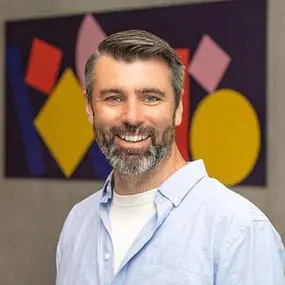
Pete Townsend is joined by Eoghan Powell, who runs WorkIQ, a new innovation centre for founders and early-stage companies in Tallaght, on the edge of Dublin. He's spent the best part of twenty years building and backing companies across education, technology and events, and he thinks hard about where Ireland's next generation of founders actually comes from. This is Part 2 of a pair on the Irish startup scene, after Derek O'Doherty of West x West. Derek covered how founders find the capital; Eoghan goes underneath that, to where founders come from in the first place.
The problem with leaning on the multinationals
Ireland's tax base rests on a small number of very large foreign companies, and Eoghan's worry is what happens if even one of them changes strategy or moves. The surpluses are real, but so is the concentration. His deeper point is that the country hasn't spent the last couple of decades building a broad base of homegrown founders to fall back on. We're good at starting companies and good at growing a few into giants like Ryanair, Kerry Group and CRH, but thin in the middle, the 50-to-200-person companies that become real economic engines.
Are the multinationals even going anywhere?
Pete pushes back. Apple has been in Cork since 1980, Google and Meta effectively built the Dublin docklands, and the time-zone advantage of covering Asia and the US West Coast in a single working day is not easily replicated. His read is that the biggest firms are too embedded to leave, even as the 12.5% tax rate erodes toward 15%, though the newer entrants might not come. Where the two of them agree: whether or not the multinationals ever pull back, the founder pipeline needs building either way. Eoghan's version of it is that Ireland already owns one genuine advantage, the human side of these businesses, the selling and relationship-building, and there's no reason to wait for a multinational to act on it.
Why it's an ambition problem, not a money problem
The heart of the conversation. Eoghan argues the real gap is ambition, and ambition is formed by what you see growing up. A kid in Dublin 4 hears about starting companies around the dinner table and assumes it's a normal thing to do. A kid in Tallaght, Kerry or Mayo often doesn't, and the quiet conclusion becomes "people like me don't get that." He's candid that it took him into his thirties to understand his own version of himself as a founder, and that the missing ingredient isn't talent, it's belief.
The Collison brothers, and what the success story leaves out
Eoghan's point about role models is that they have to be honest. You only see the polished end of the Collison brothers' story and conclude they're simply smarter than you. What you don't see is the realistic, smaller beginning, the way Intercom started in consulting services before the product that made them, and the version of the story where someone proves to themselves they can do the small thing before attempting the big one. The thing that made them successful, in his telling, was going out and trying, not raw genius. For every founder who makes it there are a dozen equally capable people it didn't work out for, and that's fine too, because they come back better prepared.
Building the base
So what does fixing it look like on the ground? A visible front door, a first place to walk in, call, or log on to, that actually feels welcoming to someone with an idea and no map. And the warm introduction, done deliberately and at scale. Eoghan breaks it down to two emails: tell someone why a person is worth their time, make the connection, then get out of the way. It isn't altruism, it runs on reciprocity and trust, and if enough people working inside the multinationals saw themselves as doors that could open for the next founder, the cost would be small and the effect enormous.
Connect with Eoghan
LinkedIn: https://www.linkedin.com/in/eoghanpowell1983/
Website: https://workiq.ie/
Chapters
0:00 Cold open
0:36 Intro and welcome
1:14 Ireland's reliance on the multinationals
2:47 The gap in the middle, and where founders come from
3:17 Why the next Google needs a homegrown base
5:02 The hard question: are the MNCs too embedded to leave?
6:09 Why wait for them? The case for building our own
7:47 Ambition, role models, and seeing the struggle
8:33 The Collison brothers myth
9:55 Does the kid in Tallaght believe they have access?
11:15 Building the base: the front door
12:20 The two-email warm intro, and how it scales
14:04 Where to find Eoghan and WorkIQ
Sharp riffs, big ideas and real insights from smart people, all in under 15 minutes. Hosted by early-stage investor Pete Townsend with the people rebuilding money, markets, and the internet from the ground up.
Frequently Asked Questions
Who is Eoghan Powell and what is WorkIQ?
Eoghan Powell runs WorkIQ, a new innovation center located in Tallaght on the edge of Dublin dedicated to supporting founders and early-stage companies.
What is the main challenge facing the Irish startup scene according to Eoghan Powell?
Powell argues that the primary challenge is an ambition and exposure gap rather than a lack of money, noting that kids from areas like Tallaght often lack visible founder role models.
Why is building a homegrown founder pipeline important for Ireland?
While Ireland relies heavily on multinationals for its tax base, developing homegrown giants and a robust middle layer of local companies ensures long-term economic independence and resilience.
How does WorkIQ help new founders get started?
WorkIQ provides a visible front door, honest role models, and scalable networking mechanisms like the two-email warm intro to help aspiring founders break into the ecosystem.
[00:00:00] Eoghan Powell: We see a lot of kids from the likes of Dublin 4, who think, "I'll go out and I'll start a company," 'cause they have seen that.
[00:00:08] Eoghan Powell: They've lived that kind of experience around the dinner table. But we don't necessarily see it in quite the same volumes in places like Tallaght or Kerry or Mayo.
[00:00:18] Eoghan Powell: You only see the end of the Collison brothers story, you go, "Oh, well, like they're way smarter than I am. And they've just done everything right. I couldn't do that."
[00:00:27] Eoghan Powell: The Intercom story is a very similar one.
[00:00:29] Eoghan Powell: They started something smaller that felt realistic to them,
[00:00:32] Eoghan Powell: But the thing that made them successful was going out and doing stuff and trying it.
[00:00:36] Pete Townsend: This is Money Never Sleeps, sharp riffs, big ideas, and real insights from smart people. I'm Pete Townsend, GP at Norio Ventures. Let's go
[00:00:50] Pete Townsend: My guest today is Eoghan Powell, who runs WorkIQ, a new innovation center for founders and early-stage companies in Tallaght on the edge of Dublin.
[00:00:59] Pete Townsend: Eoghan spent the best part of 20 years building and backing companies across education, technology, and events, and he thinks hard about where Ireland's next generation of founders actually comes from. Eoghan, welcome to Money Never Sleeps.
[00:01:13] Eoghan Powell: Thanks for having me on.
[00:01:14] Pete Townsend: Now listen, when you and I first spoke, Eoghan, you told me about a worry that you have about where Ireland's economic engine goes from here.
[00:01:23] Pete Townsend: So why don't you lay it out for me, and what do you think is gonna happen over the next five, 10, 15 years if we keep leaning on the multinationals that are here?
[00:01:30] Eoghan Powell: Ireland has done a phenomenal job in bringing in big tech multinationals.
[00:01:36] Eoghan Powell: The challenge we've got now is like, our tax revenues here are hugely reliant on a very small number of of companies. And while it's great that we're generating these huge surpluses, what does that mean if one of Apple or Pfizer or Microsoft decide they're gonna change their strategy or move away or whatever?
[00:01:57] Eoghan Powell: What we haven't done for a very long time is just generate that really broad base of people who go out and try and start things.
[00:02:07] Eoghan Powell: And, you know, we're surprisingly good at creating big companies. You know, if you look at Ryanair or Kerry Group or CRH, we actually build our own large multinationals at a pretty good rate.
[00:02:22] Eoghan Powell: We're actually quite good at, like, the business start piece.
[00:02:26] Eoghan Powell: But actually what we don't do is that middle ground between the two of them, and we just don't generate anywhere near enough in that sense.
[00:02:34] Eoghan Powell: We have a lot of formations, but that doesn't necessarily mean that they're turning into that kind of 50 to 200-person style company, which could go on and be a giant multinational or might just be a real economic engine.
[00:02:47] Eoghan Powell: That's the real gap that's there. But in order to get there, you kind of have to start at the bottom, at the grassroots level. We see a lot of kids from the likes of Dublin 4, who think, "I'll go out and I'll start a company," 'cause they have seen that.
[00:03:02] Eoghan Powell: They've lived that kind of experience around the dinner table. But we don't necessarily see it in quite the same volumes in places like Tallaght or Kerry or Mayo or a lot of these, a lot of other places around the country where we have the opportunity to do more of it.
[00:03:17] Pete Townsend: just looking back at the multinational corporations, right?
[00:03:21] Pete Townsend: We've got Apple, we've got Google, we've got Meta, you name it. Nine of the top 10 born on the internet companies are here.
[00:03:27] Pete Townsend: If the MNCs continue to flourish and we don't address this base of the founder pipeline, what's gonna happen
[00:03:36] Eoghan Powell: there's two pieces with it. One, it's not either/or, so like, part of what attracts the likes of Google to places is talent and energy.
[00:03:47] Eoghan Powell: One of the things you see in the Valley a lot is, people who worked in Google leave, start something, and then get acquired back into, to Google when it works.
[00:03:56] Eoghan Powell: It's the pharma playbook. Big pharma doesn't necessarily do all its own R&D, it just acquires the winners.
[00:04:02] Eoghan Powell: And we do that really, really well here. If you look at Galway, like med tech capital of Europe, and it's largely just because of that. People have the knowledge, the expertise. They've been inside those organizations. They have those networks. They go out, they build something, and then they sell it back into the company maybe that they were with before, and they're able to go off and, start that cycle all over again.
[00:04:25] Eoghan Powell: If we're not generating that, that energy, that intensity, that vibrancy, why would the next generation of Google, you know, decide to locate here?
[00:04:35] Eoghan Powell: Our tax advantage is gonna go away, our talent advantage is gonna have to change to go with that.
[00:04:40] Eoghan Powell: How many Irish startups are selling into, into Google, into HubSpot, why are we not doing that?
[00:04:45] Eoghan Powell: Why are there innovation funds not actively working here? They're in London, they're in Paris, they're in Israel, but they're not really that active here today. And so, that's a piece that I think we could really close the gap on.
[00:04:58] Eoghan Powell: And it benefits every- both sides of that equation as well.
[00:05:02] Pete Townsend: Okay. So let me ask you the hard question then.
[00:05:05] Pete Townsend: Like Apple's been in Cork since 1980, Google and Meta basically built the Docklands, right? And I've always thought that when you look at the presence of these big MNCs, big tech firms in Ireland, that there's always a benefit of being in this time zone, right?
[00:05:23] Pete Townsend: In that you can cover Asia, you can cover West Coast of the US, an hour on either side during your workday.
[00:05:30] Pete Townsend: To try to look at this from the perspective of, okay, the 12.5% tax rate, the benefit of that is eroding, right? And will continue, and that will go eventually.
[00:05:42] Pete Townsend: And what is it, 15% that we're gonna end up at?
[00:05:45] Pete Townsend: I still think that those bigger companies will still stay here because they're just so embedded, but perhaps it's the new ones that may not.
[00:05:56] Pete Townsend: If something happens to that part of the economy where jobs go, yeah, Ireland's in trouble
[00:06:02] Eoghan Powell: Massive. Uh, like I think, the biggest concern obviously is jobs going and tax revenues going with that.
[00:06:09] Eoghan Powell: The other side of that though is why do we need to wait for them to do that? If- Yeah ... if the ability to sell becomes, the, the big competitive advantage, the ability to build and maintain relationships, there's a huge space there for for Irish people and Irish companies to go out and, a- and do that. But we kind of have to enable them to do that.
[00:06:31] Eoghan Powell: They need to feel like that's a thing that I can do. That's a space we own, we can own, like legitimately, and then go out and, a- and go after that. The biggest challenge that we have right now is and again it's not necessarily pitching one against the other, but like if you are a really successful, talented account exec and you're sitting in HubSpot today- And someone says, "You, why don't you go out and gamble it all yourself?"
[00:07:05] Eoghan Powell: Uh, you know, back yourself on doing something." And the people around you say, "That's the good job. Take the 150K." You could make re- you could make insane money if you land the right accounts. But having the backing of lots of people around you, when you go and talk to your ma and tell her, "I'm gonna go start my own business," if she goes, "What are you doing?"
[00:07:27] Eoghan Powell: "Get away with your notions. Keep your good job. Buy your house. Put the head down, just keep going," instead of, "All right, what's the worst that can happen?" The worst that happens is you go away, you do that for six months or a year, it doesn't work out. If you're good enough, the job in Microsoft will still be there, the job with, the, the MNC will still be there.
[00:07:47] Eoghan Powell: I grew up around founders and I knew at the age of seven that I wanted to start a business. And it wasn't till I was in my 30s that I realized that made me a weirdo. And part of it was, and it's taken me a, like, a really long time to understand the whole picture of it, 'cause it's easy to say, "Oh, there was these people that you saw that were successful at it," and that is one part of it.
[00:08:10] Eoghan Powell: You see someone who's a bit like you who's done well. But the other side of it, and I think the m- kind of the more important side of it, is that you see people struggle with it and get through it. And so you're not going into these things with, rose-tinted spectacles. Seeing people who are, trying stuff and it not really working out and then going again.
[00:08:33] Eoghan Powell: You only see the end of the Collison brothers story, you go, "Oh, well, like they're way smarter than I am. They had, they were in the right place at the right time with the right idea, and they made all the right... And they've just done everything right. I couldn't do that."
[00:08:48] Eoghan Powell: The Intercom story is a very similar one.
[00:08:50] Eoghan Powell: They started something smaller that felt realistic to them, consulting services, and then they were able to, like, put some product together and sell that thing, which as much as anything, like, one, it gave them an element of financial security, but it also gave them an element of going like, "Oh, I can do this.
[00:09:10] Eoghan Powell: So next time out
[00:09:11] Eoghan Powell: it's as hard to build a giant thing as it is to build the small thing. I might as well do the giant thing." The smarts that they have is not the thing that made them successful. It helps and it definitely makes it, you know, long term an important piece of it.
[00:09:28] Eoghan Powell: But the thing that made them successful was going out and doing stuff and trying it.
[00:09:32] Eoghan Powell: For every one of those people who, who have managed to, like, get there and have the big exit and do the thing, there's a dozen people who are as smart, as hardworking, as talented, who it just didn't quite work out for.
[00:09:43] Eoghan Powell: And that's also okay, because they will often, end up working in those companies. They'll, they'll be better prepared for the next time it comes round if they decide they wanna go again.
[00:09:55] Pete Townsend: You told me something about the Collison brothers and a kid in Tallaght,
[00:09:57] Pete Townsend: The kid in Tallaght has as much access to the Collison brothers as he does Elon Musk.
[00:10:02] Pete Townsend: It's gonna be difficult to get in touch with either one, right? Or are you saying that because of the closeness and the density of the network here in Ireland, that they do have the access?
[00:10:12] Eoghan Powell: I think the biggest thing that holds them back from it is whether they believe they have that access. So like, if I sat down and started drawing the map of who do I know, who knows who, if I played seven degrees of Kevin Bacon with- Yeah ... anyone, could I then start working my way through that process?
[00:10:34] Eoghan Powell: And I probably can. If I thought, "How do I get to Elon Musk?" You know, like, all right, well, he's, he did Web Summit, so Paddy Cosgrave probably knows him. Do I know anyone who knows Paddy?
[00:10:47] Eoghan Powell: Could I work my way through that list?
[00:10:48] Eoghan Powell: Do I believe that I could and have something that's worthwhile for them as opposed to just I just wanna do the thought experiment? That's the piece, I think. Yeah,
[00:10:59] Pete Townsend: yeah.
[00:11:00] Eoghan Powell: That the... And particularly for the kid in Tallaght where they just go, "People like me don't get that." And that, and I think that's a bit that it's that mindset shift that suddenly goes, "All right, I can do that. How do I get there?"
[00:11:15] Pete Townsend: Okay. Okay, so if we could shift that mindset, right? Which is easier said than done, but by, like you said, having a place for ki- kids to come, for young entrepreneurs to come and just say, "Actually, no, listen, this is possible. You can do this. Great." That's one thing, but how do you actually build that base for the country overall?
[00:11:37] Eoghan Powell: One of the biggest things is that piece on the ground of creating that front door for people. So where do you go? Where's the, where's the first call that you go? Where's the first door you walk into? Where's the first website that you log on to? What's that look like? How welcoming is that?
[00:11:56] Eoghan Powell: So someone who goes proactively, "I think meeting this person would help you. I think going to this event would help you. I think this person could invest in you or give you advice," or whatever the thing is, I'm gonna go out of my way and talk to them to see if they'll do the piece. Like one of the things that, you know, I've spent the last couple of years doing is, is doing a lot of that.
[00:12:20] Eoghan Powell: And it sounds like a lot, but it's two emails, yeah. It's, "Hey Pete, there's this person that I think is really cool, here's why. Would you be interested in having a chat with them? No stress if if you don't." And then go back to them and going, "Here's the email between the two," and then getting out of the way and just- Yeah
[00:12:38] Eoghan Powell: leaving it happen,
[00:12:39] Eoghan Powell: it's not rocket science, but suddenly for that person on the ground, they feel like, one, there's someone behind them, backing them, putting them forward, doing stuff. And also, like try- the warm intro versus, cold outbound is, you know-
[00:12:54] Pete Townsend: Oh, yeah ...
[00:12:54] Eoghan Powell: just like game changer.
[00:12:56] Eoghan Powell: So being able to do that, and I think we can do that at scale- And the weirdest thing is the reciprocity that's created in that it's not an altruistic thing.
[00:13:07] Eoghan Powell: If I do an intro for you to someone who I think is good, even if you don't, you look at them and you go, "Ah, maybe not," you feel better about me, and so you start doing, sending stuff my way.
[00:13:18] Eoghan Powell: Yeah. And, and even if it's not directly you, the world, you know, karma's a weird thing, but, like, it kind of works. And so- It is ...
[00:13:25] Pete Townsend: it's like- It's karma and trust, you know? And, and that, that, that building relationship that two individuals have when they're sharing their network with each other that makes you think, "Okay, the next time that I hear from Eoghan, this is gonna be the best thing since sliced bread," right?
[00:13:38] Eoghan Powell: That's it. And so, while money is important and ultimately, it's the thing, if we did that piece, like, at scale as a country, if that was one of the things that we were all turning towards, if everyone who's working in a multinational was going, "Oh, I could open a door for someone," or, "People can approach me.
[00:13:56] Eoghan Powell: Is there a format we can do?" It'd cost very little, but, like, the scale of what we could achieve with that is, is enormous.
[00:14:04] Pete Townsend: Listen, Eoghan, where should people go to find out more about Work IQ and the work that you're doing there?
[00:14:10] Eoghan Powell: so, you know, at the website, workiq.ie ,
[00:14:12] Eoghan Powell: We've a 17 million euro office building in Tallaght. The, like, taking space, driving, creating that vibrancy, creating that stuff for that kid in, you know, in the area to be able to see what we're doing every day that's a really big part of it.
[00:14:28] Eoghan Powell: LinkedIn's the other place, like, um, I'm prob- I should be the only Eoghan Powell with a G and H. On there, like we, that's where we do an awful lot of stuff. Yeah, we've a couple of big exciting projects coming up in the next couple of weeks that, uh, I think people are gonna be interested in.
[00:14:43] Pete Townsend: Awesome. Awesome. Well, listen, thanks so much for coming on to the show and telling us all about this. Really wanted to dig into this with you, so thank you.
[00:14:51] Eoghan Powell: Thanks very much, Pete. I really appreciate it.
[00:14:53] Pete Townsend: And to all of you out there, thanks for watching and listening, and don't forget to follow or subscribe wherever you get your podcasts.
[00:14:59] Pete Townsend: If you're enjoying the show, please leave us a review while you're there. It helps others to find the show, and it means a heck of a lot to me. Till next time, see ya.