Spotify

 Apple Podcasts

 Amazon Music

 Overcast

 Castro

 PocketCasts

 Castbox

 RadioPublic

 RSS Feed
223: Eye Know | Terence Reilly, OLTA and the Art of the Creator Protocol
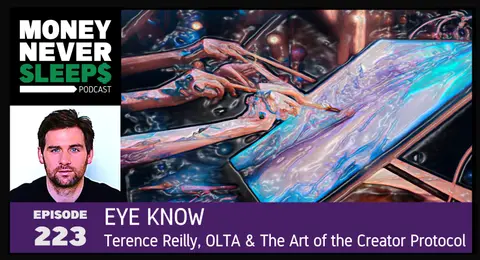
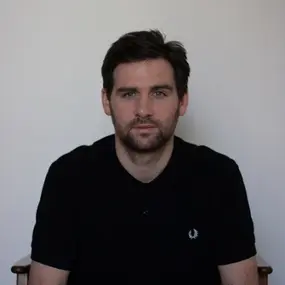
Terence Reilly is the co-founder and CEO of OLTA, a protocol for creators and studios to create dynamic media, pushing the boundaries from generative art into interactive art and story. OLTA brings this all to life through dynamic NFTs which enable collectors to determine the outcome of the artwork over time.
Terence and his OLTA co-founder/CTO George Baldwin lead one of the 12 founding teams forming the Techstars Web3 accelerator class of 2023.
Before co-founding OLTA in 2021, Terence spent 20 years working on 3D character animation projects, including the movies Jurassic World, Iron Man 2, and Paul & Chappie with clients such as Disney, Sony, Google and Aardman, the Academy Award-winning animation studio.
In this episode, Terence and Pete Townsend explore the relationship between art and technology before diving into the deep first-hand experience that Terence has with the problem that OLTA is solving for creative coders and studios. Terence and Pete also talk through some examples of the OLTA protocol in action, the big opportunity that is the global art market, and what keeps Terence moving through the ups and downs of being a startup founder.
LINKS:
Learn more about OLTA
Connect with Terence Reilly on LinkedIn and Twitter
Follow OLTA on LinkedIn and Twitter
Episode title inspired by ‘Eye Know’ by De La Soul ft. Otis Redding
Leave a review and subscribe on Apple Podcasts | Spotify
Check out our MoneyNeverSleeps website and email us at info@moneyneversleeps.ie
Follow us on Twitter: MoneyNeverSleeps | Eoin Fitzgerald | Pete Townsend
--- Support this podcast: https://podcasters.spotify.com/pod/show/moneyneversleeps/support
0:11 Hey there. I'm p-town said, and this is money. Never sleeps. We look inside the minds of entrepreneurs and at the crossover of startups and our prize Finance technology and Life, as we know it on the show this week, we've got Terrance Riley, co-founder, and CEO of Ulta. One of the 12 founding teams forming the techstars web three accelerator class of 2020 3 Ultimate. 'He is a protocol for creators and Studios to create Dynamic, media pushing the boundaries from generative art into interactive art and story Ulta, brings us all to life through Dynamic and ftes which enable collectors to determine the outcome of the artwork over time before co-founding older with George Baldwin in 2021 Karen spent 20 years, working on 3D character animation projects, including the movies.
0:54 Jurassic world Iron Man, 2 and Paul and chappie with clients such as Disney. Sony Google and aardman the academy award-winning Animation Studio in this episode Terrence and I explore the relationship between art and Technology. Before we dive into the deep first-hand experience at Terrance has with a problem that older are solving for Creative coders and Studios. We also talked through some examples of the Ulta protocol and action, the big opportunity that is the global Art Market and what keeps Terrence moving through the ups and downs of being a start-up founder. All right here on money, never sleeps. Come here, Terrance. You're our only Irish founder in this techstars web three program.
1:38 I know what? Like, I was joking about this. Like, I like the diversity picture finds God, that's funny. Actually, yes. Terrence Riley of the Monaghan Riley's as we say, right? But you've been in Bristol now for a very long time. Yeah. So but just just thrilled that when you and I were first introduced by Brian Elders back. In 2021 at the token 2049 conference in London, right? And I remember meeting you back then and I think it sent you a message afterwards and it took a little while for you to come back to me. But when you did you were like, okay. Here's what we're doing. Here's what we're up to and I'm like, okay, this is pretty interesting.
2:22 Yeah and things have evolved things have evolved since then haven't they? Well I don't know if they have to be honest. Should I actually answer this question there? Well, I mean what stood out. For me, more at the time because I'm a, I'm a, you know, maybe they have it evolved as much as I thought they did what stood out for me at the time. Was you okay? What I met you now. I'm like all right Terrence seems like he's going to be someone that is going to figure this out right? And I wasn't quite sure what it was back then. I know it is now. Yeah. But has it evolved that much since it's well to be honest, we're Vision always Was to change the art space, but, but obviously, for Georgia's art for me, it's entertainment. But together the creative, right? Industries walk.
3:12 We will always wanted to do, was make a community art work, or enable people to make art as a community. We were calling it multiplayer art. At the time, I'm obviously, we knew participation was the key thing because we wanted to focus in on real time or Force. Obviously, it's expanding beyond that, you know? Definitely definitely are. All right, all right. We'll listen. And you thinking about your background here, Terrence you've been involved in nearly 40 animation projects usually for like three to six months at a time. Maybe even up to a year since 2001. At least that's the number that you've got on your LinkedIn profile right here and that I know that with each passing year technology gets better, right?
3:57 It gives you more options as an animator. But what do you think? His move faster over the last 20 years? Has it been your own creative Spirit or technology? I would have to say. Like they're both symbiotic boss. I think that the creative Spirit might move faster than technology. However, because, you know, you see that movies, you know, they they have imagined flying cars ventures in space, you know, feel world's, I can repay one. But, you know day and then the technologist come along and try and make that a reality, whoever I feel, there's a shift. Between who's in charge, who gets to make those creative decisions. I think the creative technology is now our reader leading teams or definitely in the room so I feel it's boast. They're both working in tandem now though. How do you how do you really Chorale that? How do you really Chorale?
4:52 The creative spirit and say we're going to put this into a pain for three to six months, we're going to get it to do x with the technology that we have available right now. Because this is an animation project with a budget. We don't want to push the boat out too much. In terms of new technologies, that may not be quite ready and may leave us with some technological debt to solve when we get to the post-production and I'm winging it here. Trust me, I'm waiting to hear with my understanding of how this all works, but you know, how did you ever feel like you were in a pen? And and restrained at all, in terms of where you could go with the idea of Side of this.
5:34 Yeah Hempstead. Like so that so there's limitations and vote and honestly there is like you think you can imagine it is in of the world but you can't, you can't even draw. You can't even write it. Okay, that takes great skill, but obviously technology takes longer. Well, I'd argue if it does. So, but I do think that you need both. If you're gone to innovate, if you're going to push the boundaries, I think maybe it's more like a chain. In business model or a change in approach that their Studios need to take like you seen that words. Yeah, industrial Light and Magic. That's literally what they've done in the few effects industry and that's why they're one of the best companies Innovative companies in the world. The defend, there was a better way of making those movies instead of practical effects and they put money into it you know, the top the time and they figured a way basically make it happen, I think a lot of Studios don't aren't even considered. During that, I think what I'm saying about with the creative directors, a creative technologist coming in and sort of, having a director role or a co-director. Roll their importance is highlighted today in studios before it wasn't.
6:48 And and without that you cannot move forward, you know? Yeah. Yeah. I was thinking this Star Wars animation is coming to mind and it wasn't even on the animation. I think it's on the Mandalorian. Well, it's been enables now. Like I think in those cities they see the power, like I'd Capital was the leads person in Pixar like he's he basically imagine Pixar, you know, the he was first so he built the engine bay, see that the tools and then incomes and John Lasseter, you know, to creative Direction. And and so I think it's almost like the lead can be the creative technologist. In some cases.
7:34 So I'm kind there. So that's my argument for altar, like they're actually created to. And I feel that such as a sad thing to see in the world were like, you've got a visual, our digital creators like non coders and they're looking to, I Technologies as I've known creatives and I think that's a big problem. Yeah, no, I hear you, I hear you now. Listen, you told me part of the back story before that you were inspired by a family of entrepreneurs as you said and you To George Baldwin your co-founder back in 2021. Why don't we start a company and tell me did a lot of thinking going to that decision, or was it just a natural outcome of the direction you were headed? Well, if I'm honest, like a lot of the thinking came from me because of the 20 years I spent as an animator, you know, in a career where you know a lot of great stuff happens. A lot of cool projects I worked on. But behind the scenes there was a lot of pain. If there's a lot of like you No rejection fear from working in that industry.
8:37 See a lot of problems and over. I've had lots of yeah, bad stuff basically happen. And so I might be thinking was we need to fix this when I set it to George it was like George is like yeah whatever like lest, it doesn't matter if we set up shoot you or not, let's just do it. You know, he didn't really care. Yeah of course we just wanted to do it the right way, you know, from the get-go. But yeah, I think that's it. Like my, my thinking was I did set up companies before that, I had 3D printed company three printed Ceramics company, tried that, and also set up trade up to up Studios before. But again, my thing was I need before I go back. Or if I ever go back to animation, I need to fix fix the problems that I've encountered, so it doesn't happen to other people in the future.
9:28 Yeah, you mentioned some bad stuff. To go would any any examples of the bad stuff that that you can point to? Yeah. It's like egos in, in the creative industry is ridiculous. The expected hours, you know, to not respond on respect for your work, you know what you do. But particularly so exclusive to be a director, you know, like where it's so hard to get into that control seat. I think when people get their the ego kicks in and I've had, like, directors. I've asked for Shaw, Lots to work on movies on like big movies and event directors. Basically tell me you like English fuck do you think you are like oh yeah but you know it's really shitty stuff and I wasn't the only person like, you know. Yeah certain yeah you know, thanks yeah. Yeah, no.
10:19 I hear that. You know, all if it's you know, shit just being poured down hill and landing on the next person below and that's how it works that by the time you get to the top. After swimming through that shit like Andy Dufresne in Shawshank Redemption, you know, you kind of want to start shoveling some shit on to other people. It's a terrible way that the world works and it takes someone with a really strong personal Spirit once they get to the top to actually be able to treat people. Well yeah, it's not the shit down here. Yeah, there is a lot of people to do that but I think what's get lost gets lost in studios? Is that young, people have new ideas and they should be utilized more and I felt from working with young people. I could learn so much more, and I did actually work with a lot of younger people than me.
11:08 And I was noticing how they were making work. Either do their animation. I was like, wow, that's that's amazing. I've always felt old 30. Yeah, yeah, no, I hear you how long ago speaking of of, you know, a few years back not that long ago though Terrence and how long ago did you actually meet George? How long have you guys been working together by five years? I Met George. And I asked him to help me with my treated printed ceramics that assessment. Okay, I'm some some coding work and then we actually applied for 5G Grant to make to test out sandbox 5G, sandbox. And we, and we picked a or multiplayer web experience, okay? The actually did produce 50,000 through this in Bristol with the university and that was our first experience, and then that busy LED on to alter No.
12:02 Okay, all right. You reminding me of some of my Bristol travels back in the back in the day with the shout out to Dave Henderson. Not only is he a great fintech mind formerly of Hargreaves Lansdown. But he also shares the name with hero of the American League Championship Series in 1986 for the Boston Red Sox. So David Anderson, hit a game-tying home run to keep the stay of the Red Sox away from elimination, but then we're ultimately defeated Next round the final round called the World Series back in 1986 by the New York Mets but you know that that's another story for another day but he would hang out a lot around the engine shed in Bristol.
12:44 Is that a place that you frequent? It's tall. But I want to get in there and I because of Anna Lisa and I am actually going to meet her and next urge in a week or two cool they've invited me to a dinner but yeah I actually have been recently networking there because I I see it as a list. Okay. What do you think? What do you think is kept you and George together over the last five years? That's a good question. And that's, that's something just take it. If I had only exactly as that, I think it's basic a respect for each other. As I said, like, it's about. I realized that coders are creative to a George's, 100%. Such a creative mind, as well as attacker combined his passion for, like art, you know, he's actually Part College, then went on to be a creators program, you know. So he's got a very deep philosophical mind. I think that I do like philosophical chats with him was, he's definitely deeper which deeper than me. I think.
13:49 Yeah, it's respect. And I think the goal is we want to change shit out basically, you know, we're just bored of the way things are. And I hear the expression when somebody said we would ask the way, It is or that's just the way it is. I've heard that too many times. It's the most dangerous phrase in the human language, terrible, right? And what I'd like to do is dig in to alter a bit and you've given us a little bit of an insight to that, but tell us what is Ulta. Okay. Well, our original idea was that we wanted to enable creative coders and teams to make to make interactive Arts real-time interactive art, we seen image.
14:31 And videos as entities and we caught. Hey why can't creative coders be seen as you know sell their websites basically but that with artistic intent boss so what was it? Then it was yeah it was that was it it was basically creating features and tools to enable creative colors to make real-time art both. We had this long term vision of people w, we watch more cool. What's more cool? So we talked persistent State change, you know, from day one we wanted to do Pacey. A player Art which has turned into Community Arts. It's just way better. Way of saying it. And what do all that in a decentralized way is tricky, right? It's new.
15:13 So, so me and George went on a journey. Figure it out as we go, how to do, you know, basically Community Arts in a centralized way? So we had to start with publishing tools and and all that sort of stuff that's the basics, right? We we actually released the first three artworks on the web Sighs. Yes, we started the build platform, then profiles, and then we see in other companies, their Marketplace. So, we talked, we had to be a Marketplace. So we went down the road developing like toxins and all this with smart contracts, but it was just it, we've obviously realize we made some mistakes doing that because there's other marketplace with more money and more trust, so we didn't need to tell the marketplace.
15:57 We also knew we needed to differentiate ourselves because competitors Um, up GNR became a thing. Now, be my background, obviously the obvious thing was straight. Well from day one it was all about creating 3D interactive for me. If you ask George would probably be wouldn't matter if it's 3D or 2D. But I always loved immersive art and like, you know, V or a or and stuff like that and treaty desktop web. And so is definitely that was on the cards from day one. Who, what is old now? So, Basically like we're still building tools to enable creators make interactive art and actually we have built this already.
16:39 We have built as an ohmic feature that has those artwork to the elementary change. So basically, when you meant something buyers are listed the Articles and Emma could change. So the visual or new interactive controls can appear. So this is our first step. This is already built and this was our first entry into participation or copra. Ation for The Collector to take part in the outcome of an artwork. And that was what's done before we started textiles. Then during textiles, we decided this could be bigger than that which is already big enough. So, we were thinking, well, let's build the protocol and the protocol. It's essential to to adding structure as opposed to a feature that would be community art based. So if you're involving people you You have to track every transaction but then allowed him to jump backwards and forwards. It has to track things like the state, persistent State and changing of the artwork.
17:44 And then we didn't that their properties, though, the artist might want a color change or add an object to move or passivity or you know, all different types of things, right? So it needs to be organized. So that's why we went to a protocol and level but Above that sets the tools and features that people use. Yeah, we'll just take it just to kind of help to bring some of this to life. Yeah, you know, I'm thinking through a scenario where you've got a massive, huge video billboard up in Times Square. Yeah, right. And where it is sponsored by some digital artist named one, someone that you think might want to be the artistic mind behind a huge digital art, installation in Times Square on a big video. or name one, trying to think of one of the artists like I want to say one of the artists of Alta and Andy Warhol. Say, we could go back in time and we could get Andy Warhol, right?
18:45 Okay. It will actually do have one in mind that you wanted to mention. Well, I'd like to see someone like David O'Reilly, David O'Reilly. Yeah but closing namesake to you. Yeah, he's okay. So let's take David O'Reilly right. And that there is a huge video billboard up in Times Square and people there are fans of David O'Reilly who happened to be well known to others. Others as well. So celebrities or sports figures or whomever. And they say, listen, we're all going to take a stab at contributing to this piece of art, and we've got 24 hours to do this and over the course of these 24 hours that you can with your entry ticket, which generally maybe say a 10 ft, you'd be able to contribute to the artwork and say that we are going to have this be an overlay of all of these different types of icons and figures, and brand logos and It is that people want to contribute to this artwork and they say, I'm going to get one one-hundredth of the square on this billboard and I'm going to put my, my little own piece of art on that or my own script or my own logo or whatever.
19:55 Yeah. And then that happens over 24 hour period and that with each single change Ulta can track the individual contributor to that when it happened and have this, like, you. And I've talked about before, Terrence this state machine, this digital At State machine that says at this point in time 12 and a half hours into this 24-hour timeline on this exact date and time that this is what this piece of art look like. And that I was the last contributed to it, right before the next change. And I want to own that piece of it. And I can own that piece of it because of Ulta having this provenance of the point in time and what the exact image looked like at that point and you've got this tracking and tracing of Into art through history, which then takes on, even more of a cultural significance when you tie that to what's actually happening in the world on that day, right?
20:50 Yeah. So that's where I my imagination is going with this. Yes. And for me, it's like it's Chuck. Is that jumping back to that moment in time so it's like it's not just a list, it's a timeline. So, a timeline for a new way to distribute, a new way to publish a new way to monetize. That's sort of timeline it's like it's a new business model. Basically, if you think about it for for art for story, you know. Yes, it's real time. And so we sort of see our to take on a situation where its audience follow along with the artist Journey, you know.
21:31 It's so let me sum it up like art right now is is released, there's a release date, you know, there's a It work and it's released on this desk or in any theater that entity drop. So I see that as an event. Both I see the in the normal way, an artist works or Studio works is there's there's events every day, there's like Anonymous L dailies and the enduring between those daily events, there's like events for you to preview work. So I saw to see artists events from the very start and we all love to see finish work and then like the making of. So, when we talk about anchoring art, as it in advance, or really saying is that there's an untapped Market there around events and, you know, so you can revolve people to co-create or collaborate before an event, it can connect them together. If there's a band involved or brand involve, you know, they're going to love this right?
22:37 You get into the vent, it could be for surprises. They can see the There there Co Creations there. And then, after it's like this unique thing that they can remember and be a part of, you know? Yeah. So take a nap them from the timeline from the creation, opening up new roles for collectors, for audiences totally different when you roll these centralizing art itself, I suppose, yeah. Like, I one of the one of the artists that you have featured, and that I know, Know that you've shared his work around the bit. I think it's Owen O'Keefe. Yeah. And where there is some type of facial scanner that will monitor your facial movements and will create this stream of generative art that comes out of your facial movements. Imagine at a concert at a gig where you've got these face scanners happening and obviously totally Anonymous, but they where you've got people's facial. Years being the input, being the color on the canvas, right? Yeah.
23:47 And say you've got a hundred people, a thousand people, the gig, and all their facial gestures are contributing to this artwork. It's kind of like an expression of joy that music brings. Yeah. Right. And that's a really interesting piece of art and say it, what? Whoever it was, you know, for me, it would be awesome if it was Jesus. I talk about you to way too much. I don't think you two will ever have this at a gig because they're getting Old, right? So maybe Bono's son Eli right from their band. Inhaler might have this at their gig this expression of Joy which is this crowd-sourced community art work that's happening at a gig. Yeah. You know all of this stuff and being able to like we talked about Express the provenance around. It's pretty cool.
24:29 Yeah. Exactly. You thinking about the art of the possible? No pun intended Terrence. Yeah tell me what you think older looks like. When for example we've got these virtual art galleries or Like these virtual community art installations that we talked about, you know, virtual Street murals come to mind as well. And when all of this gains critical mass that you know, kind of asking you this question, is prefaced on this strong belief that I have that we're headed towards virtual societies. And, you know, while I take great comfort, in the fact that the new Apple Vision Pro VR device looks a lot more like that headsets from Ready Player one.
25:10 Then the ones that We're used to from meta and you know, formerly the Oculus ones. I know all of this and you know all of this is a ways off. We have a lot more work to do in order to make that possible and that has a lot more to do with fiber optic cables. There you go. So for the crowd parents and showing off is VR headset and you know to link back to kind of where this all came from Terrence, how do you temper your own optimism for the virtual world and create value now for creators In studios, that's not reliant. On some big other societal Tipping Point, like the adoption of Technology. How do you do this now? Yeah.
25:51 Okay. So start with the latter right now II think it is to, to lower the barrier entry for creators to creators can fail less. Basically, so are idea is to create an experimental and sort of a playful space on altar too fast. Our error Tech and unreleased it early to them and get their feedback. But you know, what creators really want is they want to creatively challenged themselves in the work, they do want to do the salary or the marketing. So, building a partnership pipeline is very crucial at this early stage, even if it's just one and it can be a small partner Eddie, don't require that much especially emerging creators, like creative coders because There, there's not really a place that's serving them. Very well right now.
26:45 So that's where all the steps in. So, yes, especially in the WebEx or the immersive Art Space, particularly. So that's, that's one thing. The other thing is to, for the newcomers to a house with onboarding is like to Anchor it around events, like did. So they've already been before and if tizen web tree and they've been making interactive installations in physical spaces You know, some of them I've been doing this for years and so many ways. You know, if we anchored around events then they can take and understand that while maybe they're not really grasping the current state of entities in the market day so they can get behind that.
27:28 And everything is just, you know, basically be as supportive as possible. Wait emerging artists, as well as talking with or getting the conversation starter and building that trust with the creative directors. We have In the entertainment industry, could be a studio of 1 or 10 or more and give them this like Plug-In or to set two guests. They can get in there, give them turn of route to make money but yeah I suppose that's more of a long term to make money. Yeah. Well no just it with the studio side of things. Yeah, no. I want to make money down could end well, we as you're explaining this to me and, and knowing that You know, the team size and growing that is important. In that, you know, you as founder CEO or you as co-founder CEO, your two most important responsibilities are going to be or are now sales and fundraising. Yeah.
28:27 Right. The two most important things and you know the other things you mentioned around Innovation and Community interaction and just being a good place for people to create that. Those are things that were you've got an ecosystem growth manager that you'd bring in or a partnership manager that you'd bring in. Just looking at the size of the opportunity here. Terrence obviously, the global Art Market is huge right? And its massive and you know getting altar to market. Now are you looking at this kind of daunting lie, or are you looking at this with a big hungry, ambitious smile on your face? So based on the problems that I've seen in studio systems in the studio system, and that doesn't necessarily mean replacing.
29:16 What is existing? It's, it's a new opportunity. I started to see a lot of problems there, so I suppose, I would say a big hungry smile on my face. However, there's a bit of ways to go. So that's where I see all the sort of fitting in it's like, Getting every like the creative technology is getting the coders and the animators, and everyone in the same room. Basically. And yeah, I've had that experience with working on the Google project with aardman and literally it was a Google engineer. Sitting in the room developing YouTube 360 for the first time working with our project. So I was an animator animating on it and there's a bunch of a running mate.
30:06 There's creative producers. Aardman jianping cover from Pixar who don't into your co-directed by the TV and Jerry's game. We were all in the same room. It was amazing because we were all getting to be creative and we were making a 360 interactive short story. So, wherever you look, did the animation would trigger, but in the, in the background, you would still see other things were going on. So it wasn't this overeating stop. So yeah yeah, that wasn't she was 15. So I really enjoyed that experience and I thought it's such a shame that creators and Technologies aren't in the same room making critical decisions together. Yeah, no, I hear you, I hear you and does alter allow them to all come into the same room together, obviously. Right.
30:59 If we had our own Studio we would and that's one of the reasons like like like physically but obviously firstly we're enabling Anyone, you know, to join up. We didn't want to restrict it to physical spaces. However, we'd love that. That's why. We're we love the team up with ideal collab and they run basic Library spaces and any events organizer. He's doing creative challenges or hackathons or, you know, stuff that would love to partner up with with them who have physical spaces, you know? Yeah. Gotcha. Okay yeah. So call out to it to a number of folks there. To explore some potential Partnerships there and I know we're helping with a couple of those.
31:40 So yeah, listen we've you know we talked a bit about the future here but let's really talk about the future. Imagine you did have a time machine and you could go visit your 60 year old self knowing what you think the path is that you're going down now for the next number of years, what would be the words of wisdom that you're 60 year? Old self would give to you now? So thing is I had I had written dying like, was that he prophesied? Can't remember, go figure. But the good thing is that, I think that would make sense. I think I would say that because it makes sense to me, because the journey is everything. Yeah. I actually think going through the Journey is the fun part and creators would resonate with me and now. So we'll coders everyone.
32:29 So, but in regards to You expose a personal advice from my six year old self would be, why are you not making your your your interactive animated story that you have an idea for know? And it's based around basically like the IP Wars. It's like which I feel is inevitable in the states, right? We've got media giants, like Disney Netflix, their own everything. It's inevitable. They're going to come in and try and take control of the energy space. It's going to ensure with IP law. So the idea would be to make a story around this and can fix this problem on the way.
33:11 Make a story, like an animated story around, the IP Wars. Yeah. That's, that's the idea is following a band of into your entrepreneurs and creative coders to try and solve this solution and save like how to take control of the NASA and unity industry. Because the yeah, there's lots of problems to be solved but I think See, if you could get project like this going and it get its. So they deal with a real-time interactive series is that you've got it's not all done up front like a pre-rendered thing. It's like done in sections and what's really interesting for me is to explore how you can package off and distribute an interactive series with ownership attached. And then how dynamically those Thanks segments, like know the scenes, the sequences, the beats, the story beats can be distributed in a way, are not owned in a way that can then dynamically change based on human input. Yeah, they're involved in the story. Yeah, yeah.
34:15 I know, I'm seeing this how this all could come together. It's mind-boggling. It is mind-boggling and you can't, but help think of the Neal Stephenson's, not snow crash. But the next book in that series Diamond age. Age and what were called r, actives or interactive story and rack tours which are interactive actors and that where that acting is just triggered or that by the reader or by the viewer and says which way do we want the story to go? And in this story, this young girl under the age of 10 or something was more or less, her upbringing came through an Active story feature that called this reactive that it's so, yeah, that was written in 1995 or 96, or something like that. So you know.
35:11 Yeah. Maybe there's a shared bloodline there Terrance 100%. And the thing is, the reason why I bring it up is because project like this is such a big thing. But what will be wonderful, is to see a blueprint or like, someone start this off? Like, Choose Your Own Adventure, is is an early and what talking about is about it, nearly version this, but let's Let's face it. It's more than it's more than just like, you know, type in something. It is day. It's like self-aware, like and like right now and I'll do anything George spill. The two were in a tease can actually have relationships with each other. You know, like, literally one of the can detract and you don't can, you know, grow based on what happens when someone means or less, but obviously we're expanding that into more property-based I'm definitely customization definitely I'm with ya basically my six-year-old South would say like why are you not playing with your tools or yeah.
36:11 Or get funding to do that and and believe me, I have tried and I do feel like actually that even though Ted is as incredible as it is. I think we're in a stage for a content is much needed like quality content because it is, if You look at all the VR headsets in the world today, what content, you know, is there that it's going to pull people in to buy those headsets and, you know, oh yeah. Well, you need the, you need the operating system where developers are properly incentivized to build the applications that will be featured in that, you know, VRA our experience. And, you know, and I think we're just a date there to into apples announcement of their Vision Pro headset and hopefully, because we know that The operating system behind iPhones has been what has been the real driver of that business model, not the phone itself.
37:08 The phone itself is critically important from a usability and ergonomics and people want that type of thing. But listen, we're at the point of the podcast Terrence where I ask the final question that we asked everybody on the show. What's one thing that people wouldn't expect to know about you? This is a good one. I've been. Well the thing is I suppose this law I haven't delivered it very well. The one thing that people would expect me and that I'm funny, I hadn't, are you? Well, I think so. However, I laugh during our conversations, you've got a, you've got a good sense of humor. I'll give you that. Yeah, or maybe weird sometimes but the or awkward as well. Look, the thing is I'm funny but I'm also very serious. So quite extreme any sense were so People don't know how to take me.
38:03 I can be really silly and then also really serious about silly stuff. So one thing that I suppose I was thinking, it's really important that you do not laugh at this joke. Yeah. Don't one thing I was thinking was that I suppose let's see. I don't have this mix. Is this really answering the question but let me see it anywhere. So basically, my mum used to act like random Isis, instead of reading books to me as a kid. Okay happened. She loved to inject Her Imagination and bringing life to the teddies and the objects in the room. And I suppose that probably was the driving factor for me to express myself as an animator and work in industry for 20 years. But you know, people don't expect is that how seriously I take that creativity and that that silliness as pose like this because I do it in front of my own Kids. Yeah, I can act stuff like that and having a career in animation people think.
39:07 Oh, that's a fun thing, you know, but it's not all fun. It's not a serious concentration, it's hard work, hard to master. So, yeah, and it's, yeah, I suppose that's the thing. Like, you know, I love to in Anime Studio act out in front of the camera. That's you. So fun, foldable. I'm so you have to be vulnerable. You have to be ready for critique. Every day, every minute. So I'm very fun durable but also really stubborn too. I hear that, yeah, I hear that. All right, we'll listen, that is fascinating. I think we could go on for a long time at digging into that.
39:49 And that is the story of diamond age. So I'm gonna Park that and I know that we can go down this Rabbit Hole another time because we have plenty more time to do that but Terrence listen, thank you, it's been awesome. Awesome. Having you on the show? Thank you so much. And looking forward to talk to you again later on. Yeah. Thanks very much, please. That does it for this week, folks. Thanks Terrence Riley for opening up his mind, to help us figure out why he does. What he does. You can learn more about Terrence and Ulta in the show notes on our website money, never sleeps. That IE. If you like what you heard, please leave us a rating and a review on Apple podcast or Spotify, is it helps others to find the show? Thanks to Kona Brophy from creates, on for mixing and editing this episode, Conan is an excellent medium and to get in touch with when your think about launching your own podcast.
40:36 As for me, I'm an early stage startup investor focused on where fintech me. Crypto and crypto meets web 3, my lead the textures web through accelerator there. Plenty of links in the show notes on money, never sleeps that IE and how to get in touch. So, don't hesitate to reach out finally till next time, thanks for listening. See you