Spotify

 Apple Podcasts

 Amazon Music

 Overcast

 Castro

 PocketCasts

 Castbox

 RadioPublic

 RSS Feed
225: California Love | Federico Panisi, Loki.code and Smart Contracts Made Easy
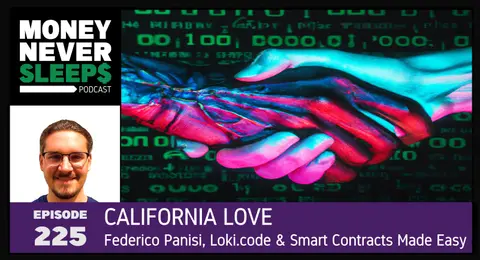
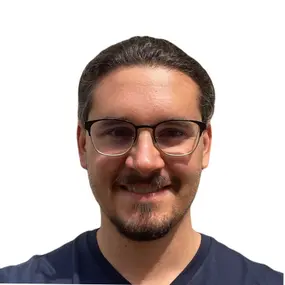
Federico Panisi is a co-founder and CEO of Loki.code, enabling simplified and intuitive co-creation of smart contracts with a collaborative web app for smart contract designers and developers.
Loki.code is also one of the 12 founding teams forming the Techstars Web3 accelerator class of 2023.
Before founding Loki.code in July 2022 with Pedro Wilson, Fabio Manzani, Adam Toth-Fejel, and Malachy Lin-Nugent, Federico’s time in academia included a law degree and a Ph.D. in Law & Business in his home country of Italy with stints in Sydney and Hong Kong, before rounding things out with a Master's in Legal Studies at Stanford Law School with a thesis on smart contracts. Federico is passionate about Web3, smart contracts, and cryptocurrency technologies, so he’s come to the right place!
In this episode, Federico and Pete Townsend riff on the serendipity of how he became an entrepreneur before diving into what Loki.code is now and what it will become. Federico and Pete also get into the importance of infrastructure and developer tools in getting us to one billion users of web3, building trust with your co-founders, and the surprising intersection of crypto with Dungeons & Dragons.
LINKS:
Learn more about Loki.code
Connect with Federico Panisi on LinkedIn and Twitter
Follow Loki.code on LinkedIn and Twitter
Episode title inspired by ‘California Love’ by 2Pac ft. Dr. Dre & Roger
Leave a review and subscribe on Apple Podcasts | Spotify
Check out our MoneyNeverSleeps website and email us at info@moneyneversleeps.ie
Follow us on Twitter: MoneyNeverSleeps | Eoin Fitzgerald | Pete Townsend
--- Support this podcast: https://podcasters.spotify.com/pod/show/moneyneversleeps/support
0:11 Hey there, I'm Pete, Townsend in this is money, never sleeps. We look inside the minds of entrepreneurs, and at the crossover of startups, Enterprise Finance, technology and Life. As we know it before we get into this week's episode, just a quick heads-up. That the eith global Waterloo hackathon will take place at the Lazar Reedus business school and Waterloo which is a short road trip from Toronto. On June 23rd to the 25th apart from building awesome projects in participating in the prize pool of 225 thousand US dollars. Equal Waterloo will also feature a keynote with metallic butyrin, the co-founder of etherium don't miss the chance to build your big Vision into birthplace of etherium itself. Waterloo, check out the details and sign up to be a hacker or a mentor at Waterloo. .F global.com on the show this week.
0:54 We've got Federico open Easy, co-founder and CEO of low key code, low key code enables simplified and To of co-creation of smart contracts with a collaborative web app for smart, contract, designers and developers. Low key code is also one of the twelve founding teams forming the techstars, web three accelerator class of 2020. Three before co-founding low key code in July 20, 22, with Pedro Wilson Fabio mazzani, Adam taught Federal and Malachy Lynn Nugent. Federico's time in Academia included, a law degree and a PhD in law and business in his home, country of Italy with Stinson Sydney in Hong Kong before rounding things out. With a master's in legal studies at Stanford law school with a thesis on Smart. Contracts Federico is passionate about web, three smart, contracts, and cryptocurrency Technologies.
1:39 So he's come to the right place in this episode Federico and I Riff on the Serendipity of how he became an entrepreneur. Before we dive into low key code and their ideal customer profile. We also get into the importance of infrastructure and developer tools and getting us to 1 billion users of web three building trust with your co-founders and the intersection of Bitcoin with Dungeons and Dragons. Dragons. All right here on money. Never sleeps. How are things in the grand country of Italy today? Anyway, you know, we had the loss of mr. Berlusconi, couple of days ago. So basically the media is talking all only about the, you know, the family and what's going to happen. After, you know, he's dead and things like that. So everybody is like, literally, what's the future of Italy? Except for that is going to be summer. So Barry, you know, a couple of days. So it's a lovely here, good, good and, and how do you feel Feel about seniority Berlusconi?
2:38 Well, you know I'm sorry for the loss of a person and it's such a controversial profile and figure. Of course, it was part of the history that we, you know, we went through the last 30 years or so because I am 30 33 years old and he started being a politician. When I was war, basically, they poured the, in the old old, the whole Berlusconi era. I think, you know, many books will be written on Game is family, his mistakes, some good things that they did, I guess so. Well let's hope the book that's written on Federico is all good things, I hope. Yeah, I'm trying to do my best, you know, good man. And when he started, if you were 4 years old, that's when you started school.
3:23 Yeah. So I started school at six so and 6 19 1996 because that's that's the way it works in Italy. And look one of the thing. Everybody nowadays talks about 94 1994, which was like, very controversial here because that back then. Basically, there was a huge how to say case? Basically politicians used to get paid for the services that they provide and all the prosecutors clean, the space up and the year after he entered, you know, politics and so everybody talks about 1984 1984. Well, well, that was my that was my first year when I went to Italy in 1994, I was in Venice.
4:05 As you might imagine, I was in Rome and then I took a boat over from brindisi to Corfu in Greece, okay. And so, probably a good week, I had no money what I was there and I was just eating as cheap as I could, I'd go into a cafe or a deli and that there would be massive sheets of Pizza on these huge Square, baking tins. And it was like, you just ask for a piece with the size of your hands. And they would cut that, they would weigh it, they'd fold it in, half, wrap it up and wax paper and then boom, there you go. You're sorted till like dinner time. Yeah. It was it was it was amazing. But you know the American in Italy raving about the pizza back then you were already were still living in the United States.
4:53 We house while I was living the us, but I was in Ireland on an exchange program. Okay, so you were more American than you are today, but yeah, very much so very much so So that was and you know that nowadays in Italy we talk about slow food versus, you know fast food. Oh yeah. Invented the fast food and now we are going back to the now the good thing is slow food. No. So have I know and then going back to Italy years later where I just the food was not the pasta or the pizza. It was loads of fish and loads of vegetables and I mean I just that changed, my whole diet was going back to Italy and this Mediterranean diet.
5:34 So it's Yeah, no. Thank you, Italy. And thank you for the RICO. But I said that's because these are the only have to say is that I support more inter rather than the land. Okay? So I feel sorry because Inter lost against Manchester City. I, I didn't know you were an Interfaith, dude. We were, we were supporting inter in this household. Oh, really? Yeah, yeah. Yeah, because you're not. Well, my two boys are man united fans, and they obviously don't want to see, man. City when anything, and I couldn't care less, either way about man united. So, I'm like, all right, we'll support inter. And my older Sons football team are black and blue. Their uniform tops are basically enter, so we're like, we're going for it.
6:23 And that was, yeah, that was sad. So, my sympathies to you is a tried and true blue and black in the blood inter fan Federico. Well, but we played well, did you did you did will give you that. But listen in prepping for this chat, I went back and had a look again at your background and the 14 years in Academia. Kind of stood out to me again that before you decided to become a start-up founder, that was a long time. How did that happen? What was it? Was it something you think inside you, that was pushing you towards this the whole time, or was it just serendipitous meeting of the guys? Yeah, so that's that's a great question. That brings me brings up a lot of memories. Actually, as you said, I had the very traditional pathway since it was 19.
7:10 My background is Law and then I was not after after the law school, I wanted to dig more. And so I started this PhD and this is the chance to basically leave in four continents during my PhD. So that was already quite kind of shocking experience. And then after my PhD, I went as you know, to the Stanford Law school, and I remember three things. The first one is that I did a lot of research regarding smart contracts and cryptocurrency Technologies. And that was probably, the thing that prepared, what would be next? The second thing that happened and that I remember quite clearly is that I took a class, which is called intrapreneurial thought leadership, and it was a very, you know, easy class because it was like one credit, so it's not too much.
7:59 Work, but it wasn't outstanding class because there were all these, you know, entrepreneurs especially based in Silicon Valley coming and telling their experience. And I remember that one of the questions that came up the most was, when was The Red Pill moment for you. So if you recall Matrix, you know, there's a scene blue pill Brad Pitt, right? And so the kind of quest you know, stuck in my mind you know the red team already more. Oh yeah, I've been popping red pills for years. Yeah, right there. Because I'm not quite a big fan of the Matrix, so that was like, and so, did I decide to become a Founder? I think it's just happened. So, basically, the way it happened is, I went online, and I found these guys that were building this thing, that will become Loki. And, you know, when that thing happened, I was like, well probably, this is my Morpheus blue pill or red, teal and back then, I also remember the fact that, you know, I was I, as you said, 14 years off, I can, I mean, experience means that I basically explored anything regarding the law, the economics and eventually some things about technology. And so at some point I was like well this is not the time probably to study things anymore but to try to make them you know to be part of the Innovation that was going on and that is still going on and and probably the fact that it was in California where everything is so pragmatic, you know. No, probably even more than
9:31 other areas in the United States just guessing but you know, that kind of culture affected my mind. And so when all these things happen together, I said, yes, this is my chance and I want to to at least to try to see where this thing could lead me and you know nowadays in hinge side I would say that it was great to make that decision to take the red pill you know to be unplugged. Yeah. Why would like what was there a moment? Were you kind of saw the cat walking backwards that? Yeah. I mean, like more like in The Matrix that was the glitch in The Matrix that that said, hey, this is this is it, I know you mentioned connecting with the other four, guys, but was the yeah, the scene for us on what that looked like.
10:17 Yeah. So basically, that was the ear of the pandemic in which as everybody, you know, I was already under the stress and the pandemic and then after the first lockdown in Italy and The first look down into it was pretty heavy. We were hit by the pandemic and things like that after the verb. The first lockdown 1111 evening, my mom tells you, I don't want to see you study more, just go out for riding a bike, right? I was riding my bike and a car hit me. And I had this very severe accident. I broke off of my mouth. I had a very severe. Wow. Back then, I didn't know Adam and Maliki and Fabio because the, the fact happened a couple of well six months, L.
11:00 So basically when I got back after this concussion and I was able to you know go back to Stanford and the world my studies and finish. Basically what would I was doing? I'm like okay, I went through your old, he's 14 years of excitement as well as not complete satisfaction. One thing Danny, you know, the thing that life can really disappear in one second and then Adam and the others with like this probably, you know. That's what we calling. And when that fact happened something started in my mind, the decision process took some months just because we met in a very strange way.
11:41 And so it took me, you know, some months just to say, okay is this something that really that is of your interest or is it, you know, something that can really Flow by your side and at the end of the day? It's a matter of choice when this happens sometimes you Beat them other times you do. I think that all those years of academic experience like prepared me to that moment and and when that happened I just said, yeah, it's my chance. Okay. Alright. It literally took a concussion. Yes. Yes literally, yeah, that's a minute I had to reset my brains guide, dog.
12:21 And well, I yes I know, stranger things have happened. There's other stories for other days around that Federico for me from my perspective. Of. But you know, I feel that I definitely feel that. How did you guys get together, right? Yeah, you Pedro Wilson Fabio Mizani, Adam taught vigil, Malachy Lynn Nugent, a bunch of wonderfully. Good names there. Yeah so this is another great story. So as I said I was at Stanford at the law school and I was researching smart contracts. Basically the research question that I had I was yeah, working with was okay. So Our contracts are out there. Everybody says, they're there are gonna change the legal industry in the coming years. What tools does a lawyer have nowadays at his or her disposal to create a smart contract.
13:17 And so I engage myself in a very deep and political research regarding all the platforms that were out there that try to simplify the process. And one day I was still in this research, mood think it was a Thursday evening and so I said, okay let's go on. Read it, you know, and just let us waste them some time. But of course, Us one of the subreddits that I was in ready with this smart contract, celebrate it. And I immediately see this poster of the, you know. So you don't him saying writing, we are building a visual programming tool that could help people to create smart contracts on their own and blah blah blah. And I was like oh nice lets you know try to engage with this post and I replied and I said can we I mean I'm doing research, I'm researching these things actually.
14:06 So if you want, let's make a call. That was the first moment in which I met virtually Adam Maliki and Fabio the thing that they would there was another Italian working on this thing. I was like, this is even more thing, right? And then Adam and Malachy told me, well, where you been? I mean, if you're still at Stanford, we can meet because we are based in the Bay Area and I think that the rest was made really in front of a very good pizza. In Palo Alto, good follow-up, the pizzeria, you know, pizza place. And I think that I had to at least break the ice because, you know, going back to was a decision. It was more something that occurred randomly.
14:48 Of course. It took me, it took us some time to say okay are you a person I want to engage with the with this thing for for some time and that the best way is just to sit down in front of some good food in a good environment and to talk and basically to bring everything That at some point we realized that part of the team was had to be empowered and Maliki had this friend that met online sometime before and that's the way we met they do. And basically when we were deciding, when we were about to decide, you know, she'll we include him in the co-founding team or not.
15:30 We asked Malachy. Do you trust this guy? And he said yes. So if you trust him, we trust you. And let's, let's get these. Started. So the cool thing as you mention is the fact that the team was very distributed. And basically there is one Italian right now living in Italy and other Italian living in Manchester UK, 1 is half American half Hungarian one is half, Irish half Chinese and the Pedro is Brazilian. So we literally have many, you know. Cultures yeah. Is and back points of view point of view as well Endo, you different lives. Which makes our theme. I think very, very unique on this side.
16:14 Yeah, yeah, I like that. I like that a lot. Interesting that with Pedro coming into the mix and that being based on trust and that you are now building something that can rely on a significant degree of trustless, right? So that is a nice little Paradox. But how did you come up with a name Loki code? I think you've told me this before but remind me. Yeah, so when I met Adam, I'm Fabio and Malachy. They were already working on this thing and they decided to call it low-key and to add the word code just to, let's say differentiated from the Marvel style. You know, the the cinema industry. Yes, and Loki comes from, I mean, is the name of this Divinity? Nordic Divinity that Masters.
17:01 The shape-shifting capacity ability especially when it comes to language and back then. Really the starting idea was, let's create a visual language that can shape-shift from solidity to another programming language and in the long-term and, you know, something that stays sort of sort of apple the core programming language. And so they, I mean, they picked his name and the two things I did watch some Marvel movies where he was in and I did like the transitioning from being a pure. Like shadowy character to someone that is more protective and helpful and a good character. The end of the day, this I get it, I get it. It's such a great name and it's you gotta live up to it now, right?
17:50 So yeah. We're it's it. No. But it makes so much sense the way that you pull this together for that but what I want to dig in now to Loki code a bit in terms of what it is and your ideal customer. Yeah, that will drive low key code into the market and drive them low key code MVP into the market. You tell us a bit about that. Yeah, yeah. So as of now, Loki code is wants to be a collaborative web application that helps teams to collaborate when building smart contracts and so create smart contracts together, better faster and in a safe environment. And the reason is because I mean, we envisioned, the fact that the smart contract development especially in the coming years will not be something made by solo developers.
18:38 I mean might Be. But when it comes to bigger, things teams are necessary. And we also Envision that the experience that we are having in our team is going to be replicated somehow I'm, you know, I have a legal background Fabio, as a ui/ux background, there are three software Engineers, one more on sale. So there are different, you know, capacities and abilities. And I and we think we think that this is going to be the future when it comes to create, you know, complex, software things like smart Trucks in terms of, let's say audience and and ideal Persona, it had two products and product managers as the people that will lead, the smart contract designing process and where we can really step in providing them a platform that relies on visual communication tools. So that the idea conception can be built in a way that can be easily conveyed to the developers and developers can execute them.
19:38 And You know, these communication flows can start so that the final output aligns with the initial idea and hopefully is Bagless and for sure is audited and the safe and secure when it when he's deployed in on the blockchain. So to wrap it up, I would say, yeah, smart controller development teams that are working as smart contract service providers in terms of consultancy or things like that. Yeah or blockchain agencies, digital agencies for sure. Something that we have been realizing is the fact that nowadays, it's pretty much like you know the web as it used to be in the early 90s. So there is something that is very new out there and we want to address these people giving them the tools that are necessary to build something that is new is complex. Yeah.
20:34 That they can experiment prefer you use to create prototypes. It's basically we really want to open up the smart contract development from a conception to deployment to the mass of people that is out there that I'm sure I'm sure that that has heard this crypto think the real thing going on but still that doesn't have the tools necessary to access the space. Yeah, yeah and you get you give me a great analogy in some of the chats that we've been on before Federico on what it was like in the 90s back in 1994. 1993 92. Where if you wanted to have a website, you had it. You had to be able to code in HTML and now we've got website in a box, we've got WordPress, we've got Wicks, we've got Squarespace, these things that are just so easy to use is that the direction you're going with low key code, internet, smart contracts. Yeah, definitely.
21:28 It's, we are making things that are very complex, much more accessible. Pretty much as you mentioned WordPress and shopping, Why webflow you know all these local no code tools it for the web 12.0 whatever. At the end of the day web 3 is the iteration of the web and it might be a new thing out there. Smart contract, decentralized application might be a New Concept, but in my opinion, the problems at the core of the development process. You know, follow certain pattern and the partner comes comes from a need that is out there and we want to Target these needs, simplify the access simplify the experience.
22:15 And I'm sure of that when we get at that point that point the, the same creativity and explosion of whatever as it as it happened, you know, the Cade's would say 20 years ago or so it will happen again. It makes me think of the chat that I With, with Sam Williams, who is one of the cofounders of our. We've, and he, and I were chatting about web three in particular. And I said, listen, I'm thinking about after a chat with somebody else. Expanding my view around this, a bit too, you know, VR and and things like that. He's like Pete stop, he's like just just stop. He said web 30 is the protocol ization of web services or turning web services into protocols, right?
23:03 You Back to the 90s again, with HTTP and FTP and IP and all of that being, you know, the protocols that were free and open source for people to use and build on. Yep, he said, imagine protocols replacing web services, today, Ecommerce, whether that be retail or, you know, business level with Shopify like you mentioned and that we're all of these are just open source, protocols driven by smart contracts, that will drive the web. Yeah, yeah, definitely. That That's where we are headed, good thinking of the future as well, that the key part of our web three thesis that back, how we made our decisions on the teams that we invested in with this techstars went through program Federico. It was driven by the lack of infrastructure that we saw on web three after going through the program last year with a class of 22.
23:53 And now the big number that people have been throwing out there is getting to 1 billion users of web 30 and if you think about what that really means, we've got 15 to 20 to 40 million. Ian monthly active users of crypto right now, of n FTS in total, right? And that's a very small number to get to 1 billion. And there is in terms of daily active users of something like Google that's 3.5 billion, right? So we got it. We're thinking in those territories in order to get to 1 billion users and the trajectories are on that track in terms of comparing to how the internet grew in the 90s and looking at how But three is grown over the last seven, eight, ten years.
24:37 So, to get to 1 billion users of web 30, I think it was a 16z, or perhaps it might have been Brian Armstrong from coinbase. You said, well, we're really going to need another three to four million developers and there's somewhere between, I don't know, a couple hundred thousand, maybe Maximilian developers right now and web three, but it's more in the low hundreds of thousands depending upon that the day. You know, there's so much to build Old right now. There's highways, there's roads. There's on-ramps there to offer a roundabout. You name it any analogy, we can use here to building infrastructure. How do you think we get there? What is going to be the path to get to 1 billion? Uses a web 3? I know this is a big question, but ya know, it's a big question and I do like the analogy and, you know, to elaborate on that a little bit further, you know, to build highways to be ill off.
25:26 Ramps, from Rams, whatever you also need the tools like excavators tubes. What's the name brains? You know, cranes? Yep. Things you read all these jackhammers. Yeah. Yeah. You need all these tools that are necessary in order to get to the final thing, which is, you know, at the end of the day, what we see what we use. And when it's out there, we say, well, you know, we everybody uses the highways nowadays. If, if you look backward and you try to put yourself in the shoes of those people that came out, you know, came with these ideas and they had to make Something that was out of any possibility, probably. I don't know.
26:07 Took some time and it took a lot of effort in order to build everything that was necessary to build something that at the end of the day, was the final output. And I think that we are kind of there in in the web three or let's say in the web Evolution today. The other thing that I mean I did like the fact that you mention Brian Armstrong, saying that, and I want also to add the fact that In my opinion it is not just about developers developing it is also designers meaning okay I want to use this technology in this specific sector for this specific purpose and I need a way to work with you guys so that our idea can be implemented and of course the more we can simplify the ways these two areas these two word words.
27:02 Communicate with We are literally creating a bridge, right? Wait somewhere. Let's say the raw materials or the workforce is and that can meet the other people on the other side of the river. And when people and minds and energies, and when there is a meeting of something, then there is always something else coming out there. And yeah, that's the moment where we are right now. So we definitely need tooling pretty much as it was. Let's say for Bitcoin, you know, since you mentioned Right answer on back. Then if you ask me in 20 2010, how to buy Bitcoin or to trade Bitcoin safely, I was not able to give you a straightforward answer and wallets everything that we know about crypto developed and nowadays, crypto as we say, is here to stay.
27:53 Yeah, it is. It is you can't put it back in the Box. No, or wait because you see that island is really moving forward and very well. So, So, maybe not Boston, but Dublin would be, yeah. Yeah, Boston has those original Roots back to the revolution, so, you know, there's some good blockchain mines in Boston but I'm Brad Armstrong and interestingly enough, this was on a podcast that I heard him speaking on, he said that The way that he stays close to where things are going with coinbase strategically, is that he still has and joins the product meetings, right? And to understand what the customer wants. Because those are the folks that are out there that are speaking to customers.
28:40 Say, what is the next big feature? What is the next big product that we need to build? And that he was originally a developer that was his thing and now he's clearly obviously stepped away from that he needs to and he you know, was handed the keys over Long time ago, but still gets involved in the product discussion, so we can had his little piece in this little two cents to this and with that analogy, that you made about building the bridge and that were compared to some of those bridges out there that we know well that are token Bridges, right? And that we're with token Bridges, someone gets tied to one side of the bridge and left there. And you create a duplicate image of yourself and that you send it across the bridge, the bridge that you guys are building.
29:20 This is actually sending people over the bridge. Yeah. So yeah, it's good. It's good stuff when you know back to your 14 years and and jumping right into this Federico that building a start-up can be sorry. It's not can be building a start-up, he's incredibly challenging, right? But it can also be very rewarding. Yeah, part question. What do you think has been the most challenging and what do you think has been the most rewarding so far? It's early days? Yeah, I mean regarding the most challenging I would say that, In our experiment, my experience in our experience. So think about Five Guys different stories, different backgrounds, they don't know each other and they find a common floor, you know? With this idea of okay, let's try to build something that makes Smart contracts, easy.
30:11 Okay. Just to make it simple the most challenging part for, I think, for each of us was get to build that level of trust and that toolkit journey of Knowing each other and solving issues literally building the team which is not just meeting and say, hey yes I'm interested in this thing and you are interested in the same thing. It was building the level of trust that we can say. Okay. Whatever happens, we have the freedom to sit down and talk to each other freely and solve the problem and move on and that takes some time. Because in our case, everybody started with his own idea, right? And you know at the end of the day as you know at the very beginning of a start-up Journey team is what really matters. The rest somehow comes after at least this is what I'm what I'm experiencing I hear you.
31:08 I hear you there's a couple different ways you can poke at this and saying that sometimes what you see with a start-up is that you've got a commercial founder or a technical founder that then looks for its counterpart right? Or looks for their counterpart, whether that is a commercial founder looking for technical co-founder or a technical founder looking for a commercial. Co-founder. Yeah. That's there was, there was a three of them in and then there was you. And then there was Pedro And that is a unique way to bring a team together, right? Yeah. And and let me phrase it this way. The most challenging thing was moving the startup from being transactional to being relational, which is not taking the transactional piece out of the equation but empowering that thing.
31:57 And when it comes down to that level, you can really go through all the other in minor child. Changes that can can occur throughout the journey. Yeah, yeah. So transactional versus relational meaning kind of that, okay. You do for me and I do for you and we're kind of testing each other out to. Okay, we now have this trust and we have this Common Ground, we can move forward on these relationships, which doesn't mean that we do not stay accountable on each other tasks and think that it's all there. But it's also you know, as you I said, I trust you and I know you know this also speeds up the process and the roadmap. So yeah even show at the end of the day but it's a work that you have to do to get there.
32:47 It doesn't. I mean it might be but in our in our case I can't say that it's like dating, right? You fall in love, then you need to work the relational. You do do ya wanna get married you so I know. Yeah, I know, clearly get that Federico on the On the challenging side. But what has been the most rewarding? Yeah. So the most sincere answer that I have is getting into textures web 3, that's the warning. No, but you that's not just for saying but you know consider at least in my my experience going after all the things that we discussed earlier about you know the personal life and things like that.
33:29 The fact that you can you know, finally find someone that trust what you're doing. That shares a vision and that you can start a relationship and the dialogue and be corrected, and be mentored. You know, this is probably the most rewarding experience. It's also, you know, something that happens after a lot of sweat, a lot of, you know, nights and days in which you have to, you know, try to shape things in a way that can be easily communicating and things like that. And, you know, going back to the dating analogy, it's like when you say, well, you know, I'd like to have a girlfriend. And then you need to find a girlfriend. And so you go out and find that that that my case that girlfriend and boyfriend whatever. And and and it's the start of the new Journey. So that was for sure the most rewarding and the the program whereas been great so far.
34:19 So I can tell you that it was not just the most rewarding thing when textures but what pre-selected us? But it is for sure. The most rewarding thing today because of all the things that have been happening you know so far awesome. I The Federico, it's very kind of you to share that, so I appreciate that. Thinking about your past as well, one more time, keep digging back into. It was one thing that I found that really jumped out at me which was and it was in Italian and it was the title of something that you wrote, perhaps a research paper. And the three words that stuck out that were in English, in the title of that research paper that were not an Italian. We're Dungeons and Dragons in Bitcoin. Yeah.
35:04 What is that? This is a funny story. I mean, so doing my PhD. I spent many summers in Chicago researching stuff and one summer I was with this friend of mine that was super into games like video games. Right. And I remember him talking about word or of Warcraft and farming and all this and this was way before the nft summer and so I was super amazed and I got into the virtual world and To, you know, explore this rabbit hole and then basically the content of the post is I see a sort of line of evolution between the virtual words as they used to be in the very early days. Dungeons and Dragons, is basically the very core beginning of any kind of role play offline or online, right? And so I was, I just draw this line between what the beard virtual words used to be before the internet. Just in our minds and the virtualization of the word that we crypto and an NST course later court. And I'll tell you something, this was a medium post initially and then it happened that a consultancy company. A little consultancy company based in Milan said, can you translate this thing in English?
36:26 Because we want to post it on our Journal, our yeah, monthly journal and I said yes no problem. And then professor Sir, an Italian Professor came to me and said, look, this is interesting and that was the period of the nft booming and you know, things like that. This is interesting. Do you want to partake in a one of the most important industrial law conferences in Italy? Because this is a very interesting piece. And so I did. And that Medium post, was published on the Journal of this conference, which was quite precise, I discovered to be quite prestigious because my background is more Banking and Financial very hard thing. And and and that was another, you know, as I said sign or Preparation of the fact that I wasn't the right track, it was a huge Discovery. Did you read Ready Player?
37:15 One play. What? What did you read? The book, Ready Player One? Well no! Never okay, okay sure this was this was this is a bit of serendipity because whether it was through that book or whether it was through something related to an article related to the book, it pointed out and some my own thoughts. It's developed around this as well. Is that, before Dungeons & Dragons, there was The Hobbit right in there was tolki and the whole world that he built the language that he built, the Lord, the mythology, all of this around The Hobbit and Lord of the Rings and that all of the fans of that wanted to bring it to life. And that's where dungeons dragons came from, right, was this whole Tolkien ecosystem in universe and world and people wanting to do this and remember with Dungeons and Dragons, you had inventory, you had a bag of gear. You had magic potions, you had money, you had swords, you had all this stuff.
38:08 And then those that were big fans of this were drove. The first video game Evolution, Right and started to get some of these things into place in the Video Game World, starting with just text based, bulletin board games in the late 80s, and I used to play some of those back, the day in the dial-up internet, with Modem, with it may thing that was going off and I forget one of the games, but It was a first almost truly animated when we call Dragon's Lair, dragon, slayer, or something like that, and then you get into the 2000s, the technology improves World of Warcraft comes along. Vitalik has been quoted as saying vitalik butyrin. The co-founder of aetherium said, listen, My World of Warcraft account, got nerfed.
38:53 And I was so upset. I cried myself to sleep and I was sick of all these centralized controllers, a video games and of this whole ecosystem. And that's why he developed a theory, mmm, in the meantime, he had. Yeah, Bitcoin, you know, creation that happened and it wasn't just a Toshi. It was it to me you know, clearly going to be a bunch of individuals been working on this since the 90s. So with the cypherpunks going back. So there's all this stuff going on, that all happen. The came together for this and it's really cool that you kind of thought about this the same time. My thoughts were developing around this in the last couple of years. Yeah, look the thing that really struck my mind was if you think about it, the fact that you can have digital property You know. Yes, it's like mind-blowing and one of the reasons why I am my back and is a legal one, so I owe you that thing. So one of the reasons why I was so interested in was the fact that there were huge cases like legal cases, regarding who owns what, when he comes a video game, because there's the license issue, but at the on the other side, you have the player that plays so many hours a day.
40:04 You know, to get that pink. One of the words that is used in the video. Game is the skin. You have your own skin, so it's my property now. I mean, I don't want to go too cerebral, but the idea that Bitcoin, or ATM or anything that can be built on top of the theorem is part of your property Stadium, will let then you can really do whatever you want is really literally mind-blowing and of course the next thing after property is contracts. So if you can really embed, you know, contracts into software, you really have your choice. Games that nowadays, you know, my look like very simple but who knows what they will be in 10 years. I mean I know I know and and to me it's you know, video game industry is driving so much of this great web three. I mean, gamification of our mindset. I mean, the kind of things that come from the video game industry and Spain.
40:58 I really like reshaping the way we live. So totally, it's putting yourself into that virtual world. Old. Yeah. And that in order to do that properly and to have fairness and Justice in the digital world, and the virtual world, you need contracts height, you need property rights. You need all these things that you guys are working on to make it easier for people to do with smart contracts. On that note, Federico we have covered a wide range of topics today and we got into your past quite a bit. Is there anything left were that people may not know about you to pose that final question that we asked everybody? What is one thing that people would not expect to know about Federico?
41:44 Yeah. Yeah. Well, I used to dance. Oh, really? Yes. I, when I was a kid, I used to do a lot of Ballroom then dances, like, About Sir, you know, Chad, okay. Yeah, yeah. And so, even even though I know law technology he couldn't, I mean Financial stuff economics. These are very rational vocals bass things, right? But I think that there is a very big part of me that is more sentimental focus on, you know, the mood, the Aesthetics, that these things can drive. So and of, you know, anything that is like see My things like that. Who knows?
42:26 Maybe in the future are going to be a movie producer. You might be, you might be but footwork. Footwork is everything when it comes to dancing, isn't it? Yes, yes, it's work. And the mood in the mood and the aesthetic is really the flow, you know, the Elegance of okay, okay. But you do have to master the footwork and and the pose, the food work, the polls. And the timing, you know, it's a bunch of things. You really need to be synchronized mind and body. Yeah, you really need. To well yeah, this is actually something that I would say, relates with the startup word. You do need to have the vision where we are with the footwork where we have where you're heading, because you need to see yourself three foods ahead. And, you know, one of the biggest challenges when it comes to start, tapping is having the vision and having the vision clear enough so that you can make, you know, the food's ahead.
43:21 Hopefully not perfectly right? But, as as right as possible, As much right as possible. So it's a great that's great. Way to sum it all up. Federigo. Listen. What is the best way for people to get in touch with you? Yeah, I think LinkedIn. I am quite responsive there. Okay. Ich open, Easy, ba and is I just drop me a connection message and I'll respond. Connect fantastic. Well Federico. Thank you so much for coming out to the show. I've really enjoyed this chat. Yeah, like I know, I'll see you in a bit later. Yes, I'll see you. Thanks again. And Have a good one. That does it for this week, folks. Thanks to Federico open Easy for opening up, his mind to help us figure out why he does.
44:03 What he does. You can learn more about Federico and low key code in the show notes on our website money never sleeps. That IE, if you like what you heard, please leave us a rating and a review on Apple podcast or Spotify. Is it helps others to find the show? Thanks to Kona Brophy, from create sound for mixing and editing this episode. Conan isn't excellent medium and to get in touch with when you think about launching your own podcast. As for me, I'm an early stage, startup investor focused on where fintech meets crypto and crypto meets web tree and I lead the textures web 3 accelerator. There are plenty of links in the show notes on money, never sleeps that IE on how to get in touch. So don't hesitate to reach out finally till next time, thanks for listening. See you