Spotify

 Apple Podcasts

 Amazon Music

 Overcast

 Castro

 PocketCasts

 Castbox

 RadioPublic

 RSS Feed
The AI Labs Can’t Do It All | Christian Catalini | MIT Cryptoeconomics Lab [EP. 331]
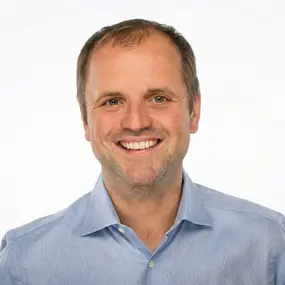
Pete Townsend is joined by Christian Catalini, co-founder of Lightspark and founder of the MIT Cryptoeconomics Lab. Christian co-created Libra at Meta, and back in 2014 he put bitcoin in the hands of every MIT undergrad. These days his work is about what happens to the economy when intelligence gets cheap and checking the work stays expensive.
Verification is the real bottleneck
Pete opens with the line from Christian’s Harvard Business Review piece with Jane Wu and Kevin Zhang, What Gets Measured, AI Will Automate. If anything that can be measured will be automated, what is left that’s scarce? Christian starts with where the models already look magical: code, mathematics and other domains with plenty of measurement. Outside those, a lot of important context is still trapped in people’s heads, in the weights every expert carries after years of working on a problem. “We’re all a world model of one,” as he puts it. Verification is the work of making sure that what the machine produced reflects your intent, and anyone who has written a prompt and then thought “oh, wait, I forgot to tell you something” knows how much of that intent we never spell out.
Can fundraising be measured?
Pete agrees that human-in-the-loop is a weak way to think about how we’ll actually use agents, and he puts his own career to Christian as a test case. If he poured everything he has learned from years of helping startups raise into an open-weights model, would that be defensible? Christian thinks fundraising is a hard one to verify. The decisions you make today often reveal themselves only years later, and that lag makes it murky to link a type of founder, idea or market to how things turned out. Problems like this don’t allow the quick checks you can run on a mathematical proof or a piece of code, which is why the human brain still has the edge there.
Every deck looks good now
Christian has a name for the colleague who sends you AI-generated slop and leaves you to check it: the meat proxy. Investors see the same thing in pitch decks that are fully AI-generated, and those decks put a real cost on whoever has to work out whether there’s anything behind them. A polished deck with real substance used to signal a good team. That signal is gone, and Christian describes it in crypto terms, as a Sybil attack on all the systems society built for measuring effort.
Record the deals you pass on
If Pete can use the same knowledge either to coach a founder or to diligence one, is passing on a deal that looks perfect on paper the kind of expert override that should be recorded? Christian calls that the key to the learning loop. The reversals and corrections matter more than the acceptances. Train a model only on your closed deals and it learns very little about you as an investor. Capture every decision to go forward or not, and more of the work can be automated, leaving you free to go deeper on a narrower slice of the pipeline or do more deals. He pushes back hard on the idea that AI leaves a fixed amount of work and ambition to go around. Every technology that expanded what we could do made us busier, and as he says, “sorry, the four-hour workweek, not happening.”
The AI labs can’t do it all
Christian has written that in crypto the value went to the boring intermediaries holding a banking charter, and he sees general purpose technologies following the same pattern. The inventors keep very little of the value. The railways earned around a 3.5% private return against a social return of about 48%. In AI, his bet is that most of the value goes to whoever holds the complementary assets, from chips and data centers to Meta putting an assistant in front of three billion users. That leaves the labs in an awkward spot. If they’re too successful, they get nationalized and regulated like a utility. If they push into everyone else’s markets, companies like Microsoft will fight back, taking open-weights models, adding their own context and building frontier specialist models for their own industries. He adds a twist on the race to automate AI research: because AI research may itself be verifiable, it could be one of the first domains to fall, leaving the value with everything that’s hard to verify.
What stays defensible
To close, Pete asks the question Christian keeps asking himself: what is worth building that will still be standing in five years? Christian gives three answers:
- Ground truth: the friction with customers, markets or regulators that you understand better than anyone, which gets more valuable as better models arrive.
- Top talent: the best verifiers in a domain still hold tacit knowledge the models don’t have.
- Complementary assets: crypto built wonderful networks and then found it still needed identity, KYC and licences, “all this boring stuff that the crypto people thought could be abstracted away,” and he thinks the AI labs are making the same mistake. Distribution counts here too. A top law firm with an open-weights model and daily friction with interesting cases will build a better legal AI than anyone else.
Connect with Christian:
Website: https://catalini.com/
LinkedIn: https://www.linkedin.com/in/ccatalini/
Substack: https://catalini.substack.com/
Subscribe on Spotify
Subscribe on YouTube
Subscribe on Apple Podcasts
Chapters
0:00 Cold open
0:14 Welcome Christian Catalini
0:52 Why verification is the real bottleneck
3:08 Human in the loop and the weights in your own mind
3:57 Why fundraising is hard to verify
4:59 AI-generated pitch decks and the Sybil attack on effort
5:54 Recording the deals you pass on
7:12 Why AI won’t take all the jobs
8:05 Is AI about to rerun crypto’s history?
9:22 Where the value goes: complementary assets
10:51 Open models as niche specialists
11:09 When the labs automate AI research
12:27 What stays defensible in five years
15:12 Where to follow Christian
Sharp riffs, big ideas and real insights from smart people, all in under 15 minutes. Hosted by early-stage investor Pete Townsend with the people rebuilding money, markets, and the internet from the ground up.
LinkedIn: https://www.linkedin.com/in/petetownsendnv/
X: https://x.com/PeteTownsendNV
Instagram: https://www.instagram.com/petetownsend353/
Email: info@norioventures.com
0:00 Yeah, I will take all the jobs or there's no point in launching a start right. The labs will do it all. I couldn't disagree more. I think every time we had a technology that really drastically expanded what we can do, we did more, we got more busy to sorry that for our work week not happening. This is Money Never Sleeps. Sharp riffs, big ideas and real insights from smart people on P Townsend GP at Norio Ventures. Let's go money. Never sleeps. Pal, my guest today is Christian Catalini Co, founder of Light Spark and founder of the MIT Crypto Economics Lab Christian Co created Libra at Meta. He put Bitcoin in the hands of every MIT undergrad back in 2014, and these days he's working on what happens to the economy when intelligence gets cheap and checking the work stays expensive. Christian, welcome to Money Never Sleeps. Great to be here.
0:52 Listen, you've got this line that I keep coming back to. Anything that can be measured will be automated. If that's right, why does it then make verification of what's being measured the real bottleneck rather than intelligence itself? Look, over the last few months, I feel like people keep getting surprised by just how capable the models are becoming and just by how rapidly they're moving in new domains. But if you zoom out most of the action as being around code, mathematics, and any sort of domain where we do happen to have a lot of measurement, these machines are truly magical. Given enough data, they will figure out how to optimize any goal that we give them within what they can see and what they can understand.
1:43 But there's a lot of important context that they still don't have. Some of the context it's trapping people's minds, you know, the weights that every expert in in their domain carries when they think about a problem, when they try to project the future and understand where where this may be going. There's a lot of excitement about word models these days in the word of AI essentially models and then can simulate lots and lots of counterfactuals. And we're all running one, right? So we're all a word model of 1. So if you believe that the machines are capable of essentially solving any problem we give them, if they have the context and you realize that some of these contexts is still elsewhere, then the concept of verification comes out of that. Why?
2:26 Because verification is really simply making sure that when the machine is created, something for you, whether it's a text, the document, a forecast, a piece of music, an image, a video, does that a reflect your original intent. And sometimes we make the mistake of even not spelling out every dimension of the intent that we may have. I think we've all experienced it. You've read a prompt and then as the model is starting to think through, is like, Oh no, wait, I forgot to tell you something, right? There's just so much context that we give for granted. So context and intent required a human to be present and ensure that the machine is executing on something that we actually want. That's why verification is so important, even as models get increasingly capable.
3:08 I hear so many people talking about this human in the loop model, which is that let's just have a human verifying what machines do. But realistically, it is a weak construct on how we'll actually use agents. And you've said, listen, it's the weights in your own mind. That's what separates a useful AI from, say, rogue agents. So talking about that real life example that see, I did take everything that I learned from my career of helping startups with fundraising and I put that into an open weight model, basically this reference library of context for the AI agents to refer to. Do you think that would be defensible, or is fundraising one of those things that might escape measurement? Fundraising is really interesting one because when you think about fundraising from a verification perspective, there's a few issues.
4:05 First of all, the decisions that you may make today will reveal themselves only often many years later. And so that feedback lag makes the direct causal link between, OK, this type of founder, this type of idea, this, this market and the conclusion way more murky. And most interesting problems in society don't really lend themselves to the easy type of verification that you can do on a mathematical proof or on a piece of cone. Whenever you have a design where there's many potential paths and you cannot explore them all, the signal that you're getting back from the universe when it's an investment decision or a policy decision or a change in, you know, an education approach gets really confounded. That's where, you know, we still have 1 engine, which is the human brain that you know, has, has been selected over many, many millennia to cope with, with that kind of environment that still have changed the machines. I think there's this friendly term of a meet proxy, right? The colleague or friend that essentially sends you I generated slop and you're the verifier of their work, right? It's almost like here's my product. What do you think?
5:09 Or as an investor, I'm sure you get these pitch tax essentially fully I generated and they impose a massive cost on the investor to figure out, OK, is this actually the real deal or not? In the past, you were able to separate form and effort really quickly, right? So very polished act with a lot of substance typically was behind a good team. Today that signal is completely lost because generating output that looks like the real thing. But once you pause and think to you know, the logic, the the substance often fails. It's got much harder For those of you that are familiar with crypto, there's a massive symbol attack on all these systems that society has invented for essentially measuring effort. Did someone spend time and thinking on something or not? Yeah, it's crazy.
5:55 Like I could take everything that I've learned, create this open weight model, I could use it not only to coach startups on fundraising, but I could also use it to do diligence startups. And which side wins, right? So that when I pass on a deal that looks perfect on paper, is that the kind of expert override that you've been talking about that we should be recording and we should be looking for and feeding that back into the model? And how does that work? That is essentially the key to the learning loop, right? I think we will want more and more automation. Economic forces drive towards that and it will happen. But for safe and reliable automation, you do need at the beginning still that expert in the loop for a number of decisions. If you codify those decisions, those reversals, the moment where you decide to decline a deal or go to the next stage, the errors and corrections are even more important probably than the acceptances, right?
6:52 So if you just read a model on your close deals, you would not learn a lot about you as an investor. But if I see every decision, every moment where you decide to go forward or not, now I can start automating more of what you do and you can dedicate your attention to an error and error slice of the pipeline and potentially go a lot deeper or do more deals if you zoom out. I feel like right now one of the biggest fallacies is that many people believe that there's a fixed amount of Labor, there's a fixed amount of projects that can be launched. There's a fixed amount of like ambition. And then they come with a very negative conclusions like AI will take all the jobs or there's no point in launching a start, right? The labs will do it all. I couldn't disagree more.
7:33 I think every time we had a technology that really drastically expanded what we can do, we did more. We got more busy to. Sorry that Ferrara work week not happening, right? I know. And on the work side, the way it would come is like, yes, a lot of what you're doing today as an investor, you won't do it in two years. You won't need to. The models will do that for you, but you will move up the value chain and expand kind of the ambition of that investment portfolio. Or if you're an engineer, you build way more complex fix that. That's why I'm quite optimistic. So am I. You've written that in crypto that the value went to the boring intermediaries, as we call them, holding a banking charter, right?
8:15 And that you're seeing that players with a regulatory Moat are the ones that are out acquiring others right now. Is that about to happen again with AI Labs and what they're about to go through? Not investment advice. We're actually recording this in a week were you know Tropic is about to launch their IPO. So very timely question. If you look at every general purpose technology, the original GPTS, right before the Internet, railways, combustion engine, electricity, it always plays out the same way. And now I hear that people keep saying this time is different, intelligence is special. Oh look, imagine a word without electricity. It was a very different universe. And a lot of what we do everyday it's powered by electricity. So sure, intelligence is special, but so was electricity. Every time we had a GPT, first of all, the inventors appropriated almost none of it.
9:12 Railways. Massive investment, the return was 3.5% on average. Social return like 48%. Massive social returns to railways. And so my bet is that in the eye, and this is where open models also play a role, most of the value will go to the holders of complementary assets. Think about who can produce the chips who can assemble the massive data center players like Meta that have launched the assistant that they can scale to 3 billion users. They don't need frontier technology to make that useful to millions and millions of people and the billions. And so the labs are in this awkward position where if they're too successful is the crazy fast take off scenarios materialized? Well, then they get nationalized and they become like electricity, right? So utility meter over regulated some something that becomes an input to production that the government will have heavy hands on.
10:02 If they're also successful in the commercial side and start peeling off against all these other businesses, those businesses will fight back before it's too late. They're not going to wait to be disrupted. It will be interesting to see what happens when Microsoft gets more challenge on the Office suite. Office is such a core product for Microsoft. Are they just going to go let that business go? I don't think so. And So what all of these companies will do is they will take open source and open ways models. They will bring their own context to your point at the beginning, right, all your knowledge about investment, they will codify that context and they were going to start releasing frontier specialist models. They don't need generalist, they need to just deliver the best model for their industry.
10:43 And so when that happens, I think Deluxe can be very successful companies, but they're definitely not going to absorb all of the economy inside of them. The big opportunity is there for those who can make these open models really accessible and to make them these niche specialists that you pair alongside A generalist, or perhaps you don't even use a generalist because you don't need to, you have one for a specific task. What's interesting is that the labs are racing towards automating AI research. RSI is a recursive self improvement is all about getting AI that can write AI. Their hypothesis is if they can do that, they believe the economy's code, and so we will be able to absorb all of the economy. But this is the classic problem of Silicon Valley thinking. Jobs are messy, jobs are complex, industries are messy and complex.
11:36 And so if all they end up doing is automating a research, they're essentially going to turn into a commodity the product that they're trying to sell. And then who benefits is everyone else, Because inevitably, even if you reach ASI, even if you have a super intelligence, unless you can contain it and put it in a black box, which today it's been impossible, right? Knowledge gets shared, talent keeps moving. There will be more than one lab, prices will come down. And in that scenario, intelligence becomes this background ingredient and everyone else start building wonderful products and services on top of it, which I think is the best outcome for the economy and for society at large.
12:16 But the irony is that because AI research might be verifiable itself, it might be one of these domains to fall, and then everything that's hard to verify is where all the value will occur. And on that note that you know, you said the question you keep asking yourself, Christian, is what stays defensible. So what do you think you tell a founder now that is worth building that'll still be standing in five years with the pace of how everything is moving? I would say three things. The first one is ground truth. If you believe that everything that can be measured will be automated, then if you can find friction with the universe, whether it's on technology, R&D, market, understanding customers, regulatory in many domains, right, understanding your regulatory environment better than everybody else. Well, if you look at crypto, turned out that was a key asset, right?
13:06 If you can find that ground truth, no matter what you're doing, and you're world class at that, you will be able to use intelligence on top of it and the intelligence will just accelerate you. So Deluxe, come back with a better model. Guess what? You're still the best entity that can take that context, that ground fruit and make it better and make a better product as a service on the other end. So that's one ground fruit. The second one is top talent. We're not in the scenario where the models will do it all. They're not super intelligence yet. And so there's still so much tacit knowledge in people's brains. If you have the top verifiers for the domain you care about, whether it's fintech or legal or cyber, you will build a better experience and eventually maybe the labs will require.
13:49 But I do think that hiring the best talent globally in a domain is still a very defensible strategy. And 3rd, I would say look for complementary assets. What are the things that combine with AI? It's the same with crypto, right? The complementary asset was the last mayor. We built wonderful networks, very scalable crypto primitives. And then in the end, for them to be useful in the real world, you need IT. Identity, KYC licenses, all this boring stuff that the crypto people thought could be abstracted away. I think the labs are making the same mistake. They think that they can just build the intelligence that will just diffuse into society magically the last mile. It's again where value will be created. Distribution.
14:30 I think people think of distribution just narrowly as scale. But like, if you think about it, distribution today in a world with AI is super valuable because if I have distribution, I will learn a lot more about the universe way faster than you. That's why news by Meta, it's a faster moving product than a startup building the same AI agent. If you can get more interaction with customers, you know where all the things break, you build a better frontier model that serves shopping and other needs. I'm sure there's the same on the institutional side, right? So if I'm a top law firm and I can take an open weights model and I get friction every day and some of the most interesting legal cases, guess what? I'm going to build the better AI for legal cases. So very repeatable recipe on that.
15:12 Tons of insights here in only a few minutes. Christian, what's the best place for people to go to follow your thinking? A usual XC catalini also on Sat snack, but definitely the the latest stars are always on X. Awesome. Very good. Well, listen, thank you so much for joining. Thanks so much, Pete. And to all of you out there, thanks for watching and listening, and don't forget to follow or subscribe wherever you get your podcast. If you're enjoying the show, leave us a review while you're there. It helps others to find the show and it means a heck of a lot to me. Till next time, see you money. Never sleeps, pal.